Rascals case in brief
In the beginning, in 1989, more than 90 children at the Little Rascals Day Care Center in Edenton, North Carolina, accused a total of 20 adults with 429 instances of sexual abuse over a three-year period. It may have all begun with one parent’s complaint about punishment given her child.
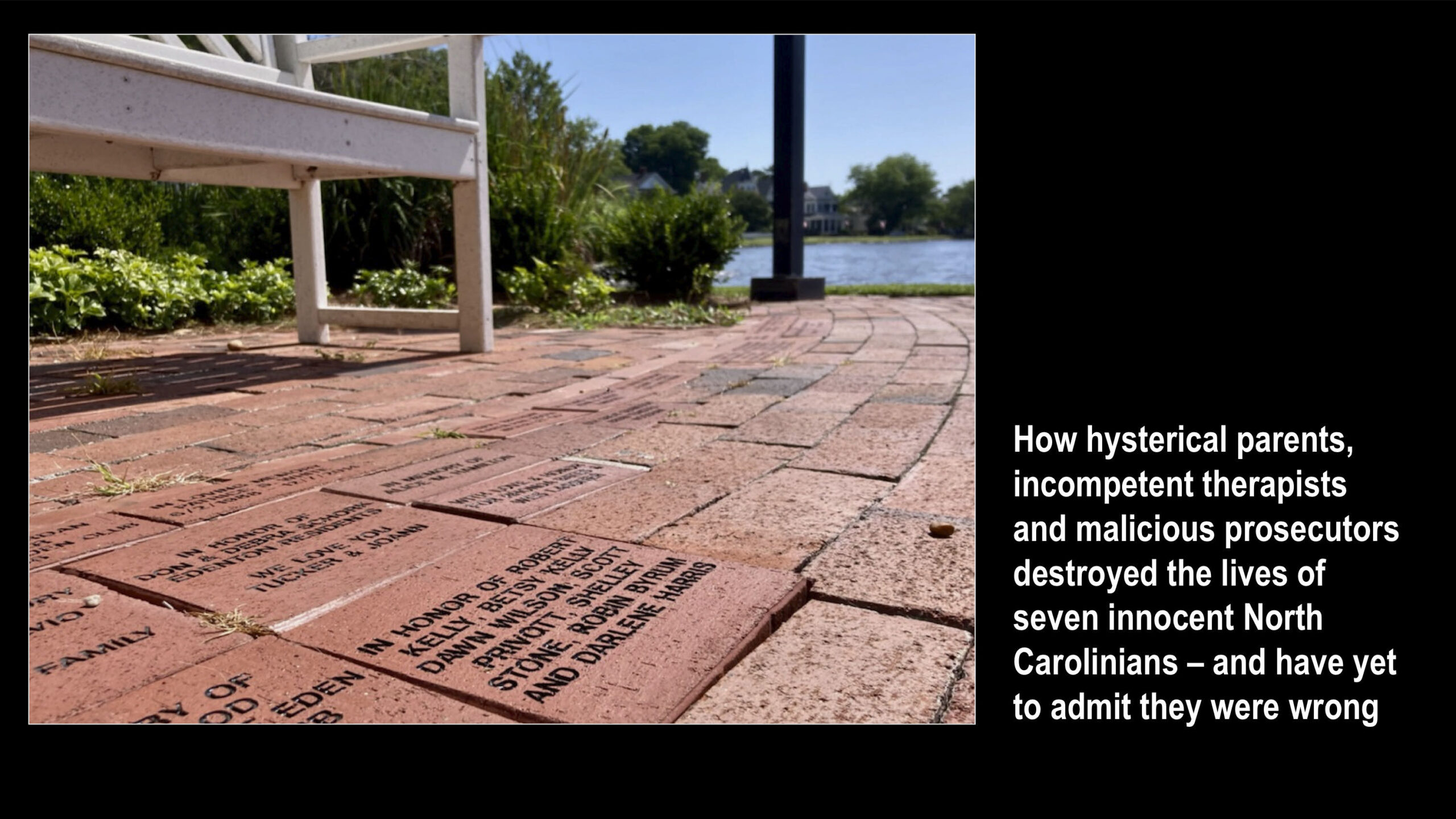
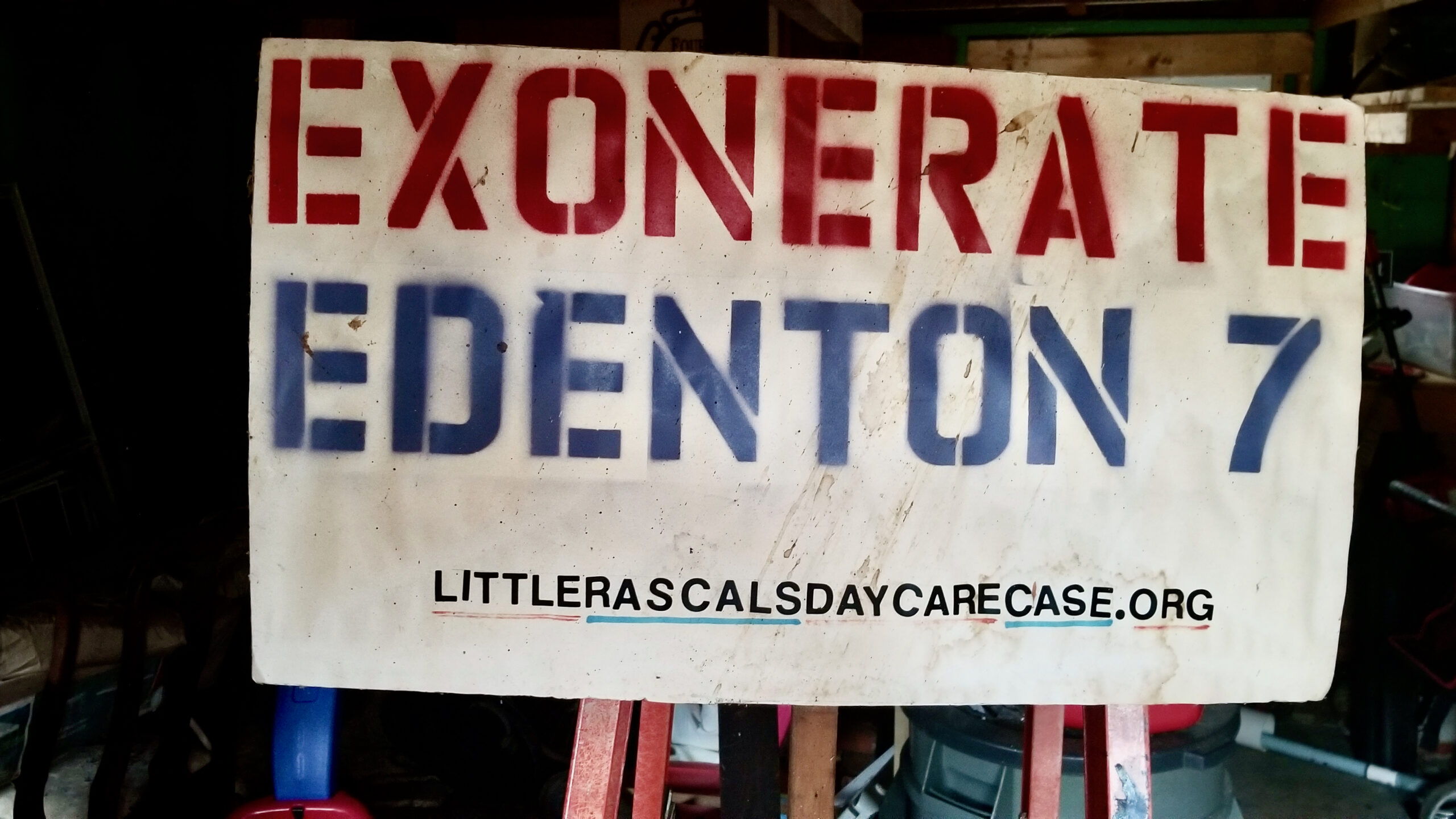
Among the alleged perpetrators: the sheriff and mayor. But prosecutors would charge only Robin Byrum, Darlene Harris, Elizabeth “Betsy” Kelly, Robert “Bob” Kelly, Willard Scott Privott, Shelley Stone and Dawn Wilson – the Edenton 7.
Along with sodomy and beatings, allegations included a baby killed with a handgun, a child being hung upside down from a tree and being set on fire and countless other fantastic incidents involving spaceships, hot air balloons, pirate ships and trained sharks.
By the time prosecutors dropped the last charges in 1997, Little Rascals had become North Carolina’s longest and most costly criminal trial. Prosecutors kept defendants jailed in hopes at least one would turn against their supposed co-conspirators. Remarkably, none did. Another shameful record: Five defendants had to wait longer to face their accusers in court than anyone else in North Carolina history.
Between 1991 and 1997, Ofra Bikel produced three extraordinary episodes on the Little Rascals case for the PBS series “Frontline.” Although “Innocence Lost” did not deter prosecutors, it exposed their tactics and fostered nationwide skepticism and dismay.
With each passing year, the absurdity of the Little Rascals charges has become more obvious. But no admission of error has ever come from prosecutors, police, interviewers or parents. This site is devoted to the issues raised by this case.
On Facebook


Little Rascals Day Care Case
This Facebook page is an offshoot of littlerascalsdaycarecase.org, which addresses the wrongful prosecution of the Edenton Seven and other such victims.

Meanwhile in Edenton....
This content isn't available right now
When this happens, it's usually because the owner only shared it with a small group of people, changed who can see it or it's been deleted.0 CommentsComment on Facebook
Allies for our cause!
This content isn't available right now
When this happens, it's usually because the owner only shared it with a small group of people, changed who can see it or it's been deleted.0 CommentsComment on Facebook
The courts have a long history of capriciously pulling the rug out from under Junior's appeals, but maybe this time....
This content isn't available right now
When this happens, it's usually because the owner only shared it with a small group of people, changed who can see it or it's been deleted.0 CommentsComment on Facebook
Click for earlier Facebook posts archived on this site
Click to go to

Today’s random selection from the Little Rascals Day Care archives….
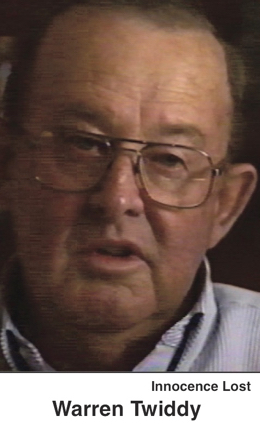
It wasn’t only defendants who suffered wrongfully
 March 17, 2015
“Warren Twiddy, 68, father of defendant Betsy Kelly, said he’s been ‘shunned, blocked out’ by some residents and nearly run out of his church.”
– From “Trial rips fabric of community” by Mark Mayfield in USA Today (March 20, 1992)
“Twiddy sold his insurance business and exhausted his retirement savings to pay his daughter’s legal fees. Old friends, he says, won’t even say hello on the street. Clients canceled policies after his daughter was indicted.”
– From “Town’s pain is revived by TV film” by Andrea Stone in USA Today (July 22, 1993)
“Twiddy admits… some bitterness toward his neighbors, who ignored him at church and at the country club.
“ ‘Before, the bulletin board was full with places we were supposed to be up ’til Christmas,’ he said. ‘After this, nothing, buddy.’ ”
– From “Talk of new trial makes Edenton shudder” by Carol D. Leonnig in the Charlotte Observer (Sept. 10, 1995)
“Our need to matter and our need to belong are as fundamental as our need to eat and breathe. Therefore ostracism – rejection, silence, exclusion – is one of the most powerful punishments that one person can inflict on another.
“Brain scans have shown that this rejection is actually experienced as physical pain, and that this pain is experienced whether those that reject us are close friends or family or total strangers, and whether the act is overt exclusion or merely looking away….”
– From a delanceyplace.com summary of “The Pain of Exclusion” by Kipling D. Williams in Scientific American (January/February 2011)
The misery caused by wrongful prosecution of the Little Rascals case extended far beyond courtrooms and jail cells. Defendants’ family members such as Betsy Kelly’s father endured many years in a hell of ostracism.
Warren Twiddy died in 2012. He was 89.
Death noted: Little Rascals judge Marsh McLelland
 April 13, 2015
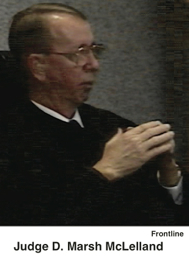
D. Marsh McLelland, judge in the trials of Little Rascals defendants Bob Kelly and Dawn Wilson, died last month in Burlington. He was 94.
This laudatory obituary in the Greensboro News & Record barely mentions the most consequential case in McLelland’s career – “He was brought out of retirement by the state’s chief justice to hear the Little Rascals Day Care child sex abuse case….” – and this one in the Burlington Times-News mentions it not at all.
Had McLelland stayed retired, the prosecution of the Edenton Seven might well have been derailed early on.
The judge originally assigned to the case, L. Bradford Tillery, stepped down under pressure from Deputy Attorney General Bill Hart. Mark Montgomery, Bob Kelly’s appellate attorney, explains why:
“Hart did not like the way Tillery was handling the case. The final straw was when Tillery ordered Hart to turn over the State’s interviews of those kids who were not the subject of indictments. He did not order them given to the defense, as he should have done, but Tillery was going to look through them himself. If he had, he would have seen that most of the kids at the day care, including Hart’s adoptive daughter, had said nothing happened and the jury would have heard about that.
“To prevent that, Hart filed motions accusing Tillery of being biased against the State. Rather than punishing Hart, Tillery took himself out of the case to avoid any appearance of partiality. Enter McLelland.
“Because Tillery had already ordered the interviews turned over to the court, that was a done deal. But McLelland never looked at them. I stumbled across them in the exhibit room of the courthouse and informed the Court of Appeals in my brief. The failure of the State to turn over to the defense the interviews of kids who said nothing happened was one of the grounds for a new trial for Bob.”
Tillery clearly was stung by Hart’s ploy: “I have served as a judge of Superior Court for over 20 years, and I never found it necessary to take such a step…. Neither have I ever been made to feel before that one side or the other considered me to be not only an adversary but also fair game …. for reckless assertions.”
If only Tillery had responded not by resigning but by sanctioning Hart for withholding evidence.
Prosecutorial arrogance – it’s forever!
March 1, 2016
“It would be hard to imagine a more glaring judicial conflict of interest than the one the Supreme Court considered in a case out of Pennsylvania on Monday.
“In 1986, Terrance Williams was convicted of killing a man named Amos Norwood with a tire iron when he was 18. Prosecutors in the Philadelphia district attorney’s office sought the death penalty, and got it….
“A state court found that the prosecutors had lied, and vacated Mr. Williams’s sentence. But the Pennsylvania Supreme Court unanimously reversed that ruling. The court’s chief justice at the time, Ronald Castille, wrote a concurring opinion criticizing the lower court’s ruling for ‘condemning’ the prosecutors.
“The problem was that Mr. Castille himself led the district attorney’s office when it prosecuted Mr. Williams, and personally authorized seeking the death penalty in that case…. Nevertheless, he refused to recuse himself from Mr. Williams’s case….”
– From “Should a Judge Rule on His Own Case?” editorial in the New York Times (Feb. 29)
Meanwhile in North Carolina, prosecutors yet again show great interest in maintaining their conviction rate and little if any in ensuring justice has been done (text cache).

Parents gave thumbs down to first ‘Innocence Lost’
June 5, 2013
“More than 50 parents of alleged child victims in the Edenton day care sex abuse case issued a statement Tuesday criticizing ‘Innocence Lost’ (after) reviewers in the national press hailed the show as a compelling portrait of a small town that may have become overcome with mass hysteria:….
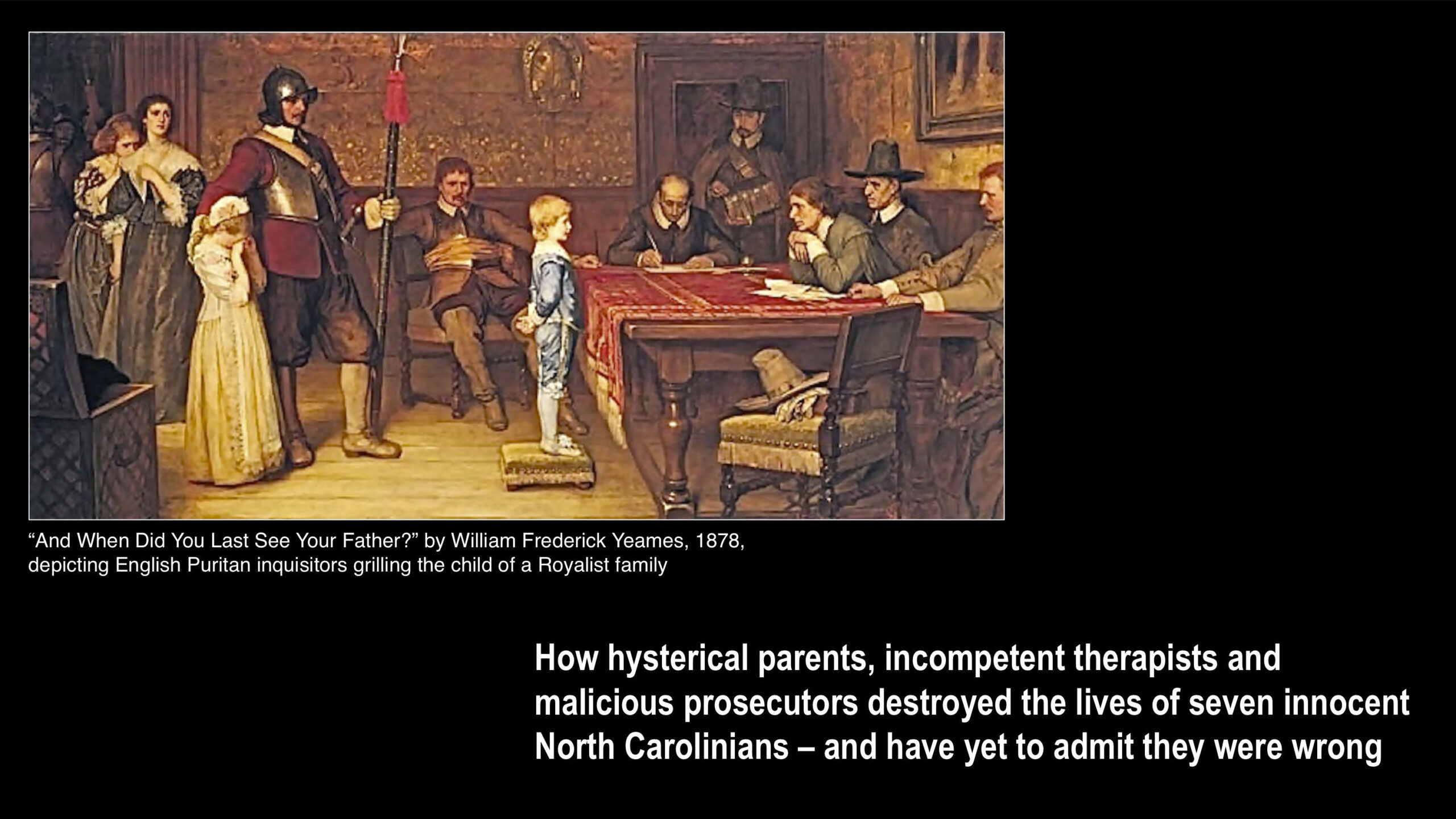
“ ‘ “Innocence Lost” conveyed the false impression that parents of the children came to the conclusions of sexual abuse as a hysterical reaction to rumors of abuse.
“ ‘We, as parents, came to the devastating conclusion of the sexual abuse of our children after great reluctance and only after the most convincing evidence, evidence which could not be revealed in interviews for “Innocence Lost” and can only be revealed during the trials of the defendants.’
“Specifically, the parents faulted the show for:
- “Failing to make clear that parents could not discuss ‘the factual reasons for the determinations of sexual abuse’ because of pending trials.
- “Suggesting to viewers that three state-sponsored, local therapists were responsible for evaluating the children when ‘in fact, the children were evaluated by no less than eight independent therapists, none of whom live or practice in Edenton, N.C.’
- “Giving the impression that the families who used the day care center were a ‘prestigious group’ when they represent a ‘broad economic and social cross-section of the town of Edenton.’ ”
– From “Day care parents resent implications of hysteria” (News & Observer, May 15, 1991)
Most disingenuous is the Little Rascals parents’ claim that “the most convincing evidence… could not be revealed in interviews for ‘Innocence Lost’ and can only be revealed during the trials of the defendants.”
In fact, it was the parents themselves who had so excitedly “revealed” the supposed evidence and sent it coursing unchecked through the town’s consciousness, reproducing and mutating as it spread, and resulting in unimaginable tragedy.