Rascals case in brief
In the beginning, in 1989, more than 90 children at the Little Rascals Day Care Center in Edenton, North Carolina, accused a total of 20 adults with 429 instances of sexual abuse over a three-year period. It may have all begun with one parent’s complaint about punishment given her child.
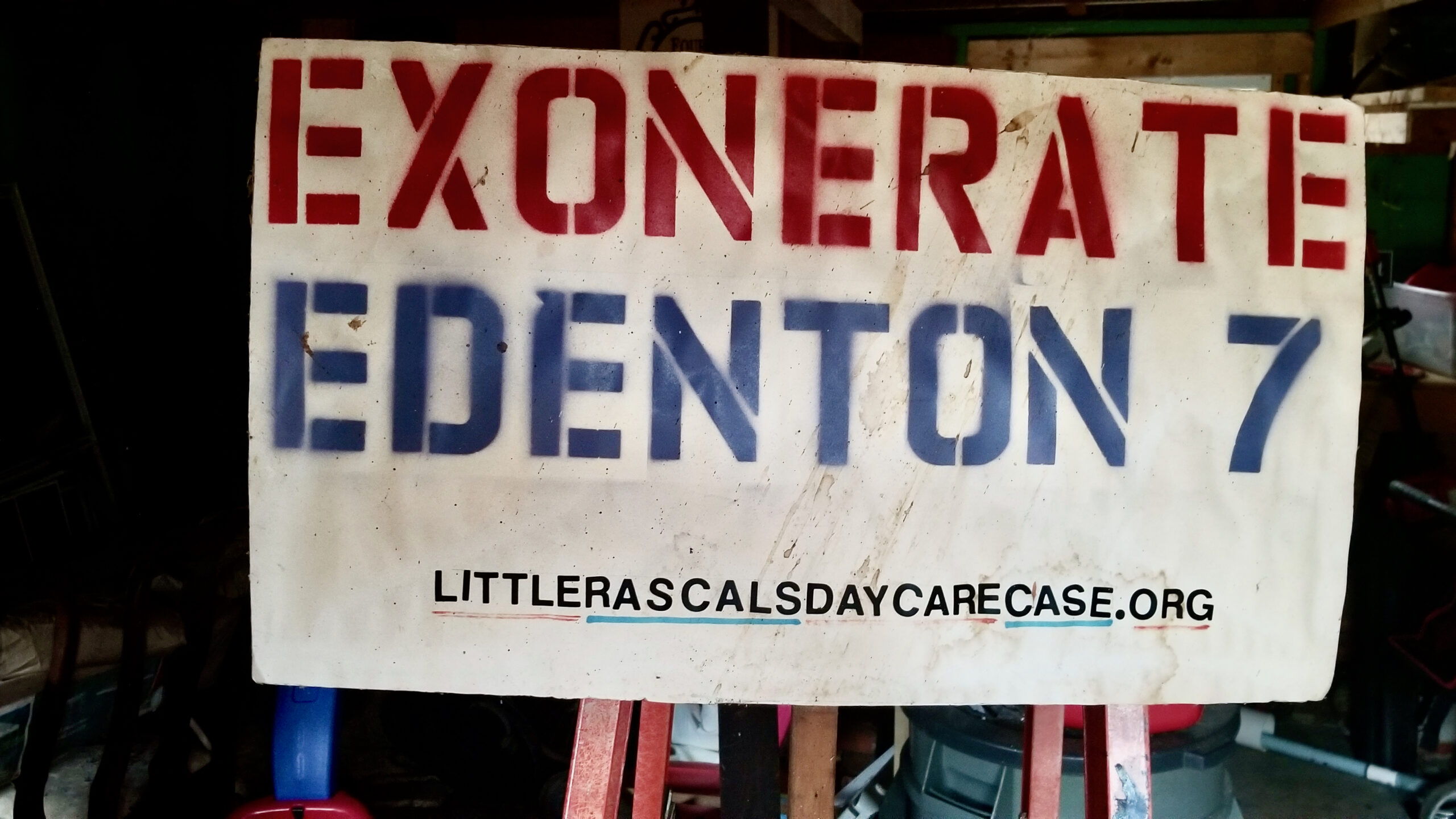
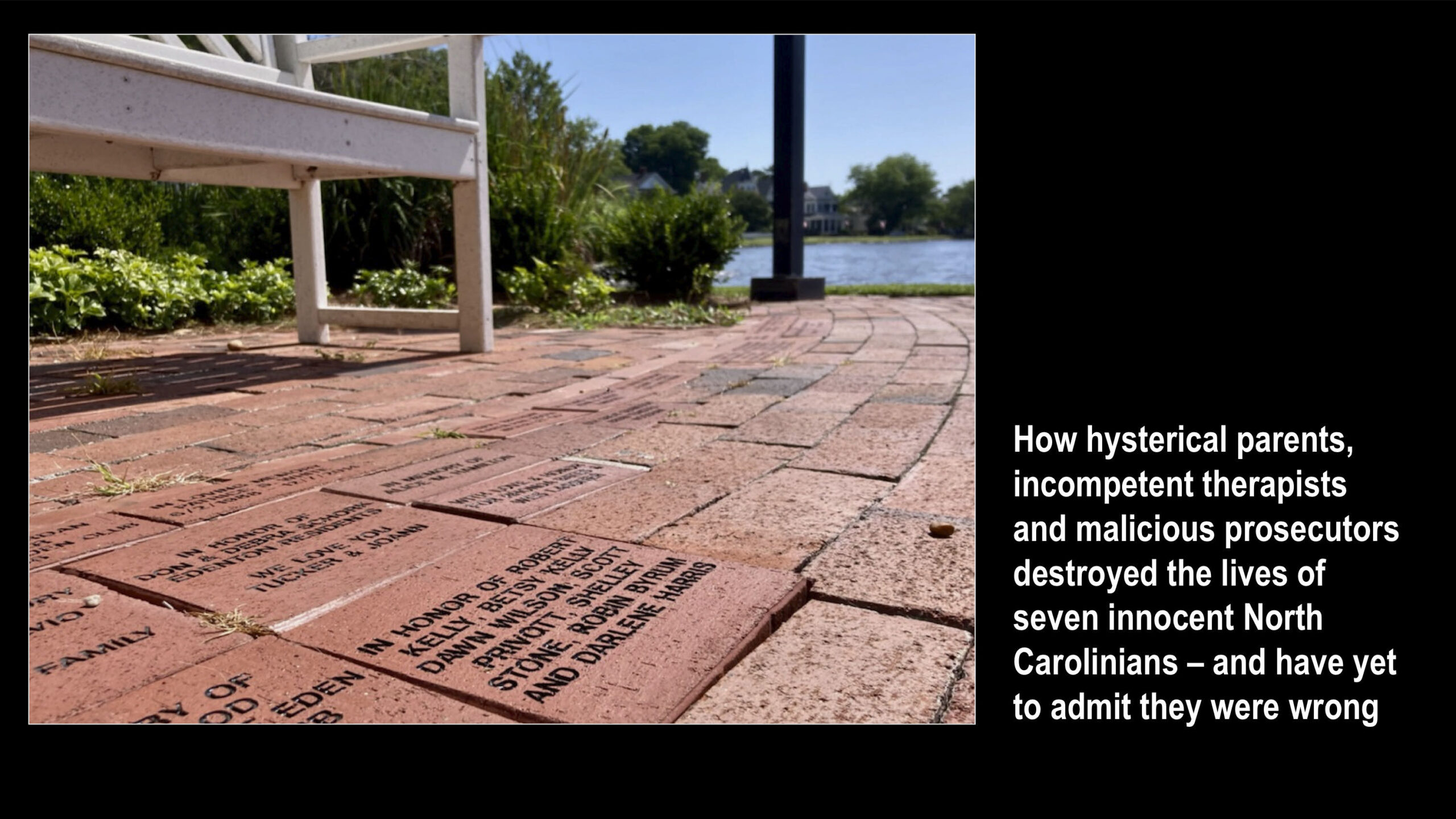
Among the alleged perpetrators: the sheriff and mayor. But prosecutors would charge only Robin Byrum, Darlene Harris, Elizabeth “Betsy” Kelly, Robert “Bob” Kelly, Willard Scott Privott, Shelley Stone and Dawn Wilson – the Edenton 7.
Along with sodomy and beatings, allegations included a baby killed with a handgun, a child being hung upside down from a tree and being set on fire and countless other fantastic incidents involving spaceships, hot air balloons, pirate ships and trained sharks.
By the time prosecutors dropped the last charges in 1997, Little Rascals had become North Carolina’s longest and most costly criminal trial. Prosecutors kept defendants jailed in hopes at least one would turn against their supposed co-conspirators. Remarkably, none did. Another shameful record: Five defendants had to wait longer to face their accusers in court than anyone else in North Carolina history.
Between 1991 and 1997, Ofra Bikel produced three extraordinary episodes on the Little Rascals case for the PBS series “Frontline.” Although “Innocence Lost” did not deter prosecutors, it exposed their tactics and fostered nationwide skepticism and dismay.
With each passing year, the absurdity of the Little Rascals charges has become more obvious. But no admission of error has ever come from prosecutors, police, interviewers or parents. This site is devoted to the issues raised by this case.
On Facebook


Little Rascals Day Care Case
This Facebook page is an offshoot of littlerascalsdaycarecase.org, which addresses the wrongful prosecution of the Edenton Seven and other such victims.

Meanwhile in Edenton....
This content isn't available right now
When this happens, it's usually because the owner only shared it with a small group of people, changed who can see it or it's been deleted.0 CommentsComment on Facebook
Allies for our cause!
This content isn't available right now
When this happens, it's usually because the owner only shared it with a small group of people, changed who can see it or it's been deleted.0 CommentsComment on Facebook
The courts have a long history of capriciously pulling the rug out from under Junior's appeals, but maybe this time....
This content isn't available right now
When this happens, it's usually because the owner only shared it with a small group of people, changed who can see it or it's been deleted.0 CommentsComment on Facebook
Click for earlier Facebook posts archived on this site
Click to go to

Today’s random selection from the Little Rascals Day Care archives….
The ugly truth about ‘Nancy Lamb’s state of mind’
 March 14, 2012
“Prosecutor Nancy Lamb practiced a little ‘voodoo’ psychology by telling the jury that when Dawn Wilson held and played with her child during breaks in the trial, it wasn’t because she loved the child – it was all a show for the benefit of the jury.
“No psychologist could have accurately reported on the state of mind or the motives of Wilson when she played with her child. However, had a psychologist known that Wilson had been offered a plea bargain which included no jail time if she pointed the finger at the others, and had told prosecutors to ‘Find yourselves another patsy,’ that psychologist might have known something about Nancy Lamb’s state of mind when she made those statements.”
– From “Due Process Is Good Psychology,” article in
Michigan Lawyer Weekly by Michael G. Brock
Defending this smear, one of many, Lamb said Wilson was presenting herself as a good mother, and “We had to remove that mask.”
In 1995 the N.C. Court of Appeals overturned her conviction. And then of course the prosecutors rushed to apologize to Dawn Wilson for their disgraceful vilification.
Prosecutors must recognize vulnerability to cognitive flaws
Nov. 17, 2016
“It’s no secret that we humans grant far too much confidence to our opinions. But when powerful people do this, the dangers compound. Zealotry replaces fair-mindedness. The worst excesses happen when prosecutors forget they’re flawed humans, like anyone else, and that as a result they’re subject to cognitive flaws like tunnel vision, racial bias, and the desire to reduce cognitive dissonance through ‘cognitive consistency’ even at the expense of complicated, nuanced, self-contradictory, paradoxical truth….
“Cognitive bias and overconfidence touch us all. Only a conscious awareness that we might be wrong can counter unthinking heuristics, biases, and schemas that lead to imperfect conclusions….
“Wisdom counsels not the confident use of power, but the wise use of power. The first step of wisdom is recognizing how little we know….”
– From “ ‘Making a Murderer’ Attorney Highlights Our Troubling Rate of Wrongful Conviction — and Suggests a Solution” by Michael Shammas in the Huffington Post (July 12)
And the latest on the still-imprisoned Brendan Dassey.

Prognosis uncertain for misled child-witnesses
May 7, 2012
From an exchange with Stephen Ceci, author (with Maggie Bruck) of the landmark “Jeopardy in the Courtroom: A Scientific Analysis of Children’s Testimony” (1995):
Q: What may have happened to the child-witnesses as a result of being so profoundly misdiagnosed? One Little Rascals child-witness who responded anonymously to an advertisement I placed in the Edenton paper continues to say she was abused by Bob Kelly, although she admits to doubts about the female defendants.
A: We lack good scientific data on the long-term beliefs of individuals who as children were suggestively interviewed. A handful of studies, none of which resemble allegations of sexual abuse, seem to indicate that they grow up with the belief that they were abused, replete with the same psychological sequelae of true abuse survivors.
But you’ll note I use phrases such as “seem to indicate,” because the data are not uniform or consistent and the scenarios are not sex abuse ones. I think many, perhaps most, memory researchers would expect someone who was convinced as a child that he or she was victimized to grow into an adult with the same problems seen in actual victims, e.g., distrust of authority figures, insecurity, etc..
–
What extreme caution Dr. Ceci, an unsurpassed authority on child abuse, uses not to present theory and speculation as fact…. If only the therapists and theoreticians behind the day-care-abuse mania had shown half the professional uncertainty….
Beware of jurors wearing deerstalker caps
April 10, 2016
“(Daniel Green’s) Durham-based defense team says it has new evidence that challenges major parts of the prosecution’s case, while bolstering their request for a new trial. They claim that misleading testimony and misconduct by the prosecutor and jury helped send Green to prison for (the 1993 murder of James Jordan) he did not commit.
“The evidence outlined in court documents includes… a sworn statement from the jury forewoman who admits she did her own investigation of Jordan’s murder, which violated a judge’s order. Paula Locklear says that during the trial, she visited the South Carolina creekside where the body was found and developed her own theory on how the killing occurred. A Charlotte legal expert says her action amounts to a ‘tremendous problem’ for the original case and could get Green’s conviction overturned….”
– From “New questions raised in slaying case of Michael Jordan’s father” by Michael Gordon and Mark Washburn in the Charlotte Observer (April 9) (cached)
Sound familiar? It should! As a juror in Bob Kelly’s trial, Dennis T. Ray not only conducted his own “crime” scene surveys, but also shared a Cosmopolitan article about how to identify child molesters, relayed incriminating claims from a jailhouse snitch and even displayed a supposed “magic key” described by child witnesses.
Unfortunately, Judge Marsh McLelland didn’t consider Ray’s rogue behavior – or that of a second juror, who dramatically revealed during deliberations that he himself had been abused as a child – to be a “tremendous problem.”
In fact, McLelland found precious few reasons to take issue with the prosecution’s case.