Rascals case in brief
In the beginning, in 1989, more than 90 children at the Little Rascals Day Care Center in Edenton, North Carolina, accused a total of 20 adults with 429 instances of sexual abuse over a three-year period. It may have all begun with one parent’s complaint about punishment given her child.
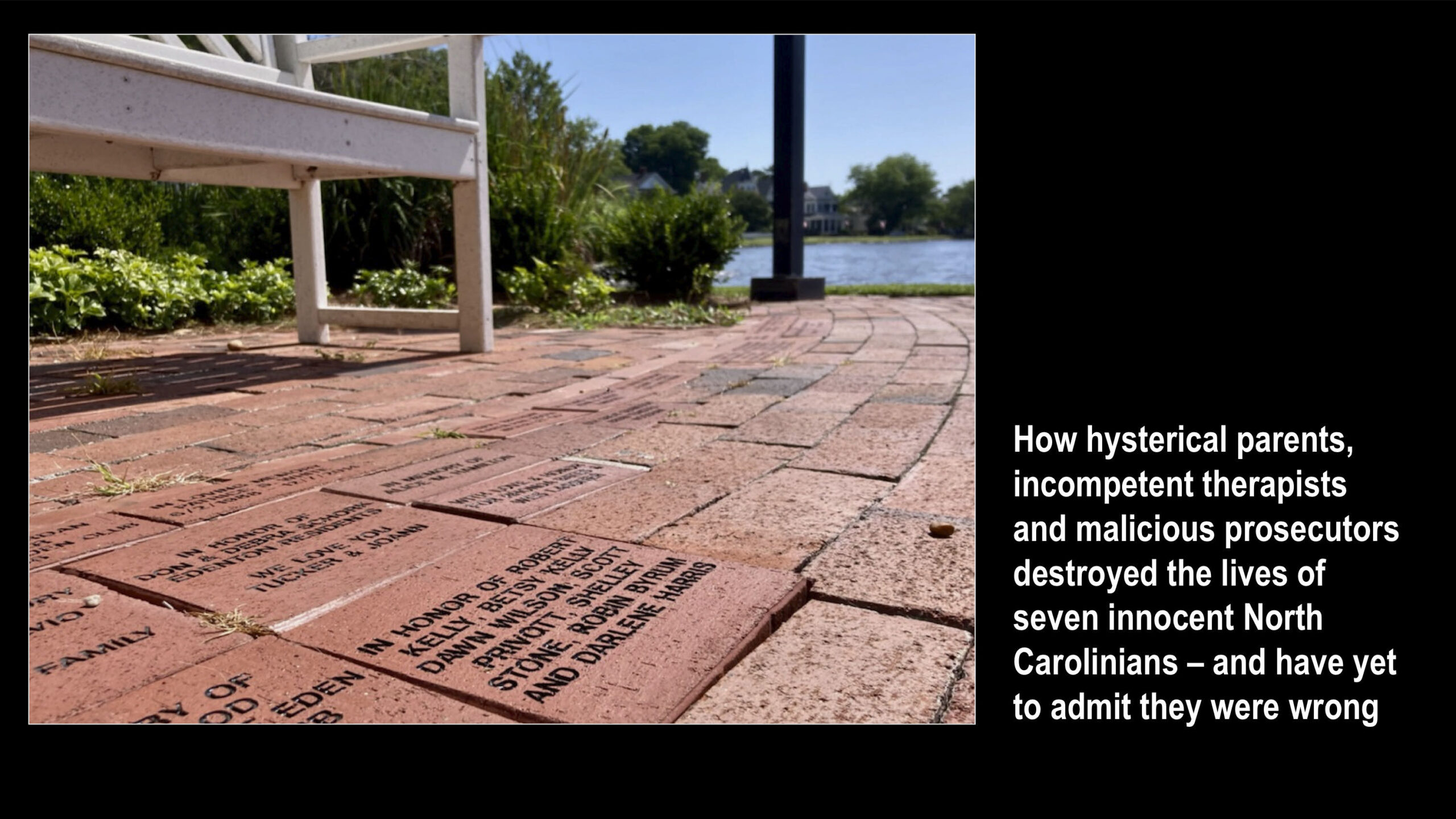
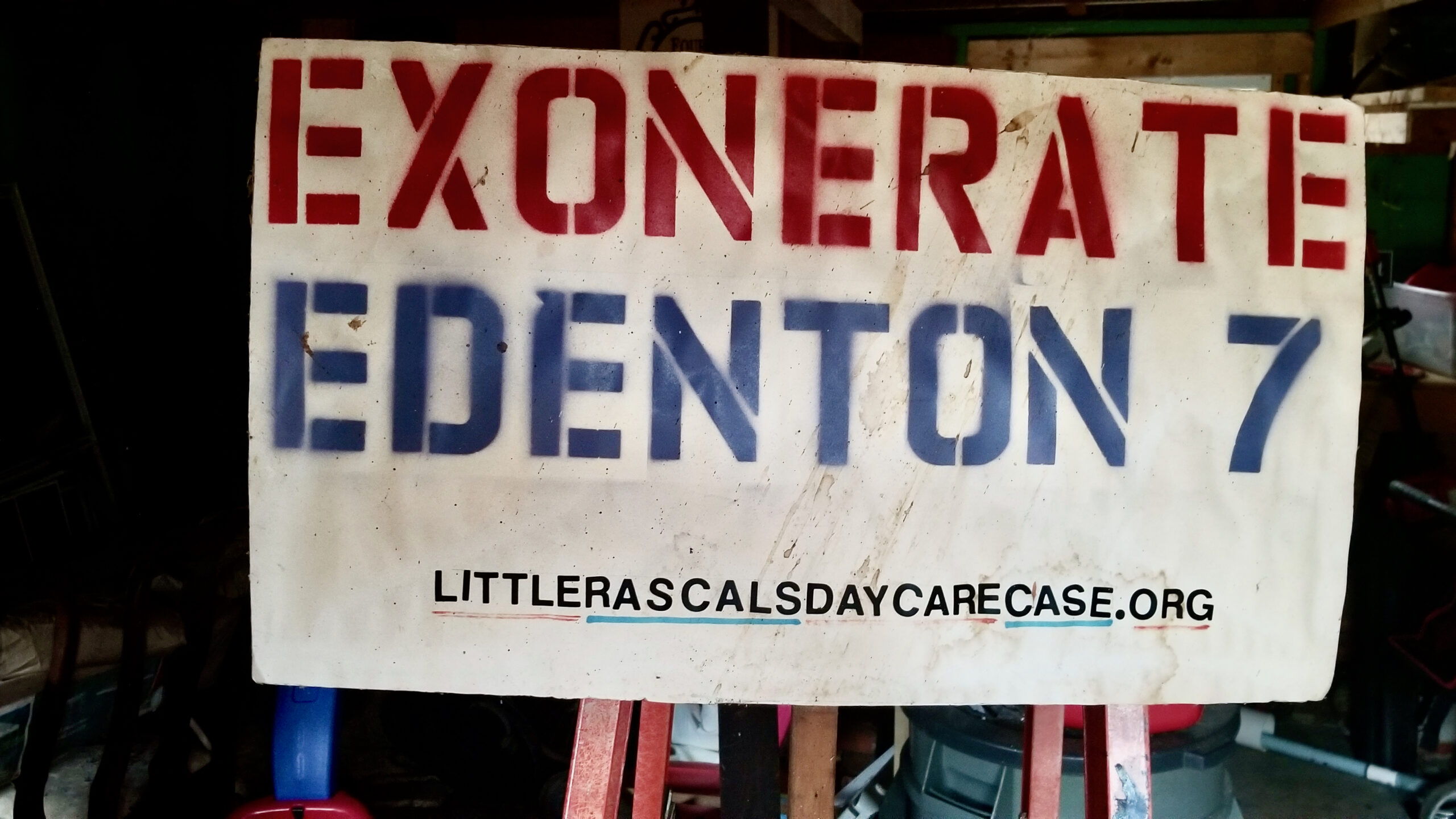
Among the alleged perpetrators: the sheriff and mayor. But prosecutors would charge only Robin Byrum, Darlene Harris, Elizabeth “Betsy” Kelly, Robert “Bob” Kelly, Willard Scott Privott, Shelley Stone and Dawn Wilson – the Edenton 7.
Along with sodomy and beatings, allegations included a baby killed with a handgun, a child being hung upside down from a tree and being set on fire and countless other fantastic incidents involving spaceships, hot air balloons, pirate ships and trained sharks.
By the time prosecutors dropped the last charges in 1997, Little Rascals had become North Carolina’s longest and most costly criminal trial. Prosecutors kept defendants jailed in hopes at least one would turn against their supposed co-conspirators. Remarkably, none did. Another shameful record: Five defendants had to wait longer to face their accusers in court than anyone else in North Carolina history.
Between 1991 and 1997, Ofra Bikel produced three extraordinary episodes on the Little Rascals case for the PBS series “Frontline.” Although “Innocence Lost” did not deter prosecutors, it exposed their tactics and fostered nationwide skepticism and dismay.
With each passing year, the absurdity of the Little Rascals charges has become more obvious. But no admission of error has ever come from prosecutors, police, interviewers or parents. This site is devoted to the issues raised by this case.
On Facebook


Little Rascals Day Care Case
This Facebook page is an offshoot of littlerascalsdaycarecase.org, which addresses the wrongful prosecution of the Edenton Seven and other such victims.

Meanwhile in Edenton....
This content isn't available right now
When this happens, it's usually because the owner only shared it with a small group of people, changed who can see it or it's been deleted.0 CommentsComment on Facebook
Allies for our cause!
This content isn't available right now
When this happens, it's usually because the owner only shared it with a small group of people, changed who can see it or it's been deleted.0 CommentsComment on Facebook
The courts have a long history of capriciously pulling the rug out from under Junior's appeals, but maybe this time....
This content isn't available right now
When this happens, it's usually because the owner only shared it with a small group of people, changed who can see it or it's been deleted.0 CommentsComment on Facebook
Click for earlier Facebook posts archived on this site
Click to go to

Today’s random selection from the Little Rascals Day Care archives….
Can we cope with seeing wrongful convictions?
 Feb. 20, 2015
“Exonerations, which were once exceedingly rare, have become regular features of the American justice system. The National Registry of Exonerations records 1,535 exonerations nationwide (including Bob Kelly and Dawn Wilson) since records began in 1989….
“The 125 wrongful convictions thrown out in 2014… might seem paltry compared to the estimated 1 million felony convictions per year, but the number of wrongful convictions is likely far higher. Many jurisdictions don’t devote the same level of resources towards exonerations that North Carolina does (with its Innocence Inquiry Commission), and even then the process can be achingly slow.
“For a justice system that exalts due process and the presumption of innocence, any wrongful conviction represents a serious breakdown of justice. Even a handful of high-profile wrongful convictions can ripple throughout the public consciousness, undermining confidence in the system. ‘The country is having to psychically cope with conclusive evidence that we make, with some regularity, errors in criminal trial outcomes,’ said (Mary Kelly Tate, director of the University of Richmond law school’s Institute for Actual Innocence).”
– From “Guilty, Then Proven Innocent” by Matt Ford at The Atlantic (Feb. 9)
‘Started as a rumor – not about molestation, not at first….’
June 24, 2013
“(I) followed the Little Rascals case closely in the Norfolk and other papers…. Moved by (its) strangeness and patent senselessness, as well as by reports nationwide at the time of what came to be tagged ‘false memory syndrome,’ I wrote and later published a short story inspired by the spectacular miscarriage of justice…. The thrust of my story was popular hysteria and jaundiced, ambitious therapists together with a grievous breakdown of the judicial system….
“I believe that behind the recovered memory and child abuse therapeutic notions of that time, so destructive of the lives of the Edenton Seven and many others, lies Freud’s almost immeasurable popular impact on our now so heavily sexualized culture – though the easy lure of the witch hunt seems to have been all too contagious in Edenton’s fearful, credulous and manipulable parents as well.”
– Historian and writer John L. Romjue of Yorktown, Va., responding to “Remembering the shame of the Little Rascals Day Care case” at North Carolina Miscellany (Oct. 24, 2011)
Although “Witches of Devon,” the title story in Mr. Romjue’s 2002 collection, veers dramatically from the course of the Little Rascals case, it does indeed capture the essence: “It had started as a rumor – and not about molestation, not at first. There had been an ‘assault’ incident at Happy Children (day care). Joanne Jamison had spanked a little girl’s bottom and not suitably apologized to the mother….”
Innocence, alas, does not guarantee exoneration
 June 11, 2012
After discovering the National Registry of Exonerations, I was happy to see that it lists Little Rascals defendants Bob Kelly and Dawn Wilson, whose convictions were overturned on appeal.
But what about Betsy Kelly and Scott Privott, who both finally accepted plea deals while maintaining their innocence, and Robin Byrum, Darlene Harris and Shelley Stone, all of whom waited years for prosecutors to drop charges?
The registry, a joint project of the University of Michigan Law School and the Center on Wrongful Convictions at Northwestern University, speaks unequivocally about “a wave of child sex abuse hysteria that swept the country….
“Starting in the early 1980s, some prosecutors, therapists and child welfare workers became
convinced that child sex abuse on a massive scale was rampant in their communities. They
believed that most of the victims were too afraid or embarrassed to discuss the abuse, so they
worked to overcome this fear and reluctance by using highly suggestive, persistent and
unrelenting questioning techniques when interviewing the young children.
“It worked. Some of the children complied and accused parents, day-care workers and adult acquaintances of numerous horrifying and bizarre acts. This led to a series of extraordinary prosecutions, many involving allegations of satanic rituals.”
Unfortunately, this acknowledgment of the moral panic doesn’t earn the remaining “Edenton 5” a listing in the registry. Here’s why, according to research assistant Ted Koehler:
“For a case to count as an exoneration for our purposes, a person convicted of a crime must be declared factually innocent by a government official or organization with authority to make such a declaration.
“If this has not happened, a person can still be exonerated if the person was relieved of all consequences of the criminal conviction by a government official with proper authority, through pardon, acquittal of the charges for which the person was originally convicted, or dismissal of those same charges. In such a case, the pardon, acquittal, dismissal or posthumous exoneration must have been the result, at least in part, of evidence of innocence that either (i) was not presented at the trial at which the person was convicted; or (ii) if the person pled guilty, was not known to the defendant or to the defense attorney and the court at the time the plea was entered.
“The Edenton case was a terrible witch hunt. Regretfully, though, because they do not meet the criteria above, Kelly’s and Privott’s guilty pleas and the dropped charges against Byrum, Stone, and Harris do not fit our definition of an exoneration, and are not listed on the registry for that reason.”
I understand the registry’s need to set the bar so high. But what a curious twist that the defendants’ only hope for exoneration lies with the same state that so unjustly prosecuted them.
It’s not just politics that make strange bedfellows
 June 23, 2014
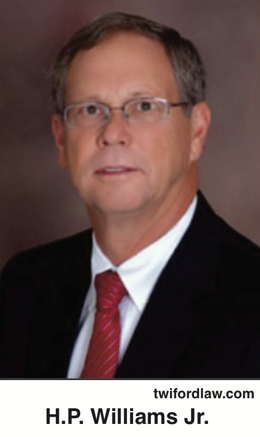
“The emphasis has got to be on the crime. Once you start using labels like satanic, sadistic or ritualistic, then you’re immediately raising a red flag…. Law enforcement, prosecutors, judges, mental health professionals and especially the general public begin to back off, because it’s so hard to believe these things happen…. We emphasized rape, sex offense, indecent liberties, crimes against nature…Those were the crimes that Bob Kelly was convicted of, those are what the jury heard evidence of….
“We let the defense attorneys bring out the sadistic and ritualistic….”
– From District Attorney H. P. Williams Jr.’s address to “From Heartbreak Through Healing: Facing the Reality of Sexual and Ritual Abuse of Children,” the first national convention of Believe the Children (April 2-4, 1993, in Arlington Heights, Ill.)
I transcribed Williams’ cautionary prosecutorial advice from audiotapes, so I can only imagine the scene on the speakers’ dais he shared with not only one of the Little Rascals mothers, but also Laura Buchanan, author of “Satan’s Child: A Survivor’s Story That Can Help Others Heal from Cultic Ritual Abuse.”
What must have Williams been thinking as Buchanan earnestly recalled that:
“We stood poised with knives in an incomprehensible world where children killed children…. Permitted to live until age four (my sister) was sacrificed by my parents…. My final programming, as a teenager, occurred on an autopsy table in the coroner’s office. A surgical procedure was staged and through a small incision in my scalp I was told that a surveillance device would be inserted into my brain. The supposed implant would be used at national headquarters to continuously monitor my thoughts. For decades the programming was extremely effective. Until the age of 44, I had no idea that my parents practiced satanism….”
With Bob Kelly and Dawn Wilson locked away, and the overturning of their convictions still two years away, DA Williams was riding high. But surely he must have experienced the slightest frisson of doubt when he saw Buchanan’s patent insanity being swallowed whole by the same audience that so enthusiastically applauded his case against the Edenton Seven.