Rascals case in brief
In the beginning, in 1989, more than 90 children at the Little Rascals Day Care Center in Edenton, North Carolina, accused a total of 20 adults with 429 instances of sexual abuse over a three-year period. It may have all begun with one parent’s complaint about punishment given her child.
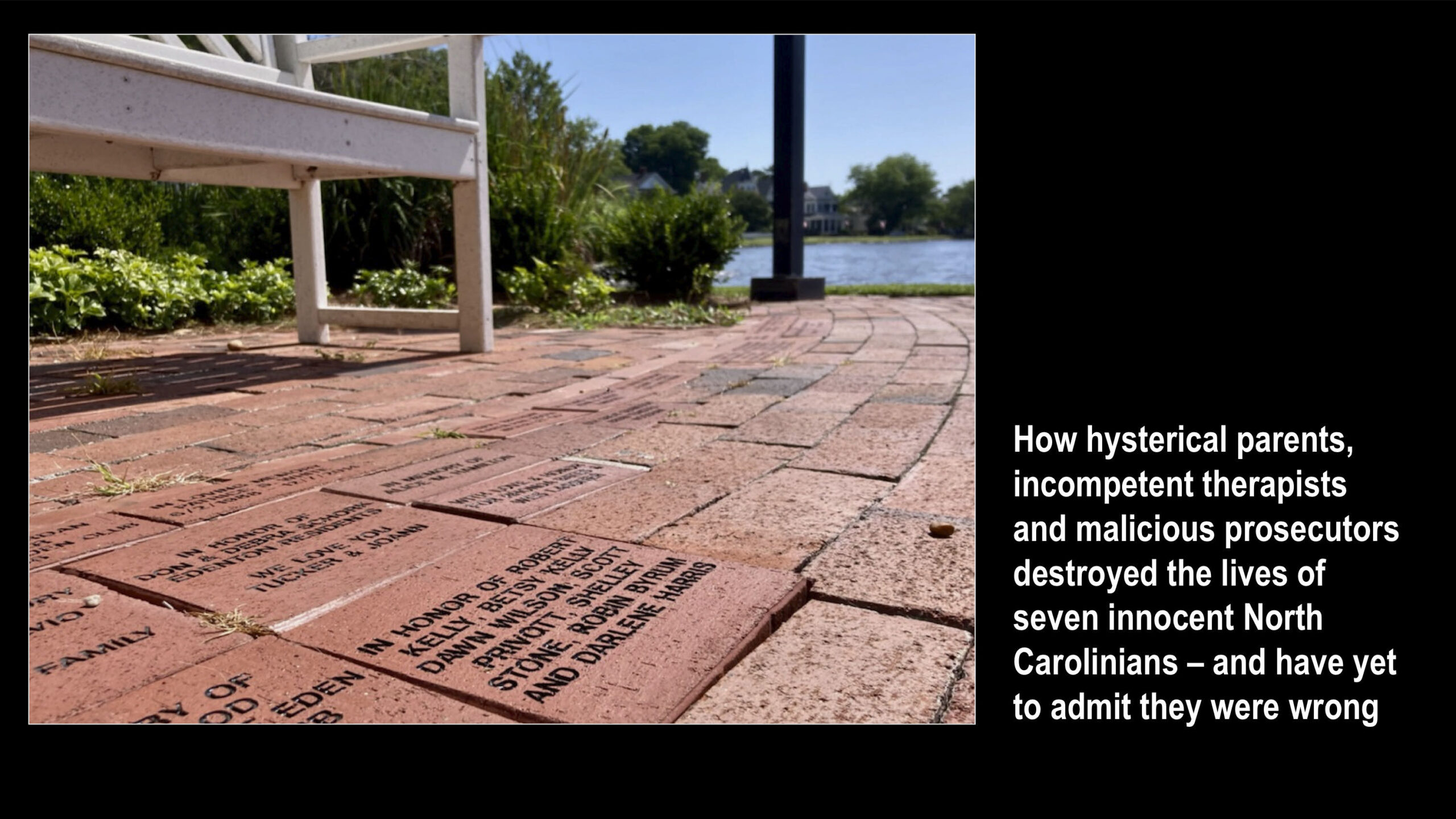
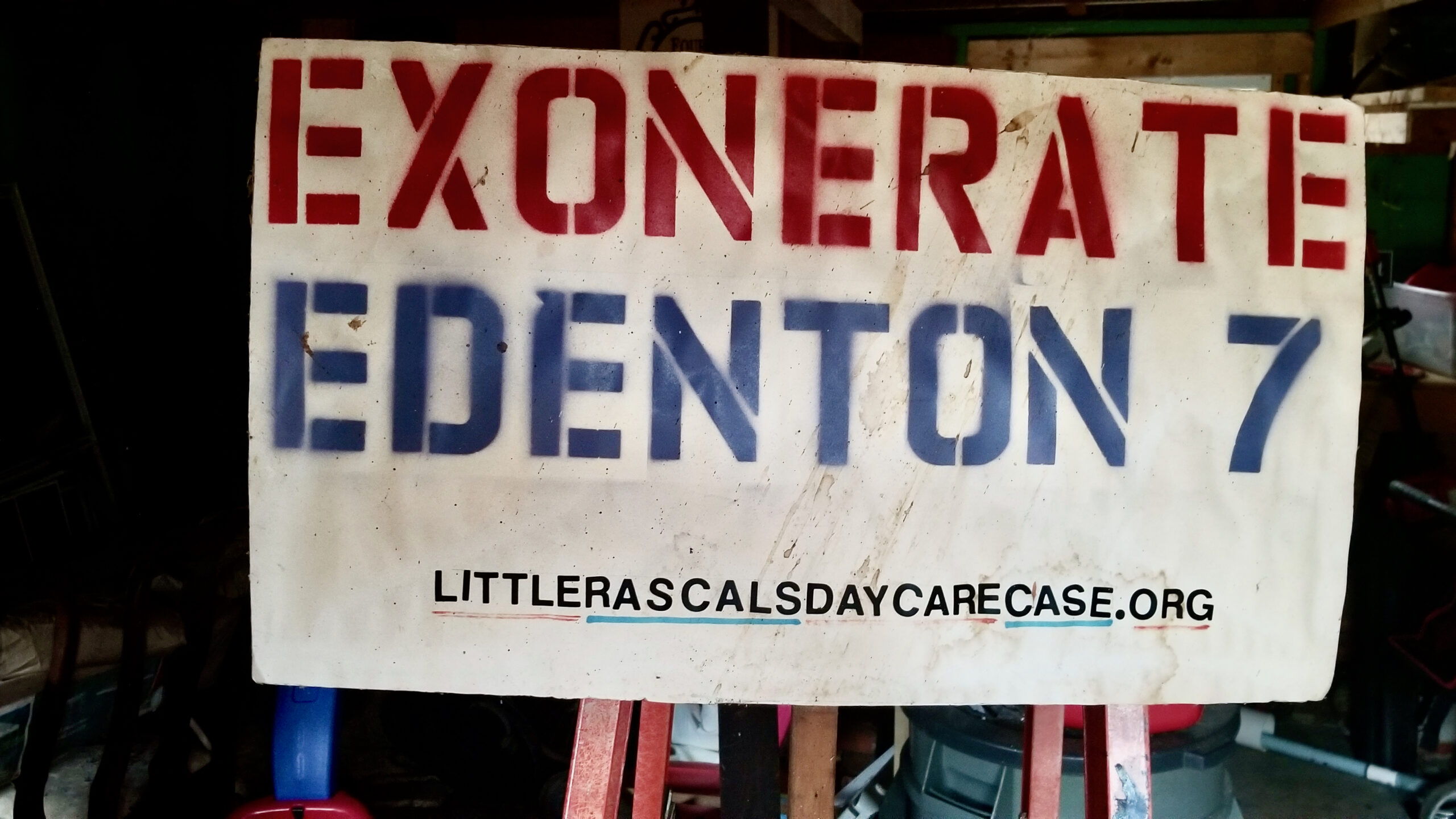
Among the alleged perpetrators: the sheriff and mayor. But prosecutors would charge only Robin Byrum, Darlene Harris, Elizabeth “Betsy” Kelly, Robert “Bob” Kelly, Willard Scott Privott, Shelley Stone and Dawn Wilson – the Edenton 7.
Along with sodomy and beatings, allegations included a baby killed with a handgun, a child being hung upside down from a tree and being set on fire and countless other fantastic incidents involving spaceships, hot air balloons, pirate ships and trained sharks.
By the time prosecutors dropped the last charges in 1997, Little Rascals had become North Carolina’s longest and most costly criminal trial. Prosecutors kept defendants jailed in hopes at least one would turn against their supposed co-conspirators. Remarkably, none did. Another shameful record: Five defendants had to wait longer to face their accusers in court than anyone else in North Carolina history.
Between 1991 and 1997, Ofra Bikel produced three extraordinary episodes on the Little Rascals case for the PBS series “Frontline.” Although “Innocence Lost” did not deter prosecutors, it exposed their tactics and fostered nationwide skepticism and dismay.
With each passing year, the absurdity of the Little Rascals charges has become more obvious. But no admission of error has ever come from prosecutors, police, interviewers or parents. This site is devoted to the issues raised by this case.
On Facebook


Little Rascals Day Care Case
This Facebook page is an offshoot of littlerascalsdaycarecase.org, which addresses the wrongful prosecution of the Edenton Seven and other such victims.

Meanwhile in Edenton....
This content isn't available right now
When this happens, it's usually because the owner only shared it with a small group of people, changed who can see it or it's been deleted.0 CommentsComment on Facebook
Allies for our cause!
This content isn't available right now
When this happens, it's usually because the owner only shared it with a small group of people, changed who can see it or it's been deleted.0 CommentsComment on Facebook
The courts have a long history of capriciously pulling the rug out from under Junior's appeals, but maybe this time....
This content isn't available right now
When this happens, it's usually because the owner only shared it with a small group of people, changed who can see it or it's been deleted.0 CommentsComment on Facebook
Click for earlier Facebook posts archived on this site
Click to go to

Today’s random selection from the Little Rascals Day Care archives….
APSAC official acknowledges ‘granddaddy of our “oops!”’
Oct. 9, 2016
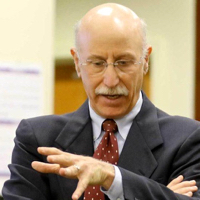
Paul J. Stern, recently retired prosecutor in Snohomish County, Wash., has long served the American Professional Society on the Abuse of Children as a board member and as an instructor on forensic interviewing.
At the least his June presentation to a large audience of APSAC conventioneers promised to be provocative: “What Practices Are We Engaging in Now That 15 Years From Now We’re Going to Look Back on and Think ‘What in the World Were We Thinking?’ ”
But the title paled in comparison with what Stern went on to say about the rap sheet of this ostensibly professional organization – its serial gullibility about “satanic ritual abuse,” “multiple personality disorder” and various other “misguided ideas.”
Click below to watch a video of Paul J. Stern’s entire talk.
He rambles, and the video suffers from not showing his accompanying PowerPoint. But the case he makes is powerful, unmistakable and surely discomfiting to audience members such as President Emeritus for Life Jon Conte and Board Member at Large Kathleen Coulborn Faller.
“I may irritate a few of you from time to time,” he noted as he began.
Some excerpts, edited for clarity:
- “I want to start by going back to the ’60s, the ’80s, the things we cared about then…. Some of the things we’ve grown up from in this field…. What were we thinking back then?… Oy! (clutches head, steps away from lectern)….What the hell were we thinking?….”
- “Let’s get the granddaddy of our ‘Oops!’ out of the way: ‘satanic ritual abuse.’ Individuals and agencies that weren’t skeptical failed to recognize that all of the iceberg that existed was the tip….And that melted pretty quickly…”
- “This matters [because] prosecutors sentenced people to prison based on good, scientific evidence that turned out not to be accurate.”
- “Why does all this happen? Child abuse is both an advocacy field and a political field. We’ve got to energize the base, energize the policymakers, get their attention…. Easy answers manage anxiety, and they get attention. ‘Kids never lie!’ ‘Believe the children!’ Great slogans, great bumper stickers, but it’s a little more complicated than that….”
Prosecutor Stern continued with a call for APSAC to focus on “evidence-based decision-making,” but I remained stunned by his acknowledgement of decades of APSAC’s cocky, costly wrongheadedness. Yes, innocent defendants such as Bob Kelly did indeed go to prison based on unfounded theories and corrupt interview practices.
Thank you, Mr. Stern, for your candor. Will this moment turn out to be an aberration – or is APSAC finally ready to make amends to the real victims of its “satanic ritual abuse” mythology?

Kids say the darndest things… eventually
 April 24, 2015
“As was made clear repeatedly upon testimony by experts, the very first reports of the children were the ones that would be most critical in determining whether sexual abuse had indeed occurred. Yet in the first interviews, the children said almost nothing of any interest with regard to sexual abuse, and the police officer who conducted these hearings destroyed all of her notes and all of her tapes of what happened before the case went to court. She was approached by several of the mothers initially because she had taken a short course in investigating cases of child abuse.
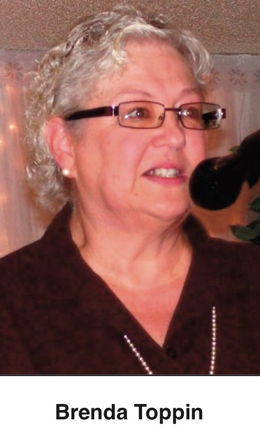
“Officer (Brenda) Toppin was crucial to the whole process because she was the one who escalated the case from a minor complaint by one parent into a case of massive sexual abuse of dozens of children by scores of day-care workers.”
– From “Understanding The Crucible: A Student Casebook to Issues, Sources, and Historical Documents” by Claudia Durst Johnson and Vernon Johnson (1998)
Another expert unfazed by being completely wrong
 July 9, 2012
What happens to a social scientist who builds her career on exposing illusory “sex rings” and “ritual abuse” at day cares? And, more specifically, whose seminar at Kill Devil Hills apparently seeded the hysteria behind the prosecution of the Edenton Seven?
If you’re Ann Wolbert Burgess, it’s no problem. You just plunge ahead – and don’t look back.
Here’s how Debbie Nathan and Michael Snedeker described Burgess in 2001 in “Satan’s Silence: Ritual Abuse and the Making of a Modern American Witch Hunt”:
“promoter of the use of children’s drawings to diagnose sexual abuse, developer of the idea of the sex ring, participant in developing the case that imprisoned the Amirault family and currently a researcher into the traumatic aftereffects of ritual abuse.”
For some people, that would be a career’s worth of wrongheaded ideas. But Burgess, now professor of psychiatric mental health nursing at Boston College, continues to accumulate merit badges on new topics such as heart attack victims, AIDS, infant kidnapping, online predators, nursing home abuse, women in prison, mass murder and elder abuse. Here she is in Raleigh on May 29 testifying as “an expert in crime scene classification and offender typology.”
Whew.
I’ve asked Dr. Burgess to reflect on Little Rascals and other examples of ritual abuse prosecutions. Too bad the subject didn’t come up when she was on the witness stand in Raleigh.
Privott’s allies found way around $1 million bail
 Feb. 3, 2012
Glenn Lancaster, a Raleigh pay-phone executive, played a key part in facilitating life-after-incarceration for both Bob Kelly and Scott Privott.
I asked Glenn to recall how he became involved in the Little Rascals case:
“I had lived in Windsor, about 20 miles west of Edenton. I knew some of the Little Rascals parents but none of the Edenton Seven.
“I hadn’t paid that much attention to the case, but the truth seemed pretty clear, especially when the prosecution couldn’t persuade even one of the seven to turn state’s evidence.
“After I moved to Cary, I saw a story about Scott in the News & Observer (in 1993). He had been in (the Chowan County) jail for more than three years with no trial in sight and a $1 million bond.
“I wrote Scott offering to send him magazines and to cover some gas money for his wife to visit, as she had moved to the Outer Banks. He put me in touch with a lady in Edenton, who told me about other supporters.
“I called Scott’s attorney and asked why he hadn’t tried to lower the bail. I told him we could cover $50,000 and I would give Scott a job and a place to live.
“When the attorney asked the judge to reduce the bond to $50,000, he agreed on the spot! Over the next few days, several people came to the Clerk of Courts office in Edenton and posted land and cash. One man from Washington, N.C., brought a $25,000 check. When it was all counted, they were still a few hundred dollars short. I was told the Clerk of Court reached into his own pocket and posted the difference.
“Everyone in the jail knew Scott was innocent, and as he left jail the staff shook his hand. Scott’s wife showed up to tell him she was now living with a UPS driver and he could not come to her home. A supporter loaded up a cardboard box of Scott’s jail property – 6 or 8 paperback books, a radio and the stack of clothes his wife had brought him – and delivered him to a hotel in Cary around 5 p.m. There I met and spoke to Scott for the first time.
“When we returned to the hotel two hours later to take him to dinner, he told me he had spent most of that time standing in the shower. It was the first time in over three years he could set his own temperature and shower as long as he chose.”