Rascals case in brief
In the beginning, in 1989, more than 90 children at the Little Rascals Day Care Center in Edenton, North Carolina, accused a total of 20 adults with 429 instances of sexual abuse over a three-year period. It may have all begun with one parent’s complaint about punishment given her child.
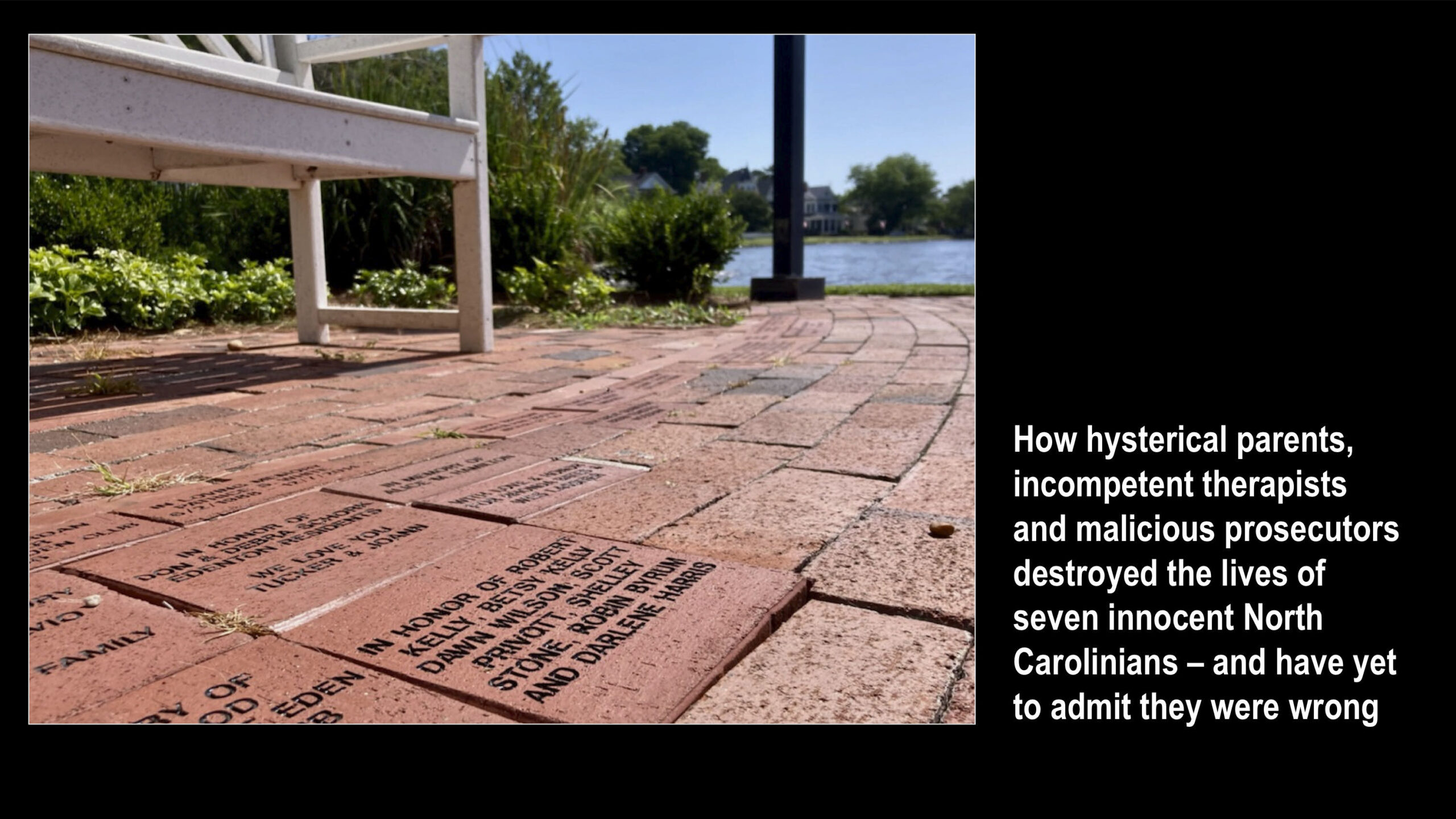
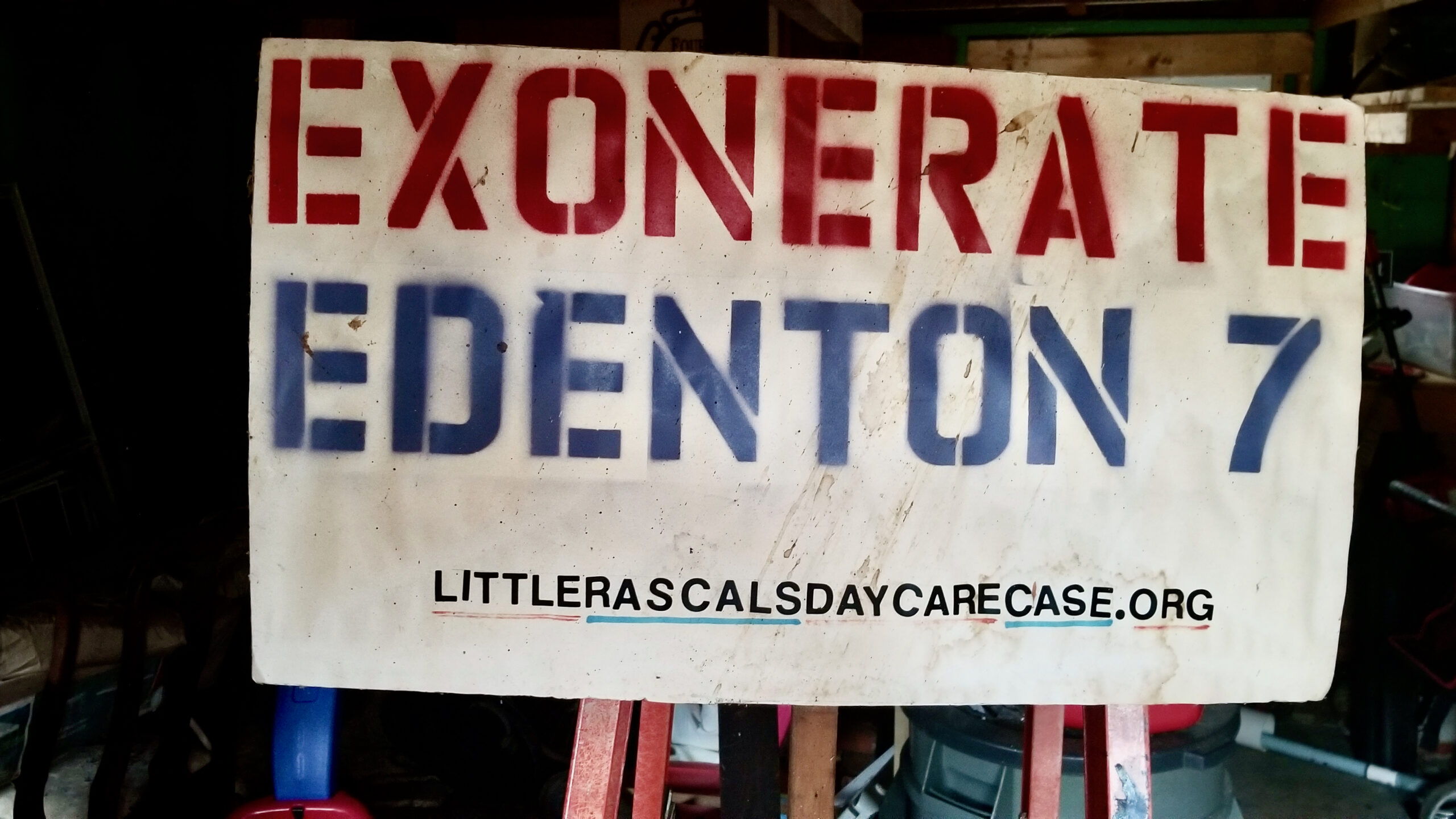
Among the alleged perpetrators: the sheriff and mayor. But prosecutors would charge only Robin Byrum, Darlene Harris, Elizabeth “Betsy” Kelly, Robert “Bob” Kelly, Willard Scott Privott, Shelley Stone and Dawn Wilson – the Edenton 7.
Along with sodomy and beatings, allegations included a baby killed with a handgun, a child being hung upside down from a tree and being set on fire and countless other fantastic incidents involving spaceships, hot air balloons, pirate ships and trained sharks.
By the time prosecutors dropped the last charges in 1997, Little Rascals had become North Carolina’s longest and most costly criminal trial. Prosecutors kept defendants jailed in hopes at least one would turn against their supposed co-conspirators. Remarkably, none did. Another shameful record: Five defendants had to wait longer to face their accusers in court than anyone else in North Carolina history.
Between 1991 and 1997, Ofra Bikel produced three extraordinary episodes on the Little Rascals case for the PBS series “Frontline.” Although “Innocence Lost” did not deter prosecutors, it exposed their tactics and fostered nationwide skepticism and dismay.
With each passing year, the absurdity of the Little Rascals charges has become more obvious. But no admission of error has ever come from prosecutors, police, interviewers or parents. This site is devoted to the issues raised by this case.
On Facebook


Little Rascals Day Care Case
This Facebook page is an offshoot of littlerascalsdaycarecase.org, which addresses the wrongful prosecution of the Edenton Seven and other such victims.

Meanwhile in Edenton....
This content isn't available right now
When this happens, it's usually because the owner only shared it with a small group of people, changed who can see it or it's been deleted.0 CommentsComment on Facebook
Allies for our cause!
This content isn't available right now
When this happens, it's usually because the owner only shared it with a small group of people, changed who can see it or it's been deleted.0 CommentsComment on Facebook
The courts have a long history of capriciously pulling the rug out from under Junior's appeals, but maybe this time....
This content isn't available right now
When this happens, it's usually because the owner only shared it with a small group of people, changed who can see it or it's been deleted.0 CommentsComment on Facebook
Click for earlier Facebook posts archived on this site
Click to go to

Today’s random selection from the Little Rascals Day Care archives….
Ever so slowly, progress made toward DAs’ accountability
July 1, 2016
“Prosecutors should have to disclose evidence of innocence obtained after a person is convicted, a North Carolina State Bar panel agreed Wednesday.
“The ethics subcommittee voted 3-2 at a meeting in Greensboro to support the general principle that a prosecutor’s duty to disclose innocence evidence continues after a defendant is sentenced, although the members didn’t settle on specific language. A federal prosecutor and a former district attorney opposed the motion, while three attorneys in private practice supported it….
“The North Carolina Conference of District Attorneys had said in a letter to the State Bar that prosecutors say that the rule is unnecessary….
“The panel is just the first step in a lengthy process that – if the rule is approved at each step – involves the full ethics committee, public comment, the full State Bar Council and finally, the state Supreme Court.”
– From “NC panel: Innocence evidence right continues after sentence” by Martha Waggoner of the Associated Press (June 29)
Read more here.

UNC psychologist still thinks kids aren’t suggestible

Sept. 10, 2017
“With no conclusive DNA evidence, medical evidence of penetration or an eyewitness to the alleged assault, both prosecution and defense relied on expert witnesses to speak to the reliability of a young child’s testimony and whether it had been tainted by outside factors, such as how her mother had pressed her about whether she was touched… and how child advocacy center staff had interviewed her….
“ ‘Did [the 6-year-old girl] lie? I don’t know, and the problem is, neither does anyone else,’ [Marine Col. Daniel] Wilson’s civilian attorney Phil Stackhouse said in a closing argument…. Stackhouse pointed out that she had twice denied to her mother being touched by Wilson before she said he had.
“A government witness, Dr. Mark Everson, an expert on childhood trauma at the University of North Carolina, had testified that 6-year-olds are remarkably resilient to suggestion, or the planting of false memories….”
– From “Jury Deliberates Over Colonel Accused of Child Sex Assault” by Hope Hodge Seck at military.com (Sept. 9)
Yes, that’s the same Mark Everson who helped persuade a jury that Bob Kelly was guilty of 99 counts of child sexual abuse.
Everson, a UNC psychologist, disputed well-accepted research that children are suggestible and should not be repeatedly interrogated by therapists. Even 10 years later, he found it hard to believe that every Little Rascals child-witness had been badly interviewed and confused: “There’s so much smoke there, it’s hard to imagine there’s no fire.”
Update: A military court at Camp Lejeune found Col. Wilson guilty of child molestation.
Day-care teachers ‘as helpless as a clay pigeon’
Aug. 28, 2013
“It’s not by chance that day care centers are the sites of magical molestation, and not public schools with their powerful lobbies and unions…. Those primary and secondary school teachers’ organizations provide protection and security for their members, much as the AMA protects doctors and the ABA protects lawyers.
“It’s only you – a day care teacher – who has no protection at all. If hysterical parents gang up and attack you, you are as helpless as a clay pigeon in a shooting gallery.”
– From “Magical Child Molestation Trials: Edenton’s Children Accuse” by Margaret Leong (1993)
Are mistaken prosecutors silenced by shame?
 Jan. 31, 2015
“ ‘You need to try to rectify whatever error you made,’ says Santa Clara County, California, Special Assistant District Attorney David Angel. ‘But it needs to really shift from this kind of highly moralistic, punitive view. Maybe it’s a cause for embarrassment, but it’s not a cause for shame.’
“He believes prosecutors have drawn the short straw in language, noting that defense attorneys who err are called ‘ineffective’ and judges are ‘reversed,’ while prosecutorial error alone is labeled ‘misconduct,’ with all the attendant negative connotations.
“Angel believes that most prosecutors are willing to admit to mistakes but that ‘people are very hesitant to admit to something that’s called “misconduct,” because it makes you feel like you did something morally wrong.’ ”
– From “Why can’t law enforcement admit their mistakes?” by Sue Russell at Pacific Standard (via Salon, Oct. 21, 2012)
The concept becomes trickier, however, the longer prosecutors cling to their fallacious and costly narratives. At some point – oh, let’s say 25 years later – might “mistakes” have toxified into “misconduct”?