Rascals case in brief
In the beginning, in 1989, more than 90 children at the Little Rascals Day Care Center in Edenton, North Carolina, accused a total of 20 adults with 429 instances of sexual abuse over a three-year period. It may have all begun with one parent’s complaint about punishment given her child.
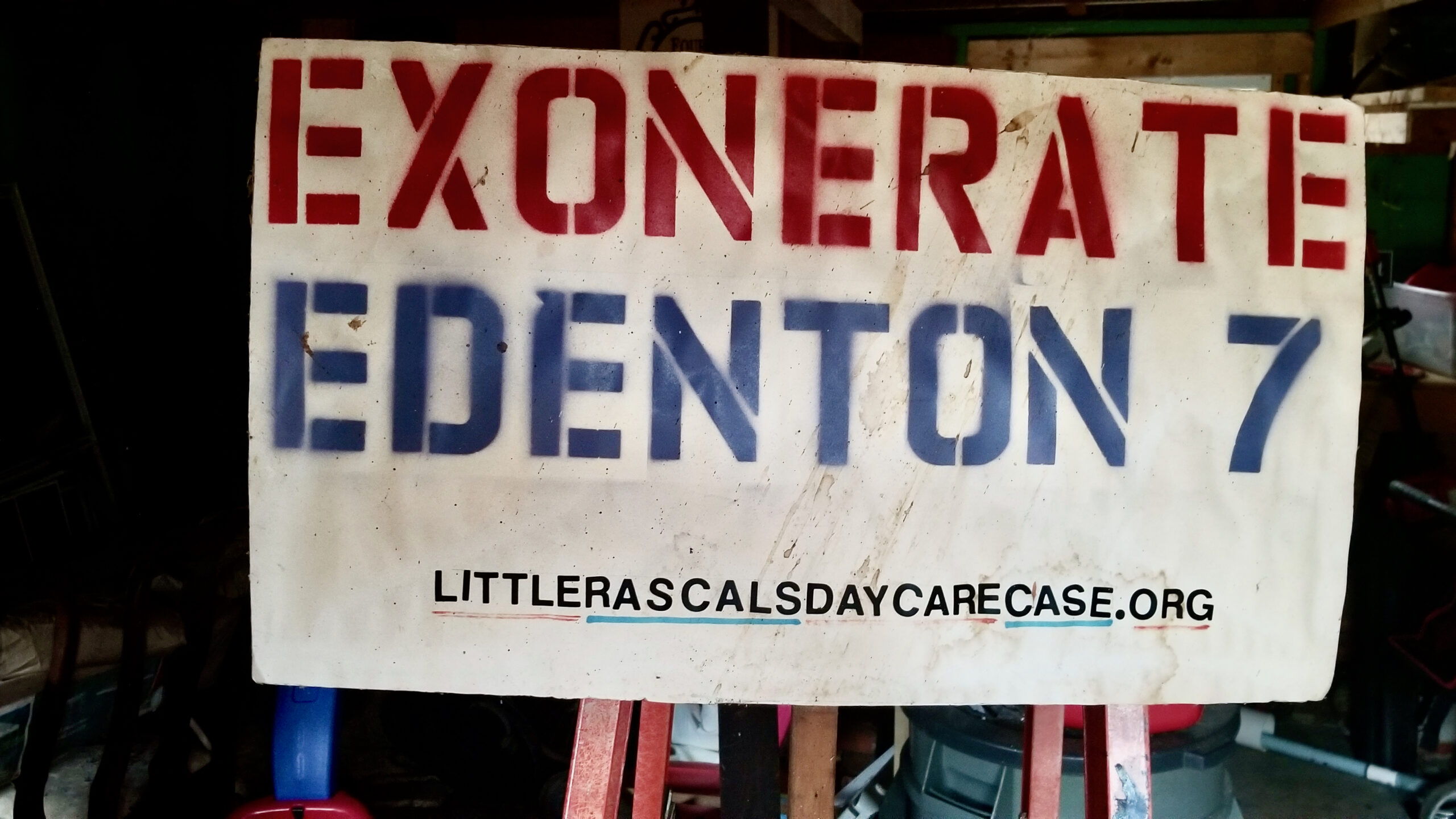
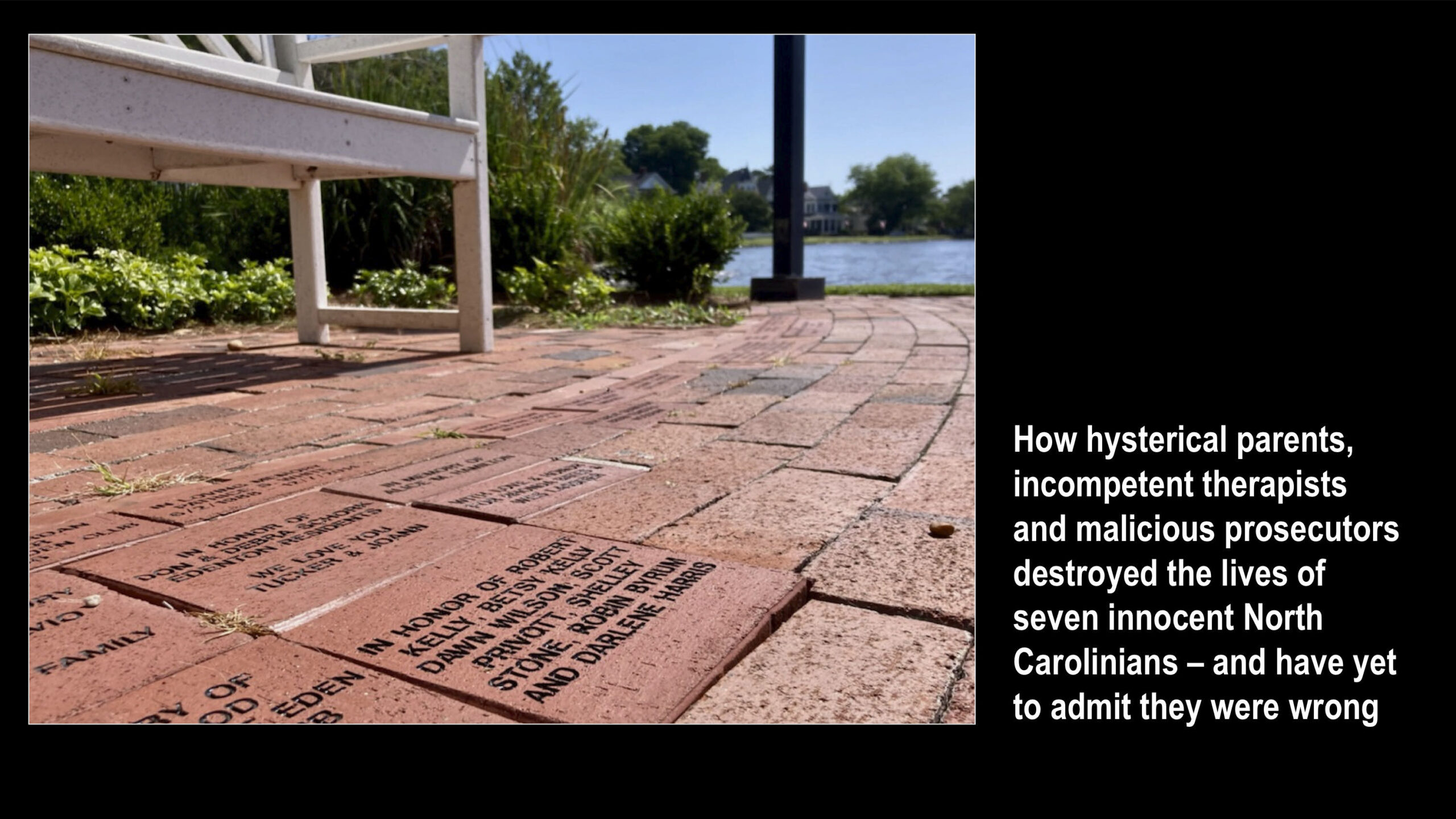
Among the alleged perpetrators: the sheriff and mayor. But prosecutors would charge only Robin Byrum, Darlene Harris, Elizabeth “Betsy” Kelly, Robert “Bob” Kelly, Willard Scott Privott, Shelley Stone and Dawn Wilson – the Edenton 7.
Along with sodomy and beatings, allegations included a baby killed with a handgun, a child being hung upside down from a tree and being set on fire and countless other fantastic incidents involving spaceships, hot air balloons, pirate ships and trained sharks.
By the time prosecutors dropped the last charges in 1997, Little Rascals had become North Carolina’s longest and most costly criminal trial. Prosecutors kept defendants jailed in hopes at least one would turn against their supposed co-conspirators. Remarkably, none did. Another shameful record: Five defendants had to wait longer to face their accusers in court than anyone else in North Carolina history.
Between 1991 and 1997, Ofra Bikel produced three extraordinary episodes on the Little Rascals case for the PBS series “Frontline.” Although “Innocence Lost” did not deter prosecutors, it exposed their tactics and fostered nationwide skepticism and dismay.
With each passing year, the absurdity of the Little Rascals charges has become more obvious. But no admission of error has ever come from prosecutors, police, interviewers or parents. This site is devoted to the issues raised by this case.
On Facebook


Little Rascals Day Care Case
This Facebook page is an offshoot of littlerascalsdaycarecase.org, which addresses the wrongful prosecution of the Edenton Seven and other such victims.

Meanwhile in Edenton....
This content isn't available right now
When this happens, it's usually because the owner only shared it with a small group of people, changed who can see it or it's been deleted.0 CommentsComment on Facebook
Allies for our cause!
This content isn't available right now
When this happens, it's usually because the owner only shared it with a small group of people, changed who can see it or it's been deleted.0 CommentsComment on Facebook
The courts have a long history of capriciously pulling the rug out from under Junior's appeals, but maybe this time....
This content isn't available right now
When this happens, it's usually because the owner only shared it with a small group of people, changed who can see it or it's been deleted.0 CommentsComment on Facebook
Click for earlier Facebook posts archived on this site
Click to go to

Today’s random selection from the Little Rascals Day Care archives….
The ugly truth about ‘Nancy Lamb’s state of mind’
 March 14, 2012
“Prosecutor Nancy Lamb practiced a little ‘voodoo’ psychology by telling the jury that when Dawn Wilson held and played with her child during breaks in the trial, it wasn’t because she loved the child – it was all a show for the benefit of the jury.
“No psychologist could have accurately reported on the state of mind or the motives of Wilson when she played with her child. However, had a psychologist known that Wilson had been offered a plea bargain which included no jail time if she pointed the finger at the others, and had told prosecutors to ‘Find yourselves another patsy,’ that psychologist might have known something about Nancy Lamb’s state of mind when she made those statements.”
– From “Due Process Is Good Psychology,” article in
Michigan Lawyer Weekly by Michael G. Brock
Defending this smear, one of many, Lamb said Wilson was presenting herself as a good mother, and “We had to remove that mask.”
In 1995 the N.C. Court of Appeals overturned her conviction. And then of course the prosecutors rushed to apologize to Dawn Wilson for their disgraceful vilification.
‘Have you ever stopped to consider…?’
July 31, 2013
“Have you ever stopped to consider what the statistical odds must be against the following allegations made by the prosecution? How could the following all be true?
“1. That seven child abusers would somehow all show up at the Little Rascals Day Care during the same time period.
“2. That out of these seven alleged abusers not one had any record of any sexual misbehavior in their past.
“3. That out of all seven of these alleged abusers not one was found to be in possession of any child pornography or other suggestive materials.
“4. That with multiple-hundreds of alleged abuses claimed to have taken place, not one single piece of ‘hard’ evidence was ever found. Nor was there a single adult witness to any behavior even suggestive of abuse.
“5. That out of all seven of these alleged abusers, not one would be willing to testify against the others in return for easier treatment.”
– From a Feb. 22, 1994, letter sent to prosecutors and the press by Jeffrey Keimer of Portola Valley, Calif.
These are questions that occurred to someone following the Little Rascals case from 3,000 miles away. Too bad they seem not to have occurred to so many prosecutors, therapists, parents, reporters and jurors. Up close, was the “ritual abuse” narrative simply too mesmerizing?
How hard it was to say, ‘Boy, was I wrong’
 Aug. 10, 2012
Carol Tavris:
“After the McMartin trial in 1986, I wrote an article for the Los Angeles Times about research that had been done on how to interview children in sex abuse cases. Evidence at the time suggested that sometimes you have to ask children leading questions or they will not tell you they have been molested.
“For example, if you interviewed a child after a genital examination and you asked her just to tell what the doctor did, almost no child would volunteer that the doctor touched her genitals. But if you asked a leading question, such as, ‘The doctor touched your private parts, didn’t he?’ the children would say ‘yes.’ The L.A. Times headlined this article, ‘Do Children Lie? Not About This.’
“Of course that was preposterous. Of course children lie ‘about this’ and lots of other things. But my essay, although based on research at the time, helped support the child advocates who were on a rampage against child molesters, and who were running around saying ‘children never lie’ and selling bumper stickers that said ‘Believe the Children.’’ I didn’t foresee that prosecutors and therapists would use these same studies to coerce the hell out of kids.
“When I think of my own embarrassment about that little article, and how hard it was to say, ‘Boy, was I wrong about that research,’ I realize how difficult it must be for all those ‘believe the children’ people to acknowledge they were wrong, too. In fact, most of them haven’t. They are more entrenched than ever in their pernicious beliefs.”
– From “The Measure of a Woman: An Interview with Social Scientist Carol Tavris”
in Skeptic magazine (Feb. 9, 2011)
Day-care panic rooted in more than sex-role changes
Sept. 23, 2016
“We Believe the Children” offers a clear explanation of how a then-novel crusade for child welfare and a murk of neo-Freudian psychological theory together drove officials to find suppressed trauma where none existed, and [Richard] Beck also cites the popular nonfiction books Sybil (1973) and Michelle Remembers (1980) for their role in spreading acceptance of Multiple Personality Disorder and Satanic Ritual Abuse as authentic phenomena.
“He further argues that the day care scandals represented a conservative backlash on behalf of traditional family structures, in which fathers worked while mothers stayed at home to raise children, over the newer model of two busy parents dropping their kids off with professionals. In this reading, the contemporaneous wave of incest survivor memoirs and self-publicizing MPD victims likewise reinforced the traditionalist ideal of helpless females unable to cope in a modern society that gave women too much sexual and career freedom.
“Maybe. Yet Beck only devotes a paragraph or two to the burgeoning pop-culture fascination with the occult which preceded the Satanic panic, and it’s worth pointing out that, despite hit films like The Godfather and Scarface, no one in the 1980s was accused of recruiting children into a mobster underworld, and despite turmoil in the Middle East, day cares were not suspected of being fronts for Islamic terrorists.
“Rather, the emphasis on perversion, ritual killing, and cultism which characterized the scare drew on obvious sources in the mass entertainment of the mid-1960s onward. As I’ve written in my book Here’s To My Sweet Satan: How the Occult Haunted Music, Movies, and Pop Culture, 1966-1980,
For a culture accustomed to the bloody rampages of Charles Manson, the shameless perversities of Anton LaVey, and the no-holds-barred gross-outs of The Exorcist, such combinations of cruelty, vulgarity, and the occult [in the McMartin charges] were no longer surprising.…For a long time the public had been bombarded with messages of what Satan and Satanists were like, of the words, images, and symbols associated with devil worship, and especially of how children were Satan’s favorite victims. It had all finally proved too much for some people.
“I believe it’s this influence that fostered the climate for McMartin and other travesties, at least as much as any right-wing fantasies about dutiful moms and dangerous outsiders….”
– From “Children of the Grave” by Canaadian author and blogger George Case (Sept. 23)
An earlier challenge to Beck’s emphasis on conservative backlash points a finger at feminism.
