Rascals case in brief
In the beginning, in 1989, more than 90 children at the Little Rascals Day Care Center in Edenton, North Carolina, accused a total of 20 adults with 429 instances of sexual abuse over a three-year period. It may have all begun with one parent’s complaint about punishment given her child.
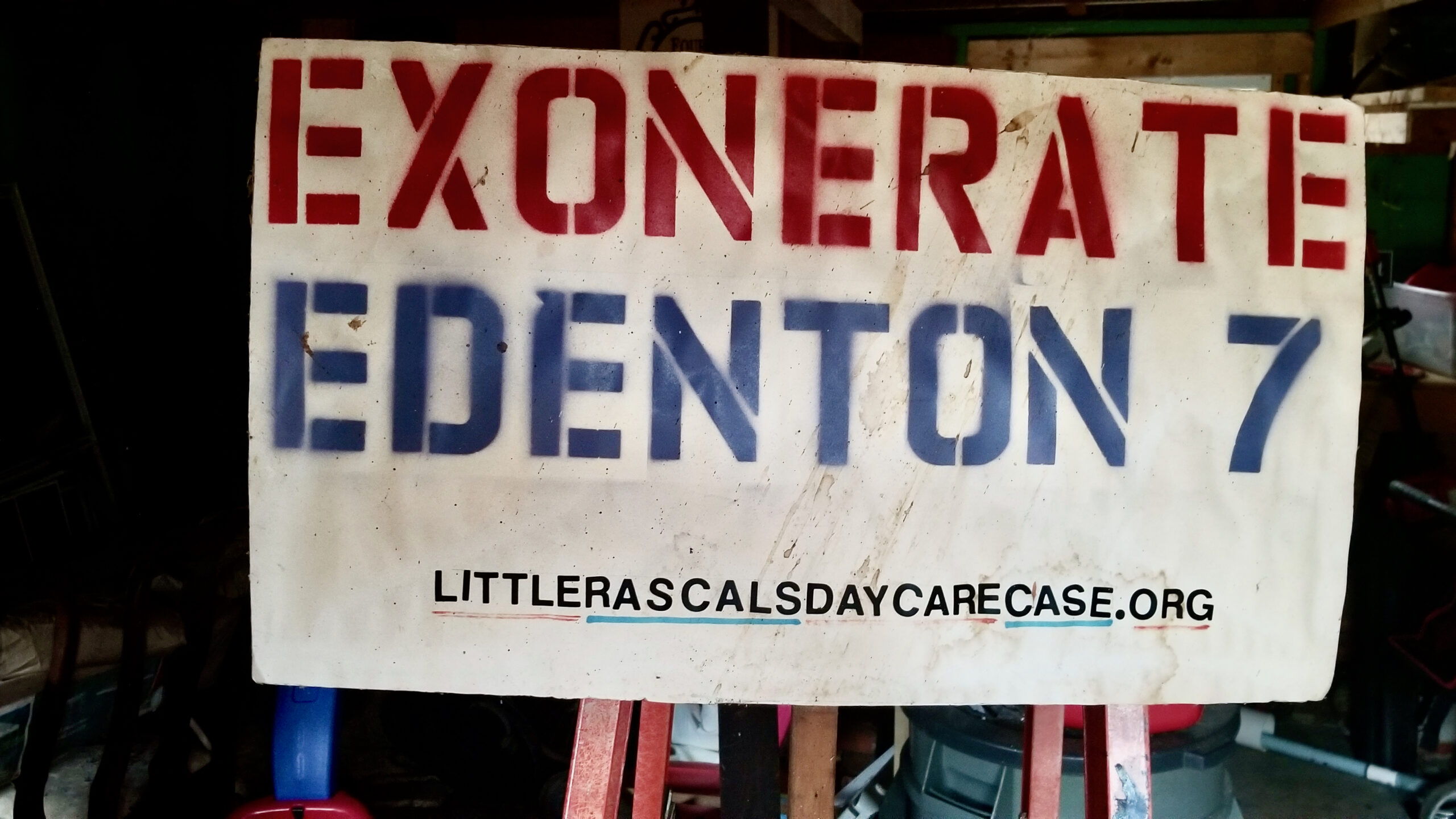
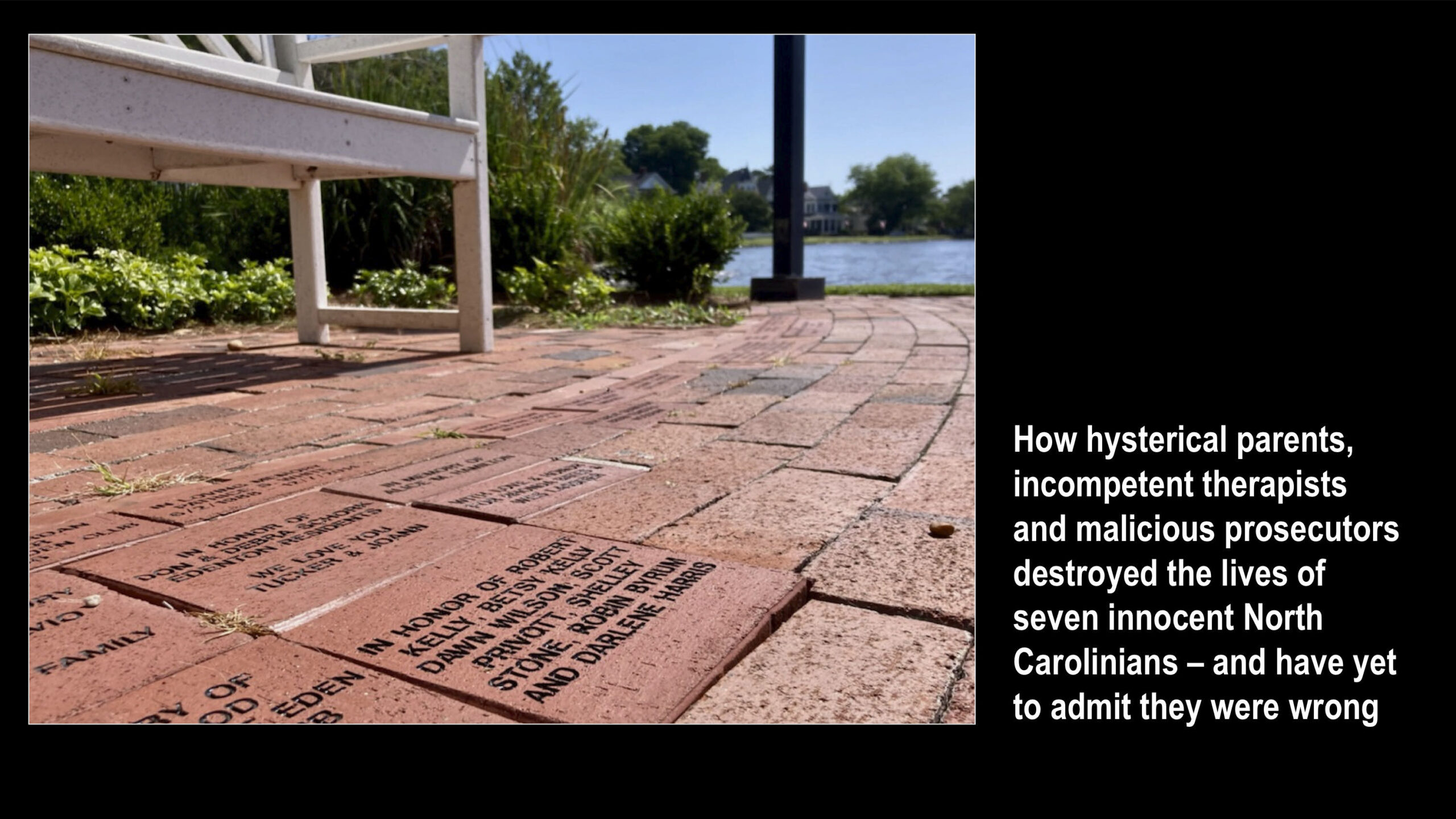
Among the alleged perpetrators: the sheriff and mayor. But prosecutors would charge only Robin Byrum, Darlene Harris, Elizabeth “Betsy” Kelly, Robert “Bob” Kelly, Willard Scott Privott, Shelley Stone and Dawn Wilson – the Edenton 7.
Along with sodomy and beatings, allegations included a baby killed with a handgun, a child being hung upside down from a tree and being set on fire and countless other fantastic incidents involving spaceships, hot air balloons, pirate ships and trained sharks.
By the time prosecutors dropped the last charges in 1997, Little Rascals had become North Carolina’s longest and most costly criminal trial. Prosecutors kept defendants jailed in hopes at least one would turn against their supposed co-conspirators. Remarkably, none did. Another shameful record: Five defendants had to wait longer to face their accusers in court than anyone else in North Carolina history.
Between 1991 and 1997, Ofra Bikel produced three extraordinary episodes on the Little Rascals case for the PBS series “Frontline.” Although “Innocence Lost” did not deter prosecutors, it exposed their tactics and fostered nationwide skepticism and dismay.
With each passing year, the absurdity of the Little Rascals charges has become more obvious. But no admission of error has ever come from prosecutors, police, interviewers or parents. This site is devoted to the issues raised by this case.
On Facebook


Little Rascals Day Care Case
This Facebook page is an offshoot of littlerascalsdaycarecase.org, which addresses the wrongful prosecution of the Edenton Seven and other such victims.

Meanwhile in Edenton....
This content isn't available right now
When this happens, it's usually because the owner only shared it with a small group of people, changed who can see it or it's been deleted.0 CommentsComment on Facebook
Allies for our cause!
This content isn't available right now
When this happens, it's usually because the owner only shared it with a small group of people, changed who can see it or it's been deleted.0 CommentsComment on Facebook
The courts have a long history of capriciously pulling the rug out from under Junior's appeals, but maybe this time....
This content isn't available right now
When this happens, it's usually because the owner only shared it with a small group of people, changed who can see it or it's been deleted.0 CommentsComment on Facebook
Click for earlier Facebook posts archived on this site
Click to go to

Today’s random selection from the Little Rascals Day Care archives….
What is ‘appropriate indemnity’ for wrongful prosecution?

June 21, 2016
“One of the earliest arguments for financial compensation for the wrongly incarcerated came in 1932, from the Yale law professor Edwin Borchard. In an influential book called ‘Convicting the Innocent: Sixty-five Actual Errors of Criminal Justice,’ Borchard wrote, ‘When it is discovered after conviction that the wrong man was condemned, the least the State can do to right this essentially irreparable injury is to reimburse the innocent victim, by an appropriate indemnity for the loss and damage suffered.’ He noted, ‘European countries have long recognized that such indemnity is a public obligation.’ But it would be many years before the United States began puzzling through what constituted an ‘appropriate indemnity.’ It wasn’t until the first DNA exoneration, in 1989, that most states began to seriously consider compensation.
“There is still no consensus about the value of lost time. Missouri gives exonerees $50 a day for time served, California twice that much. Massachusetts caps total compensation at $500,000. In Maine, the limit is $300,000; in Florida, it’s $2 million. The variation is largely arbitrary. ‘If there’s a logic to it, I haven’t seen it,’ Robert J. Norris, a researcher at SUNY Albany who has studied compensation statutes, told me…. Twenty states have no compensation statutes at all.”
– From “The Price of a Life: What’s the right way to compensate someone for decades of lost freedom?” by Ariel Levy in the New Yorker (April 13, 2015)
North Carolina exonerees are entitled to $50,000 for each year spent in prison, plus job training and college tuition, up to a maximum of $750,000. However, those statutes apply only to persons “granted a pardon of innocence by the Governor upon the grounds that the crime with which the person was charged either was not committed at all or was not committed by that person.”
As excruciatingly demonstrated in the case of Henry McCollum and Leon Brown, not every governor is in a hurry to enable that compensation.

Betsy Kelly: Still innocent, but no longer believing
 Jan. 7, 2013
““When I began this journey almost five years ago, I was a very strong, very optimistic, very believing and very innocent person. As I stand here today, I have become very tired, very disillusioned, very unbelieving but very much the innocent woman I was.
“When I lost my home, my job and business, my worldly possessions – then my husband and friend – I realized that what I had believed in and held onto as truth and justice no longer existed. But with the love and concern and total support of my family, my attorneys and very dear friends, I have come to realize that although prison is some place I do not want to return to, there are many worse prisons to endure out in the free world.
“I can now, for the first time in five years, look my precious daughter in the eyes and tell her that this will all be over soon and that (the) life that we have dreamed about but never dared to believe in is going to come true.
“No one in this courtroom can truly understand why I chose this pathway at this time – but I am at peace with the only true person that matters.”
– From Betsy Kelly’s statement to the court (Jan. 21, 1994), as she entered a no contest plea to 30 counts of child molestation
Convictions overturned, judge angrily exited
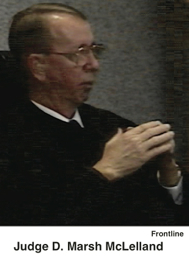 July 5, 2014
“The Burlington judge who has presided over the the Little Rascals Day Care Center case since 1990 resigned in disgust the day after the state Supreme Court refused to review (the overturning of) two convictions.
“D. Marsh McLelland, a retired Superior Court judge, said in a letter dated Sept. 8 that the court’s refusal to review the cases ‘is legally and morally reprehensible.’
“McLelland’s letter to Chief Justice Burley Mitchell said the refusal to review a Court of Appeals order for a new trial raised the term technicality to new heights….”
– From “Judge quits Little Rascals case” from the Associated Press (Sept. 22, 1995)
I imagine that the “technicality” comment was from a direct quote, although I haven’t been able to find either McLelland’s original letter or a more substantial account. It’s no wonder he felt humiliated – the Court of Appeals decision had laid bare his indifference to the rights of the defendants.
Regardless, McLelland’s resignation proved irrelevant, as prosecutors decided not to retry Bob Kelly and Dawn Wilson.
Forensic evaluator or therapist? A distinction not made
 March 23, 2012
“A given professional must undertake either a forensic examination or therapy, not both, with any given child.
“The roles of forensic evaluator and ongoing therapist are different. The forensic evaluator must not become an advocate for the child, a role often difficult to avoid when one is an ongoing therapist.
“For this reason the American Psychological Association’s Guidelines for Psychological Evaluations in Child Protection Matters (1999) holds, ‘Psychologists generally do not conduct psychological evaluations in child protection matters in which they serve in a therapeutic role for the child or the immediate family or have had other involvement that may compromise
their objectivity.’ ”
– From “A Behavior Analytic Look at Contemporary Issues in the Assessment of Child
Sexual Abuse” by W. Joseph Wyatt in The Behavior Analyst Today (March 22, 2007)
By serving enthusiastically as agents of the prosecution, Betty Robertson, Judy Abbott, Susan Childers and Michele Zimmerman not only ignored that crucial ethical distinction, but also fostered psychological havoc where there had been none.