Rascals case in brief
In the beginning, in 1989, more than 90 children at the Little Rascals Day Care Center in Edenton, North Carolina, accused a total of 20 adults with 429 instances of sexual abuse over a three-year period. It may have all begun with one parent’s complaint about punishment given her child.
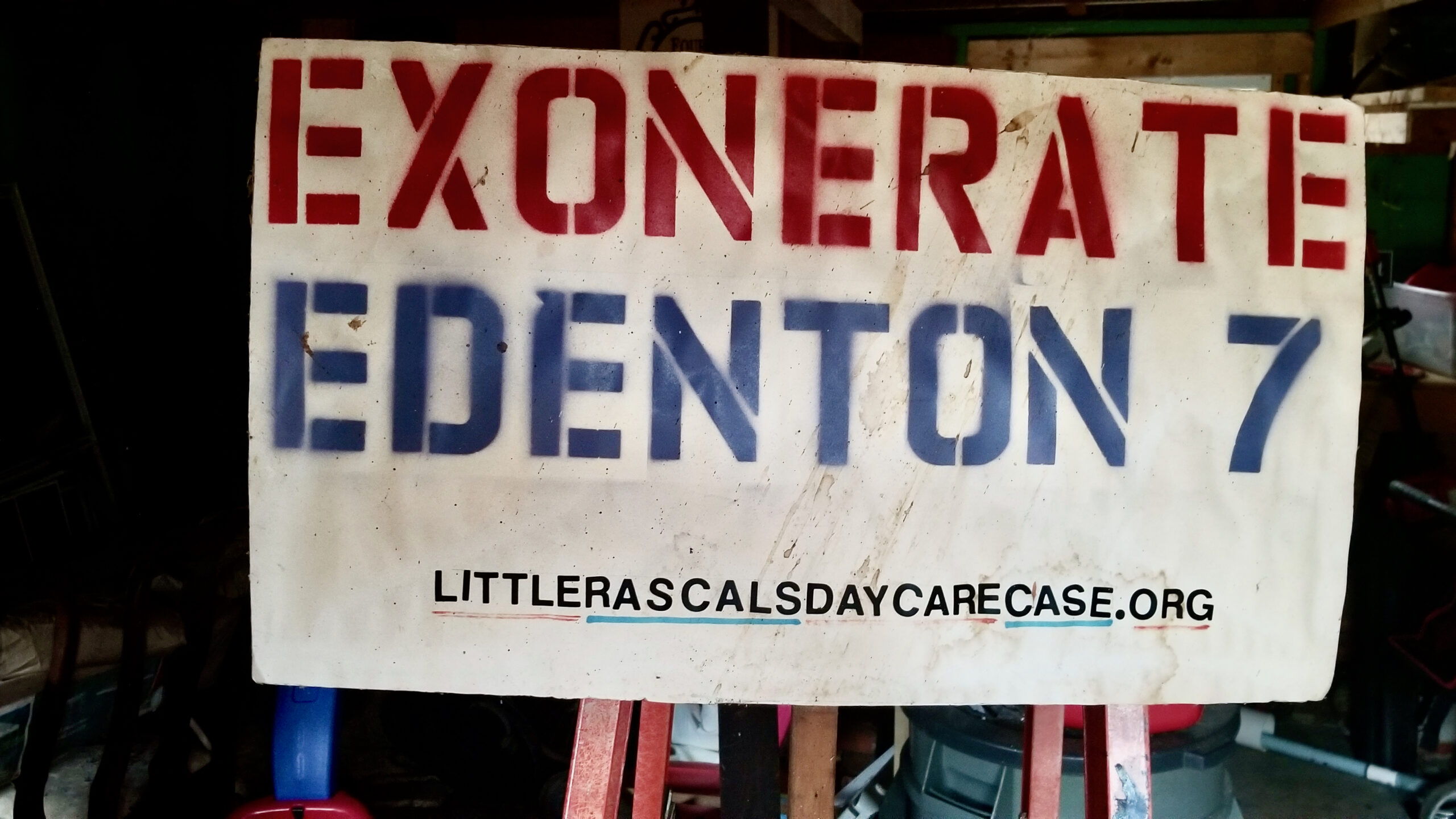
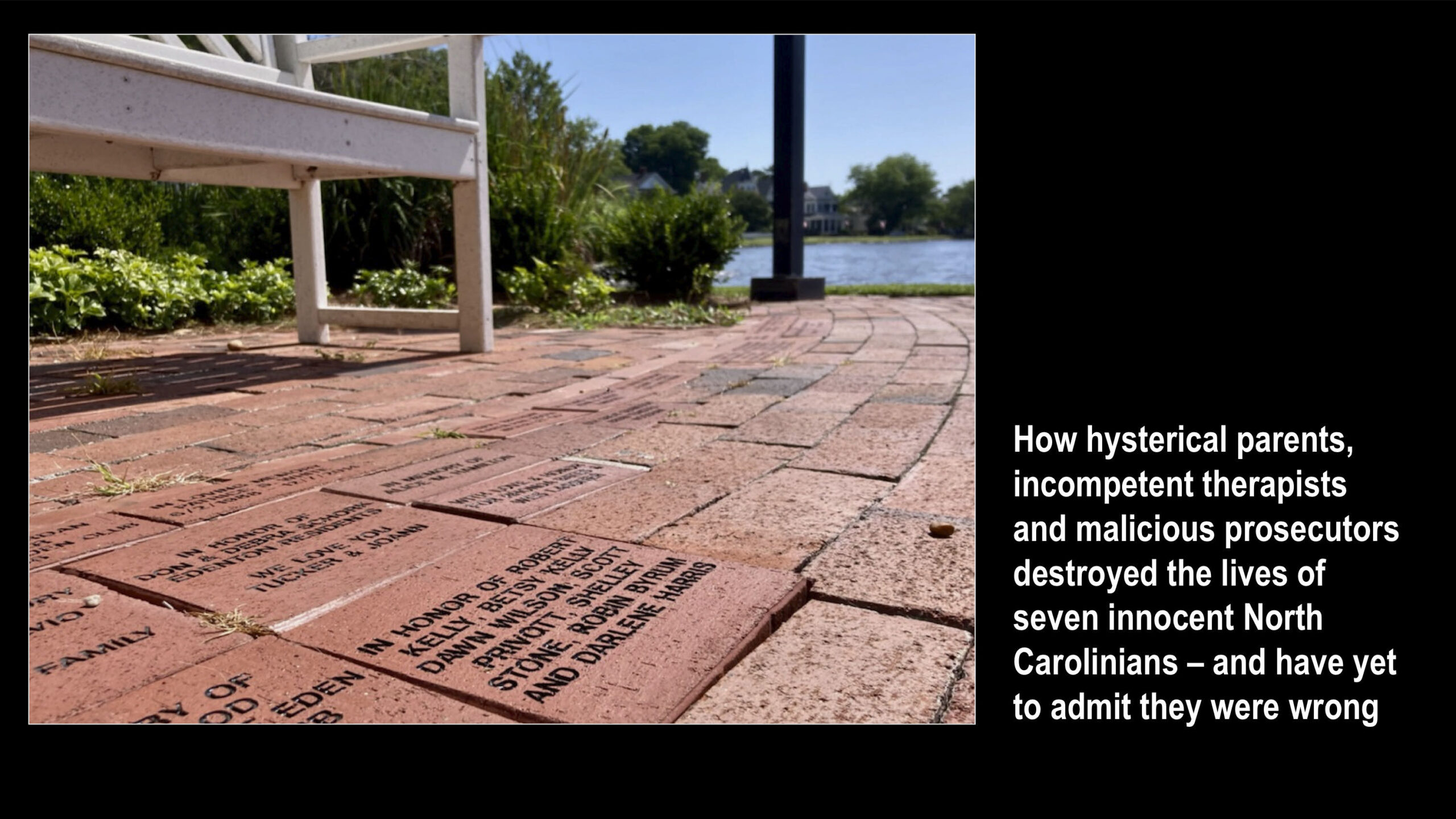
Among the alleged perpetrators: the sheriff and mayor. But prosecutors would charge only Robin Byrum, Darlene Harris, Elizabeth “Betsy” Kelly, Robert “Bob” Kelly, Willard Scott Privott, Shelley Stone and Dawn Wilson – the Edenton 7.
Along with sodomy and beatings, allegations included a baby killed with a handgun, a child being hung upside down from a tree and being set on fire and countless other fantastic incidents involving spaceships, hot air balloons, pirate ships and trained sharks.
By the time prosecutors dropped the last charges in 1997, Little Rascals had become North Carolina’s longest and most costly criminal trial. Prosecutors kept defendants jailed in hopes at least one would turn against their supposed co-conspirators. Remarkably, none did. Another shameful record: Five defendants had to wait longer to face their accusers in court than anyone else in North Carolina history.
Between 1991 and 1997, Ofra Bikel produced three extraordinary episodes on the Little Rascals case for the PBS series “Frontline.” Although “Innocence Lost” did not deter prosecutors, it exposed their tactics and fostered nationwide skepticism and dismay.
With each passing year, the absurdity of the Little Rascals charges has become more obvious. But no admission of error has ever come from prosecutors, police, interviewers or parents. This site is devoted to the issues raised by this case.
On Facebook


Little Rascals Day Care Case
This Facebook page is an offshoot of littlerascalsdaycarecase.org, which addresses the wrongful prosecution of the Edenton Seven and other such victims.

Meanwhile in Edenton....
This content isn't available right now
When this happens, it's usually because the owner only shared it with a small group of people, changed who can see it or it's been deleted.0 CommentsComment on Facebook
Allies for our cause!
This content isn't available right now
When this happens, it's usually because the owner only shared it with a small group of people, changed who can see it or it's been deleted.0 CommentsComment on Facebook
The courts have a long history of capriciously pulling the rug out from under Junior's appeals, but maybe this time....
This content isn't available right now
When this happens, it's usually because the owner only shared it with a small group of people, changed who can see it or it's been deleted.0 CommentsComment on Facebook
Click for earlier Facebook posts archived on this site
Click to go to

Today’s random selection from the Little Rascals Day Care archives….
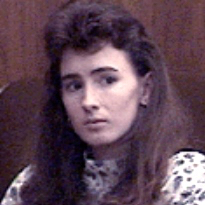
Robin Byrum, youngest of Edenton Seven, recalls brutality at hands of prosecution
April 29, 2017
Robin Byrum, not long out of high school and pregnant with her first child, went to work at Little Rascals Day Care Center in September 1988. A year later she was in prison under $500,000 bond, charged with 23 counts of child sex abuse. Prosecutors had no credible evidence against her, but they were betting the youngest defendant would implicate Bob Kelly and the others accused.
“I was in the wrong place at the wrong time,” she recalls today in her first interview since charges finally were dropped against her in 1996. “They thought I would tell on the others. That was the only reason I was swept up.”
Now 15 years into her second marriage, she lives in Eastern North Carolina. For her privacy I’m not mentioning her town or married name. “I’ve gone on with my life. It’s turned out well, in spite of all that….”
——-
After months of sporadic questioning she was arrested in January 1990. “Three men from the SBI came to my mother’s house. It was so frightening. They intimidated me. One of them put his foot up on the table and I could see the gun in his ankle holster. He said, ‘I’d hate to see you taken away from that child.’
“Then we went to the police station in Edenton. [SBI agent] Kevin McGinnis said he would give me one more chance to talk. I could hear my baby crying in the next room. When I told him again I didn’t know anything, he was so angry he kicked the desk across the room.”
Along with Betsy Kelly and Dawn Wilson, she was put in a cell in women’s prison in Raleigh. “I was three hours from my only family in North Carolina. Strip-searched before and after every visit.
“They put another prisoner in there with us, a snitch, thinking she could get us to talk. But we had nothing to tell….. One day they even tossed our cell, looking for ‘satanic’ passages marked in our Bibles.”
As the months passed, prosecutors offered Byrum ever more tempting plea deals. In a particularly poignant moment in “Innocence Lost: The Plea” (1997) she explains to Ofra Bikel why she had even turned down a deal offering no active time, but an admission of guilt: “‘That would mean knowing I would not ever have to be separated from my child again. But then I’d have to live with the rest of my life that I [said I] did something when I didn’t do it.’”
In 1990, bond was reduced to a still absurd $200,000 and her grandparents and two aunts in Kentucky managed to pay in time to get her home for Christmas.
Today Byrum, 46, works in health information management. “My office manager knew about the case, but the doctors hadn’t put two and two together until they went to your site. One of them shook his head and said, ‘How did seven people go to prison on something completely unfounded?’ Well, I’m still baffled too….
“How could anyone believe all these things happened? We were a block from downtown, in a building with huge windows and no curtains. Parents walked their 2- and 3-year-olds there, and they dropped by all the time….
“Didn’t a light bulb ever once come on that made somebody use their common sense?”

It’s a long way from Duke to Avery-Mitchell Correctional
 March 21, 2015
I spent several hours Friday at Duke University Law School listening to experts detail “Evolving Trends in Forensic Science.”
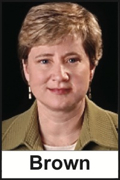
Fascinating. Topics ranged from the effects of sleep deprivation on jurors’ decision-making to the use of cell tower evidence to determine suspect location. But I was wedged into an auditorium otherwise full of lawyers to hear pediatrician Cynthia Brown and defense attorneys Mark Montgomery and Lisa Miles outline the latest standards for medical exams in cases of suspected child abuse. The good news – if you’re being wrongfully prosecuted in 2015 – is that those standards have become dramatically more specific and sophisticated.
If, however, you were wrongfully prosecuted in 1987, then the fruits of that scientific progress remain maddeningly out of reach. Waiting for me when I returned home Friday was a letter from Junior Chandler:
“April 15 will be 28 yrs – nearly half my life, all because of lies when I did no crime. It’s a shame & disgrace to the whole N.C. justice system, not only to do this but never to be willing to say they were wrong….”
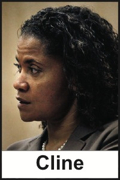
Tracey Cline, Mike Nifong and H.P. Williams
 March 21, 2012
“In July 1993, (Tracey Cline) headed to the state’s northeast corner to work as a prosecutor in a cluster of counties near Elizabeth City. Her stint there was short-lived, just six months, and unremarkable, according to supervisors….
“ ‘I hated to see her leave….’ (former District Attorney H. P.) Williams said. ‘I would have given her a good recommendation.’ ’’
– From the News & Observer of Raleigh, February 19, 2012
Williams may have nothing to say on behalf of the innocent Little Rascals defendants, but he seems ever eager to speak well of Cline and Durham’s other epically unethical DA.
Professor yet to decide about McMartin case
 June 28, 2013
“Children can lie, but research shows that they do not fabricate detailed descriptions of adult sexual acts unless they have experienced or witnessed them. Studies also show that children have good memories and that even preschoolers can remember key events like sexual abuse. One problem is that repeatedly molested children have great difficulty distinguishing one act of abuse from another and linking abuse to specific dates….
“In the McMartin case, we learned… to minimize the use of leading questions during interviews…. While the verdict comes as a disappointment to the children in the case, their courage and willingness to testify for weeks on end has been a catalyst for change that will protect countless other children.”
– From Believe the Children adviser Civia Tamarkin’s interview with John E. B. Myers, professor at McGeorge School of Law, University of the Pacific, in “The McMartin Nightmare” (People magazine, Feb. 5, 1990)
As his faculty bio notes, Professor Myers has long been “one of the country’s foremost authorities on child abuse,” especially in tracing its historical context, but he seems to have been excruciatingly slow to recognize the fraudulence of “satanic ritual abuse” claims. Although he stopped short of declaring the McMartins guilty, Myers clearly stationed himself in the “child saver” camp, more sympathetic toward serial interviewer Kee MacFarlane than toward the defendants whose lives she devastated.
In a journal article five years later, Myers would acknowledge “growing skepticism regarding children’s credibility,” at the same time warning of a “real danger that the pendulum will swing too far in the direction of disbelief.”
More recently, Myers addressed McMartin in “Child Protection in America: Past, Present, and Future” (2006), crediting it with raising the standard for interviewing, but concluding that “In the final analysis, we will never know what happened at the McMartin Preschool. From the outset, the case divided people into ‘true believers’ and skeptics….”
In “The Backlash: Child Protection Under Fire” (1994) Myers had added a most curious footnote: “I have no opinion regarding the guilt or innocence of any of the McMartin defendants.” How could he – a law professor! – acknowledge the corruption of the child-witnesses’ testimony, yet doubt the defendants deserved a “not guilty” verdict?
Almost 20 years later, I wondered whether Myers might have formed an opinion.
His emailed response: “No idea about guilt or innocence.”