Rascals case in brief
In the beginning, in 1989, more than 90 children at the Little Rascals Day Care Center in Edenton, North Carolina, accused a total of 20 adults with 429 instances of sexual abuse over a three-year period. It may have all begun with one parent’s complaint about punishment given her child.
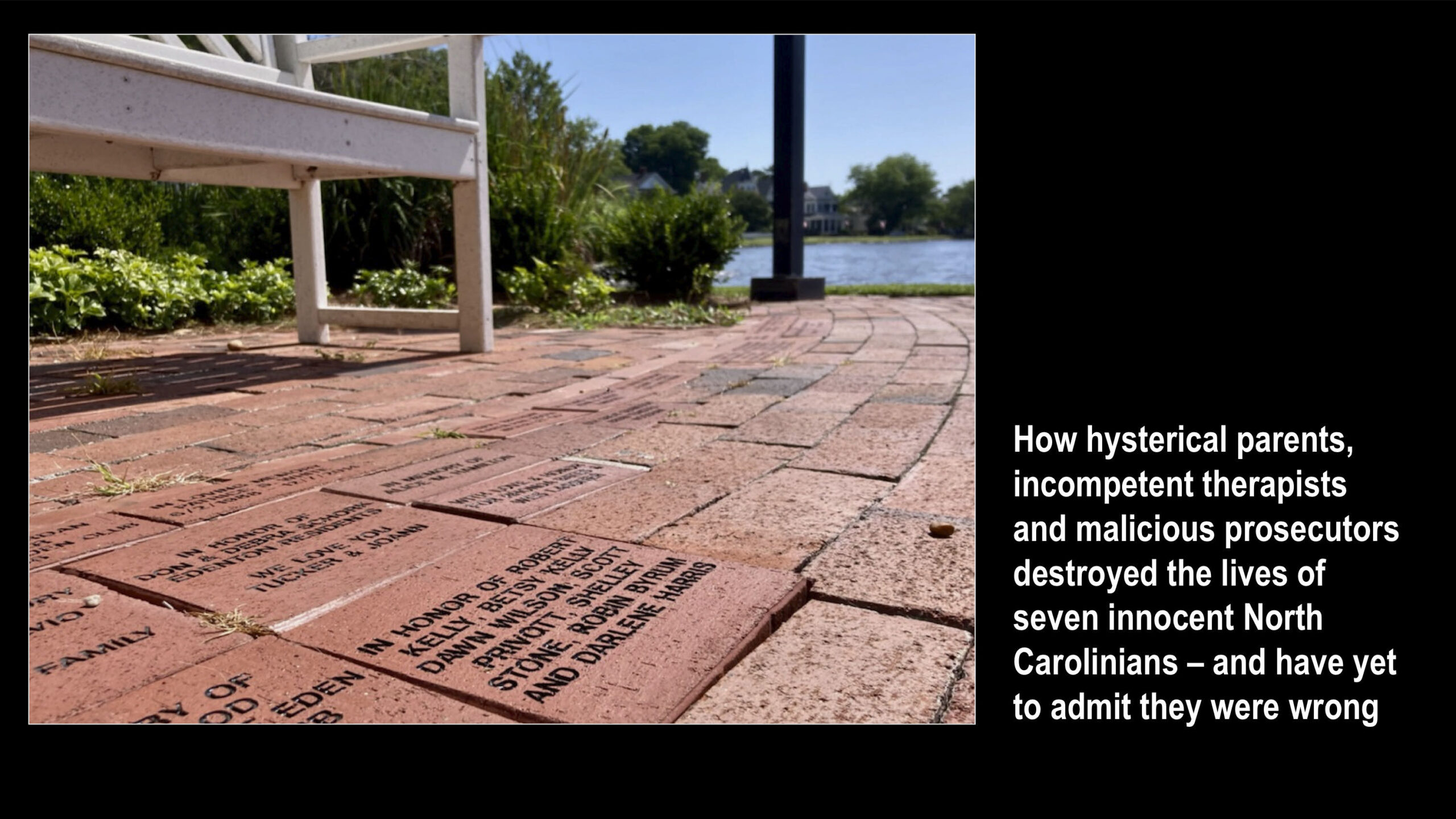
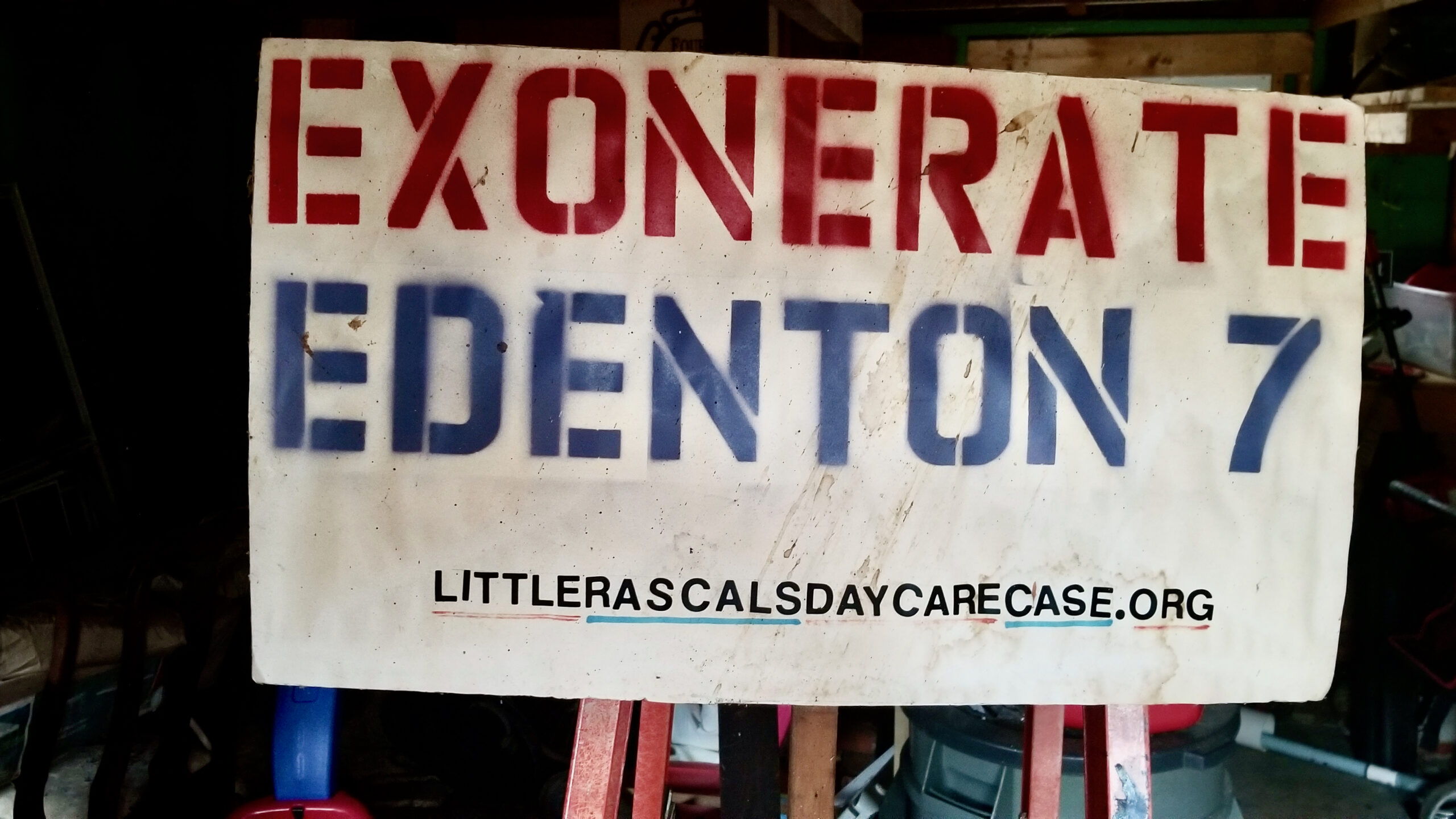
Among the alleged perpetrators: the sheriff and mayor. But prosecutors would charge only Robin Byrum, Darlene Harris, Elizabeth “Betsy” Kelly, Robert “Bob” Kelly, Willard Scott Privott, Shelley Stone and Dawn Wilson – the Edenton 7.
Along with sodomy and beatings, allegations included a baby killed with a handgun, a child being hung upside down from a tree and being set on fire and countless other fantastic incidents involving spaceships, hot air balloons, pirate ships and trained sharks.
By the time prosecutors dropped the last charges in 1997, Little Rascals had become North Carolina’s longest and most costly criminal trial. Prosecutors kept defendants jailed in hopes at least one would turn against their supposed co-conspirators. Remarkably, none did. Another shameful record: Five defendants had to wait longer to face their accusers in court than anyone else in North Carolina history.
Between 1991 and 1997, Ofra Bikel produced three extraordinary episodes on the Little Rascals case for the PBS series “Frontline.” Although “Innocence Lost” did not deter prosecutors, it exposed their tactics and fostered nationwide skepticism and dismay.
With each passing year, the absurdity of the Little Rascals charges has become more obvious. But no admission of error has ever come from prosecutors, police, interviewers or parents. This site is devoted to the issues raised by this case.
On Facebook


Little Rascals Day Care Case
This Facebook page is an offshoot of littlerascalsdaycarecase.org, which addresses the wrongful prosecution of the Edenton Seven and other such victims.

Meanwhile in Edenton....
This content isn't available right now
When this happens, it's usually because the owner only shared it with a small group of people, changed who can see it or it's been deleted.0 CommentsComment on Facebook
Allies for our cause!
This content isn't available right now
When this happens, it's usually because the owner only shared it with a small group of people, changed who can see it or it's been deleted.0 CommentsComment on Facebook
The courts have a long history of capriciously pulling the rug out from under Junior's appeals, but maybe this time....
This content isn't available right now
When this happens, it's usually because the owner only shared it with a small group of people, changed who can see it or it's been deleted.0 CommentsComment on Facebook
Click for earlier Facebook posts archived on this site
Click to go to

Today’s random selection from the Little Rascals Day Care archives….
‘We’ve learned a lot….’ (Too bad it took so long)
March 30, 2012
Kee MacFarlane is the notorious therapist who led the ritual abuse scare of the late 1980s (and pioneered the misuse of anatomically correct dolls in interviewing children). In just four months MacFarlane diagnosed more than 360 children at the McMartin Pre-School as abused.
In 2005 she declined to be interviewed by CNN but sent a statement:
“We’ve learned a lot in 20 years about how to interview children for forensic purposes and how to manage complex cases such as this one. It would be a sad commentary if we didn’t learn from such painful experience.”
Not much of a mea culpa – but still more than anyone connected with the Little Rascals prosecution has managed.
The darkness that lurks behind Darkness to Light
Jan. 16, 2012
Darkness to Light is a Charleston-based nonprofit with the goal “End Child Abuse.” Since its founding in 2000, D2L claims to have trained adults in 48 states and 10 foreign countries in how to prevent, recognize and react to child sexual abuse. Among its allies: YMCAs.
Unfortunately, D2L is less than meticulous in associating itself with other organizations. This is a letter I sent D2L officials on Dec. 5:
Darkness to Light does a disservice to the public and to your cause when you include on your list of resources the Survivorship website.
 Survivorship’s board president is Neil Brick, who identifies himself as “the founder of S.M.A.R.T. (Stop Mind Control and Ritual Abuse Today) at http://ritualabuse.us. He is a survivor of ritual abuse and a survivor advocate. He works on developing supports for survivors and getting information out to the general public about ritual abuse. He runs yearly ritual abuse conferences on the east coast of the United States every year at http://ritualabuse.us/smart-conference. Links to his presentation transcripts and research papers are http://ritualabuse.us/smart/neil-brick.”
S.M.A.R.T. is perhaps the most prominent organization still insisting that numerous day-care providers in the 1980s and early 1990s subjected children to “satanic ritual abuse.” Although the day-care panic eventually waned and courts freed nearly all the unfortunate defendants, S.M.A.R.T. continues to see abuse in every one of these cases – from McMartin to Little Rascals to Fells Acres, etc.
Like Scientologists and Holocaust deniers, S.M.A.R.T. has been banned from editing Wikipedia entries. Neither should its disinformation campaign be given a platform by Darkness to Light.
Darkness to Light has yet to respond to that letter or to a Dec. 30 follow-up soliciting “a statement explaining why you continue to support this organization.” I’d be happy to publish such an explanation, but even happier to learn that D2L has cut its ties to the ritual abuse movement.
Was there nothing to fear but ‘day care itself’?
April 19, 2013
“What can have spurred so many communities to such (ritual abuse) hysteria? The answer may be day care itself. The mothers who report that children never lie are simply unfamiliar with the ways of children. They may also feel guilty about putting their children in day care. A righteous rage against the day-care provider can certainly distract a parent from wondering whether she is doing an adequate job as a mother.”
– From “Believe the children?” by syndicated columnist Mona Charen (October 11, 2003)
Although Charen approaches the subject as a proselytizer for stay-at-home motherhood, less partisan observers also have speculated about the role of day-care guilt.
When millions believe in alien abduction….
Jan. 25, 2013
“With regard to recovered memories, ritual abuse charges and multiple personalities, the tide seems to have turned. Courts are continuing to reverse decisions…The Edenton Seven have been released from prison…. Yet many of these people’s lives have been wrecked by false allegations….
“If, as some polls claim, millions of Americans believe in alien abduction, we have a long way still to go before credulity, superstition and hysterical epidemics are on the wane…”
– From “Hystories: Hysterical Epidemics and Modern Media” by Elaine Showalter (1998)