Rascals case in brief
In the beginning, in 1989, more than 90 children at the Little Rascals Day Care Center in Edenton, North Carolina, accused a total of 20 adults with 429 instances of sexual abuse over a three-year period. It may have all begun with one parent’s complaint about punishment given her child.
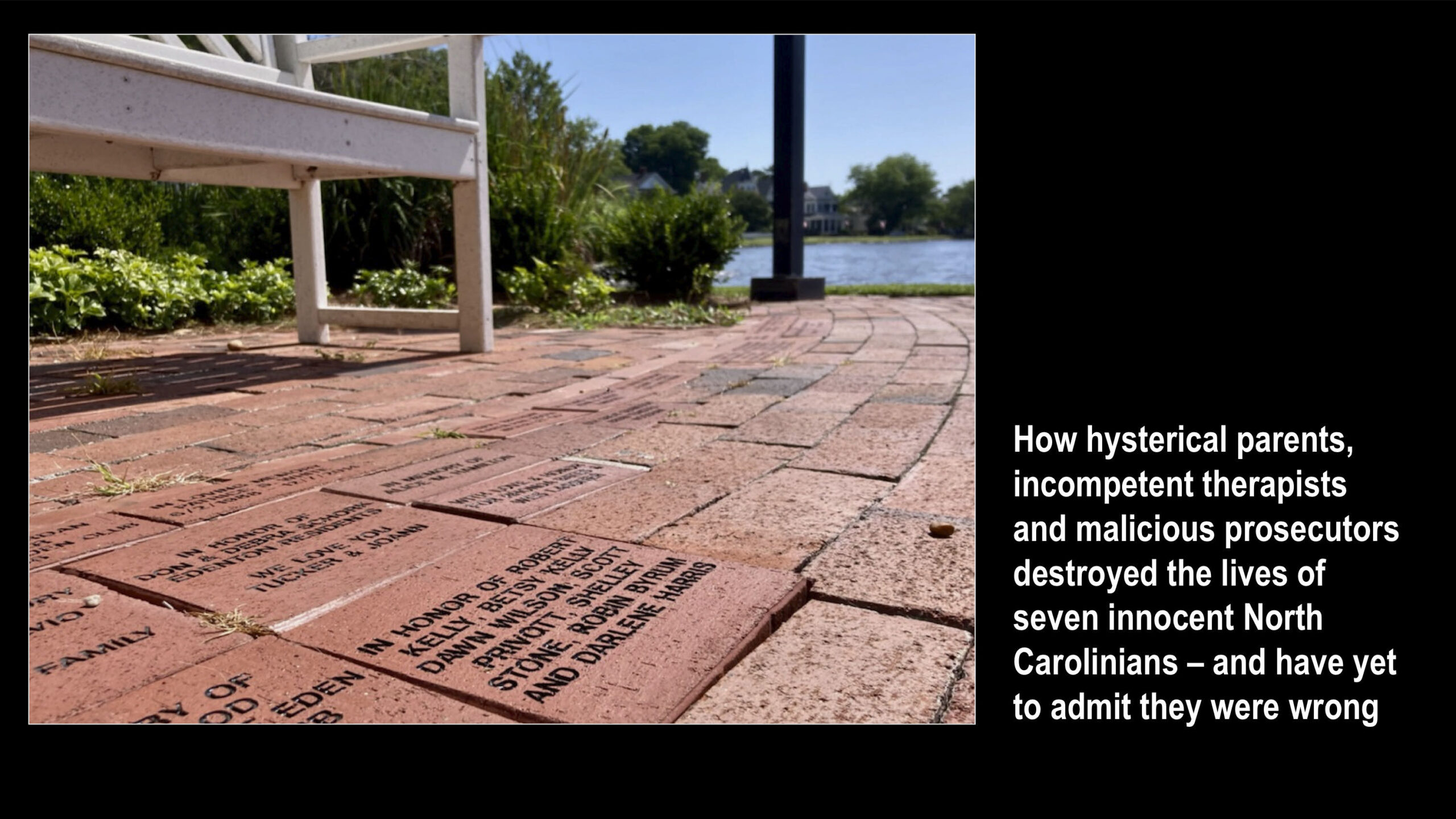
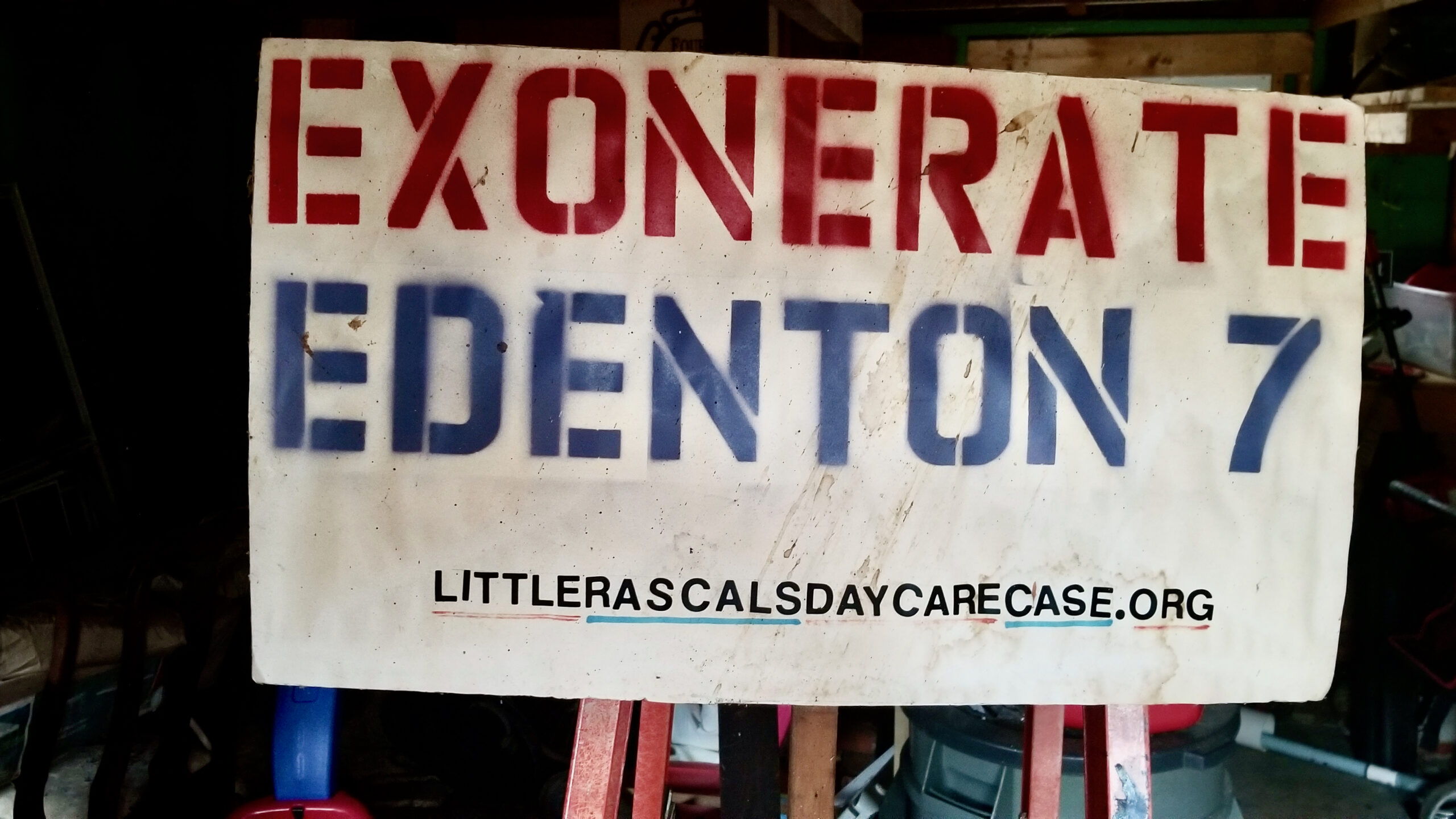
Among the alleged perpetrators: the sheriff and mayor. But prosecutors would charge only Robin Byrum, Darlene Harris, Elizabeth “Betsy” Kelly, Robert “Bob” Kelly, Willard Scott Privott, Shelley Stone and Dawn Wilson – the Edenton 7.
Along with sodomy and beatings, allegations included a baby killed with a handgun, a child being hung upside down from a tree and being set on fire and countless other fantastic incidents involving spaceships, hot air balloons, pirate ships and trained sharks.
By the time prosecutors dropped the last charges in 1997, Little Rascals had become North Carolina’s longest and most costly criminal trial. Prosecutors kept defendants jailed in hopes at least one would turn against their supposed co-conspirators. Remarkably, none did. Another shameful record: Five defendants had to wait longer to face their accusers in court than anyone else in North Carolina history.
Between 1991 and 1997, Ofra Bikel produced three extraordinary episodes on the Little Rascals case for the PBS series “Frontline.” Although “Innocence Lost” did not deter prosecutors, it exposed their tactics and fostered nationwide skepticism and dismay.
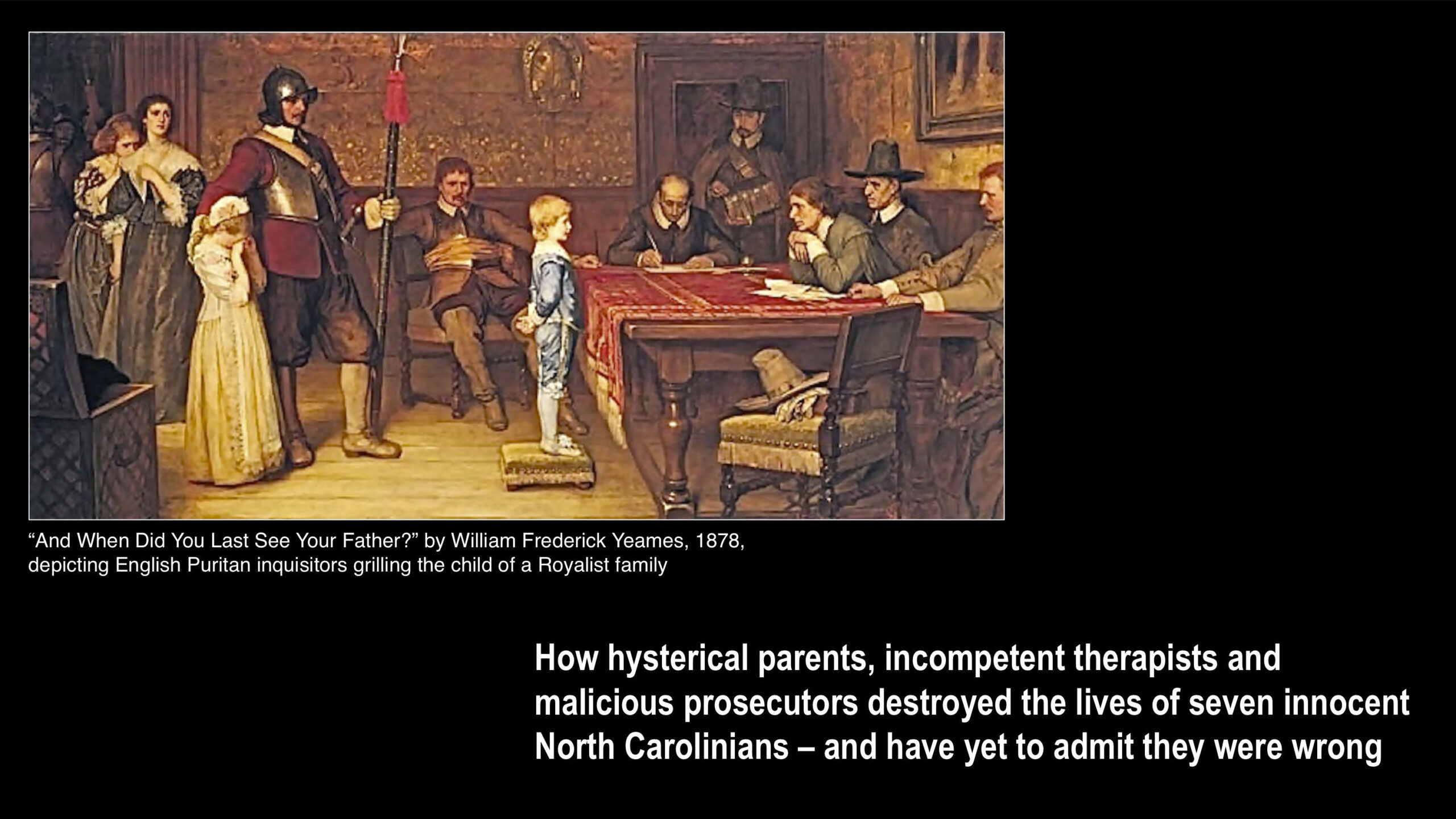
With each passing year, the absurdity of the Little Rascals charges has become more obvious. But no admission of error has ever come from prosecutors, police, interviewers or parents. This site is devoted to the issues raised by this case.
On Facebook


Little Rascals Day Care Case
This Facebook page is an offshoot of littlerascalsdaycarecase.org, which addresses the wrongful prosecution of the Edenton Seven and other such victims.

Meanwhile in Edenton....
This content isn't available right now
When this happens, it's usually because the owner only shared it with a small group of people, changed who can see it or it's been deleted.0 CommentsComment on Facebook
Allies for our cause!
This content isn't available right now
When this happens, it's usually because the owner only shared it with a small group of people, changed who can see it or it's been deleted.0 CommentsComment on Facebook
The courts have a long history of capriciously pulling the rug out from under Junior's appeals, but maybe this time....
This content isn't available right now
When this happens, it's usually because the owner only shared it with a small group of people, changed who can see it or it's been deleted.0 CommentsComment on Facebook
Click for earlier Facebook posts archived on this site
Click to go to

Today’s random selection from the Little Rascals Day Care archives….
9/11, Sandy Hook and the McMartin ‘tunnels’
July 1, 2013
I noted last week the continuing unwillingness of law professor John E.B. Myers, widely published authority on child sex abuse, to express an opinion “regarding the guilt or innocence of any of the McMartin defendants.”
In this passage in “Child Protection in America” (2006), which Professor Myers graciously forwarded to me, he justifies his indecision on the case by pointing to claims of secret underground tunnels supposedly discovered (too late!) beneath the McMartin Preschool:
“Several McMartin parents, especially the indefatigable Jackie McGauley, hired an archeologist to excavate under the abandoned preschool. The archeologist conducted an excavation and issued an exhaustive report concluding there probably were tunnels. The tunnels had been backfilled with dirt, but McGauley pointed out that the Buckeys had months to fill in the tunnels after the preschool closed. I read the archeologist’s report and came away convinced. Yet, I shared the report with a colleague who was just as firmly convinced the report proves nothing.”
At the very least, this approach constitutes feckless “research.” To see the tunnel report thoroughly vaporized, Myers needed only to click on “The Dark Truth About the ‘Dark Tunnels of McMartin’ ” by John Earl (1995) or “What Was Under the McMartin Preschool?” by Joseph Wyatt (2002).
When the McMartin parents went digging for nonexistent tunnels, the term “truther” hadn’t yet entered the lexicon. Too bad.
Prognosis uncertain for misled child-witnesses
May 7, 2012
From an exchange with Stephen Ceci, author (with Maggie Bruck) of the landmark “Jeopardy in the Courtroom: A Scientific Analysis of Children’s Testimony” (1995):
Q: What may have happened to the child-witnesses as a result of being so profoundly misdiagnosed? One Little Rascals child-witness who responded anonymously to an advertisement I placed in the Edenton paper continues to say she was abused by Bob Kelly, although she admits to doubts about the female defendants.
A: We lack good scientific data on the long-term beliefs of individuals who as children were suggestively interviewed. A handful of studies, none of which resemble allegations of sexual abuse, seem to indicate that they grow up with the belief that they were abused, replete with the same psychological sequelae of true abuse survivors.
But you’ll note I use phrases such as “seem to indicate,” because the data are not uniform or consistent and the scenarios are not sex abuse ones. I think many, perhaps most, memory researchers would expect someone who was convinced as a child that he or she was victimized to grow into an adult with the same problems seen in actual victims, e.g., distrust of authority figures, insecurity, etc..
–
What extreme caution Dr. Ceci, an unsurpassed authority on child abuse, uses not to present theory and speculation as fact…. If only the therapists and theoreticians behind the day-care-abuse mania had shown half the professional uncertainty….
Less bonding, less crying, more thinking – why not?
Jan. 21, 2013
“According to advocates (of victim impact statements), they allow victims to personalize the crime and elevate the status of the victim by describing the effect the crime has had on them or their families. Some laud the courtroom ritual as an aid in the emotional recovery of the victim…. A few legal scholars suggest that the well-intentioned personalization of a crime can blur the line between public justice and private retribution….”
– From “Death by Treacle” by Pamela Haag in the American Scholar (Spring 2012)
“Prosecutor Nancy Lamb and the mothers of the victims burst into tears. Court officials handed out tissues.”
– From “Day Care Owner Convicted on 99 Counts of Child Abuse” by the Associated Press (April 22, 1992)
Count me with those “few legal scholars” who doubt justice is well served by injections of sentimentality. (Although Bob Kelly’s sentencing seems to have concluded without victim impact statements, prosecutors ensured an ample display of mawkishness – the front row was packed with supposed child-victims holding tight to their dolls and teddy bears.)
But sentimentality also extends to the blindered bonding of Little Rascals prosecutors and parents.
What if Nancy Lamb had managed to keep even the slightest professional distance between herself and the parents, instead of being swallowed up in their manic cause? Might she have been able to glimpse reality?
And what if Bill Hart had avoided dating (and later marrying) one of those parents?
Pennsylvania prosecutor Alan Rubenstein managed to avoid such pitfalls – why couldn’t others?
‘Why hadn’t any of the suspects copped a plea?’ he wondered

Feb. 2, 2018
“In August 1983 [Manhattan Beach, Calif., police chief Harry] Kuhlmeyer was presented with the McMartin Preschool case. Therapists and medical doctors had identified dozens of McMartin children as sexual abuse victims. Raymond Buckey, the sole male teacher at the preschool owned by his grandmother Virginia McMartin, was the primary suspect….
“Parents demanded Buckey’s immediate arrest, but Kuhlmeyer refused. His detectives could find no corroborating evidence.
“ ‘Why hadn’t any of the suspects copped a plea, why no mea culpas, no suicides? No one got drunk and bared his soul. If everything the kids said happened, it looked like the perfect crime. Even the Mafia has snitches,’ Kuhlmeyer said.
“The Los Angeles County District Attorney’s office… drew up an arrest complaint about Buckey, but Kuhlmeyer refused to sign it. [The DA took the case to the grand jury, which routinely rubber stamps indictment requests.]
“Kuhlmeyer’s unpopular stance was vindicated seven years and $15 million in court costs later when two McMartin trials ended with no convictions.”
– From “Police chief during McMartin case refused to charge abuse suspects” by Kevin Cody in Easy Reader News (Jan. 31)
No such doubt, by either police or prosecutors, slowed the rush to put the Edenton Seven behind bars. The result, of course, was a disaster of McMartin dimensions.
Chief Kuhlmeyer died Jan. 12 in Santa Monica, Calif. He was 94.
