Rascals case in brief
In the beginning, in 1989, more than 90 children at the Little Rascals Day Care Center in Edenton, North Carolina, accused a total of 20 adults with 429 instances of sexual abuse over a three-year period. It may have all begun with one parent’s complaint about punishment given her child.
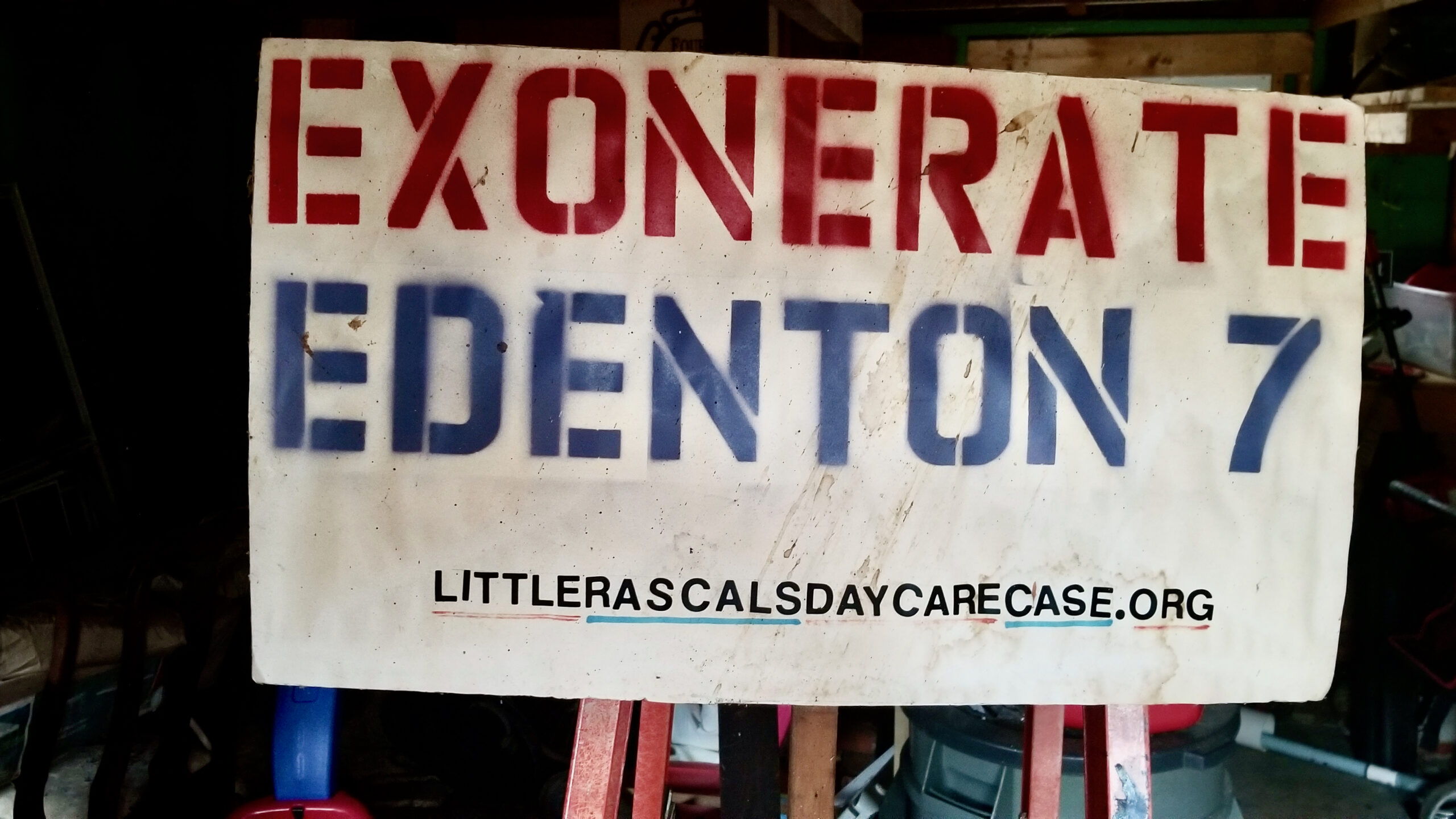
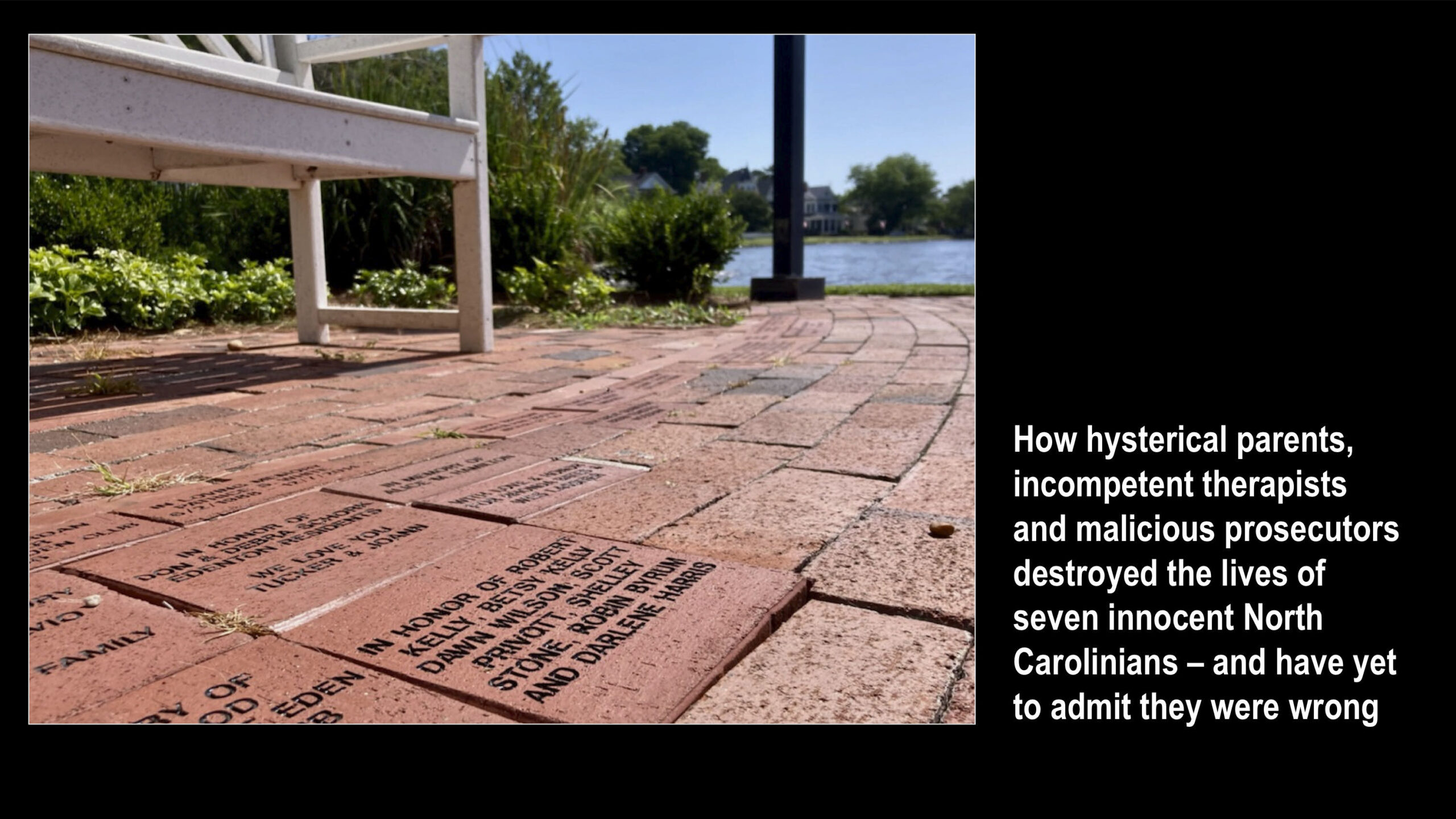
Among the alleged perpetrators: the sheriff and mayor. But prosecutors would charge only Robin Byrum, Darlene Harris, Elizabeth “Betsy” Kelly, Robert “Bob” Kelly, Willard Scott Privott, Shelley Stone and Dawn Wilson – the Edenton 7.
Along with sodomy and beatings, allegations included a baby killed with a handgun, a child being hung upside down from a tree and being set on fire and countless other fantastic incidents involving spaceships, hot air balloons, pirate ships and trained sharks.
By the time prosecutors dropped the last charges in 1997, Little Rascals had become North Carolina’s longest and most costly criminal trial. Prosecutors kept defendants jailed in hopes at least one would turn against their supposed co-conspirators. Remarkably, none did. Another shameful record: Five defendants had to wait longer to face their accusers in court than anyone else in North Carolina history.
Between 1991 and 1997, Ofra Bikel produced three extraordinary episodes on the Little Rascals case for the PBS series “Frontline.” Although “Innocence Lost” did not deter prosecutors, it exposed their tactics and fostered nationwide skepticism and dismay.
With each passing year, the absurdity of the Little Rascals charges has become more obvious. But no admission of error has ever come from prosecutors, police, interviewers or parents. This site is devoted to the issues raised by this case.
On Facebook


Little Rascals Day Care Case
This Facebook page is an offshoot of littlerascalsdaycarecase.org, which addresses the wrongful prosecution of the Edenton Seven and other such victims.

Meanwhile in Edenton....
This content isn't available right now
When this happens, it's usually because the owner only shared it with a small group of people, changed who can see it or it's been deleted.0 CommentsComment on Facebook
Allies for our cause!
This content isn't available right now
When this happens, it's usually because the owner only shared it with a small group of people, changed who can see it or it's been deleted.0 CommentsComment on Facebook
The courts have a long history of capriciously pulling the rug out from under Junior's appeals, but maybe this time....
This content isn't available right now
When this happens, it's usually because the owner only shared it with a small group of people, changed who can see it or it's been deleted.0 CommentsComment on Facebook
Click for earlier Facebook posts archived on this site
Click to go to

Today’s random selection from the Little Rascals Day Care archives….
Forensic evaluator or therapist? A distinction not made
 March 23, 2012
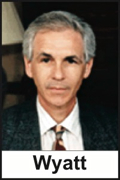
“A given professional must undertake either a forensic examination or therapy, not both, with any given child.
“The roles of forensic evaluator and ongoing therapist are different. The forensic evaluator must not become an advocate for the child, a role often difficult to avoid when one is an ongoing therapist.
“For this reason the American Psychological Association’s Guidelines for Psychological Evaluations in Child Protection Matters (1999) holds, ‘Psychologists generally do not conduct psychological evaluations in child protection matters in which they serve in a therapeutic role for the child or the immediate family or have had other involvement that may compromise
their objectivity.’ ”
– From “A Behavior Analytic Look at Contemporary Issues in the Assessment of Child
Sexual Abuse” by W. Joseph Wyatt in The Behavior Analyst Today (March 22, 2007)
By serving enthusiastically as agents of the prosecution, Betty Robertson, Judy Abbott, Susan Childers and Michele Zimmerman not only ignored that crucial ethical distinction, but also fostered psychological havoc where there had been none.
Postcard from the bumpy path to exoneration
 Sept. 3, 2012
Since its creation by the General Assembly in 2006, the North Carolina Innocence Inquiry Commission has considered more than 1,100 innocence claims, three of which resulted in exonerations. This is from a letter I wrote the Innocence Inquiry Commission requesting that it take up the case of the Edenton Seven:
“I am fully aware that my request falls outside the letter of your mandate. It is of such importance, however, that I believe consideration by the Commission would be both just and appropriate.”
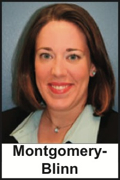
And this is from the response I received from Kendra Montgomery-Blinn, executive director:
“By law the Commission is only permitted to consider claims arising from current convictions. We cannot consider cases in which the conviction was vacated, even if the claimants were not fully exonerated.
“I am familiar with the (Little Rascals) case as I studied it both in college and in law school. In fact, I cited the case in the brief for a 2007 Commission hearing….
“I am sorry that the Commission cannot be of further assistance. The only other option I am aware of is a Gubernatorial pardon. The surviving defendants from the Wilmington 10 case have recently applied for pardons.
“Thank you for contacting the Commission and for continuing to bring attention to this important case and the subject of wrongful convictions. I am proud that North Carolina is first in the nation to have a state-run innocence commission.”
Another door to exoneration is closed, however sympathetically. Others remain.
Footnote: The hearing Ms. Montgomery-Blinn mentions grew out of a 2001 case in Pitt County. Henry Reeves had been convicted of taking indecent liberties with his 6-year-old daughter, Marquita. This passage in the Innocence Commission’s investigative statement caught my eye:
“Barbara Hardy (the child’s mother and the defendant’s wife) stated that when Marquita came out of her sessions with Dr. (Betty) Robertson, Marquita would have gum or little presents, and Marquita would state ‘Look what she gave me for getting the questions right.’
“Mrs. Hardy said that she tried to tell Dr. Robertson that Marquita was a people pleaser and may say things just to be rewarded, but Dr. Robertson said, ‘I believe it happened, and it’s going to court.’
“It is important to note that Dr. Robertson…. provided therapy and evaluations to 23 of the children in (the Little Rascals) case….”
Still rewarding possibly-abused children for “getting the questions right”? Did Betty Robertson learn nothing from the 23 false positives she reported in Edenton?
Dr. Summit was anything but objective about McMartin
Feb. 8, 2019
Second of two parts
At the core of the recent McMartin expose “They Must Be Monsters: A Modern-Day Witch Hunt” is the authors’ meticulous tracing of how the fantasies of one paranoid schizophrenic mother, Judy Johnson, fostered the longest and most expensive criminal trial in American history.
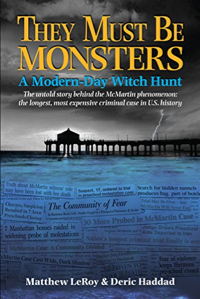 But Johnson did not act alone. Toward the end of the book Matthew LeRoy and Deric Haddad recall interviewing psychiatrist Roland Summit in his office and confronting him with evidence that – contrary to his earlier denials — he had been deeply involved not only with supporting Johnson’s bizarre accusations but also with fostering them.
I asked Haddad what lay behind Summit’s deceit.
“I suspect he was trying to cover up that he had given false testimony under oath,” he said. “He’d testified that they ‘first met’ in February 1984 – but Judy’s own calendars revealed a relationship that went back a year earlier. He may have had an influence on her before she ever even dropped her son off at McMartin.
“So when he looked over her notes, that only we had possession of, he saw that we could prove he’d lied. He got really shaky….”
If he had concerns about his professional reputation, Summit surely had much to be shaky about, including his role in whipping up panic among parents and his insistence that McMartin Preschool sat above a network of abuse-enabling secret tunnels.

Less bonding, less crying, more thinking – why not?
Jan. 21, 2013
“According to advocates (of victim impact statements), they allow victims to personalize the crime and elevate the status of the victim by describing the effect the crime has had on them or their families. Some laud the courtroom ritual as an aid in the emotional recovery of the victim…. A few legal scholars suggest that the well-intentioned personalization of a crime can blur the line between public justice and private retribution….”
– From “Death by Treacle” by Pamela Haag in the American Scholar (Spring 2012)
“Prosecutor Nancy Lamb and the mothers of the victims burst into tears. Court officials handed out tissues.”
– From “Day Care Owner Convicted on 99 Counts of Child Abuse” by the Associated Press (April 22, 1992)
Count me with those “few legal scholars” who doubt justice is well served by injections of sentimentality. (Although Bob Kelly’s sentencing seems to have concluded without victim impact statements, prosecutors ensured an ample display of mawkishness – the front row was packed with supposed child-victims holding tight to their dolls and teddy bears.)
But sentimentality also extends to the blindered bonding of Little Rascals prosecutors and parents.
What if Nancy Lamb had managed to keep even the slightest professional distance between herself and the parents, instead of being swallowed up in their manic cause? Might she have been able to glimpse reality?
And what if Bill Hart had avoided dating (and later marrying) one of those parents?
Pennsylvania prosecutor Alan Rubenstein managed to avoid such pitfalls – why couldn’t others?