Rascals case in brief
In the beginning, in 1989, more than 90 children at the Little Rascals Day Care Center in Edenton, North Carolina, accused a total of 20 adults with 429 instances of sexual abuse over a three-year period. It may have all begun with one parent’s complaint about punishment given her child.
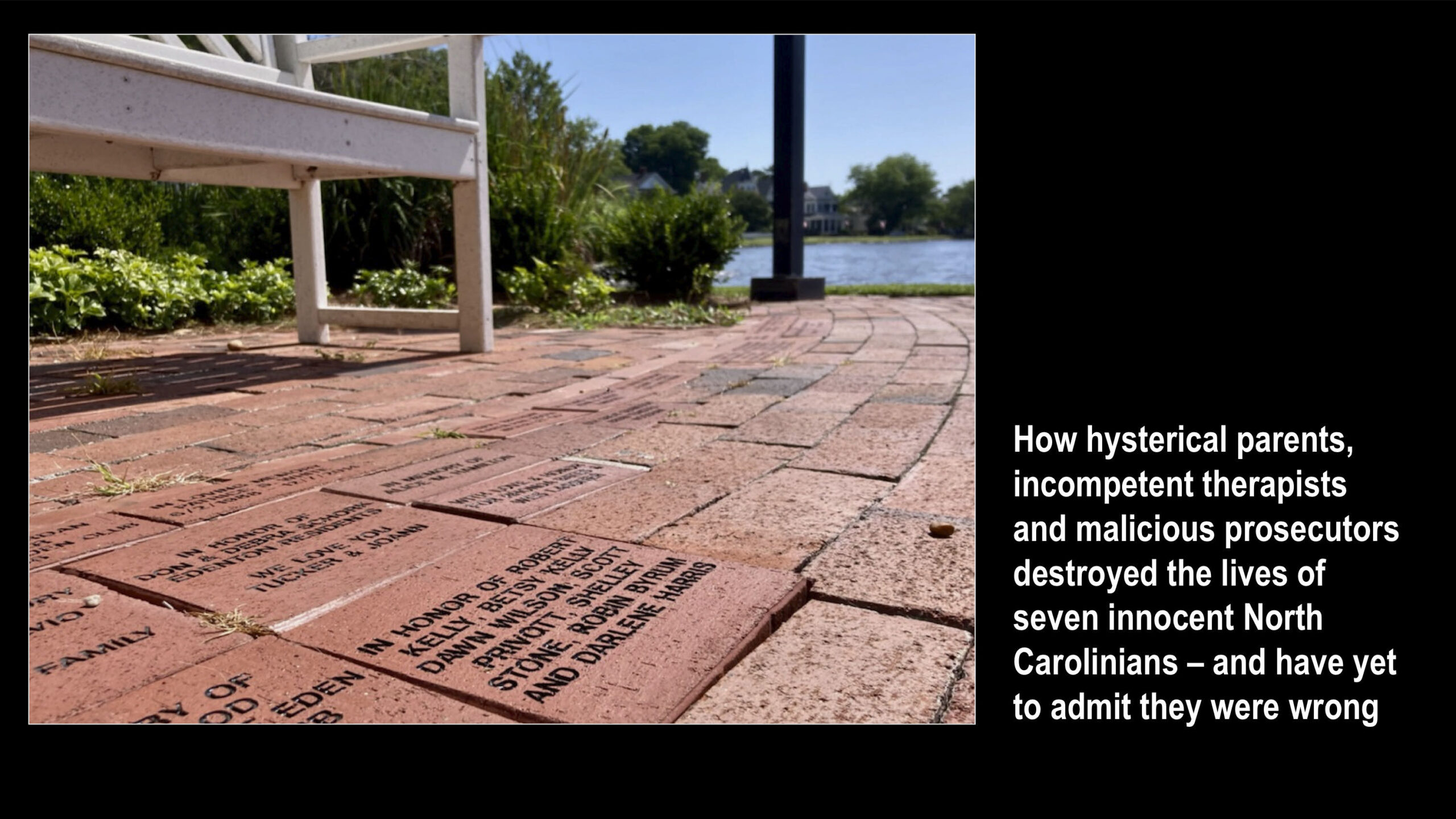
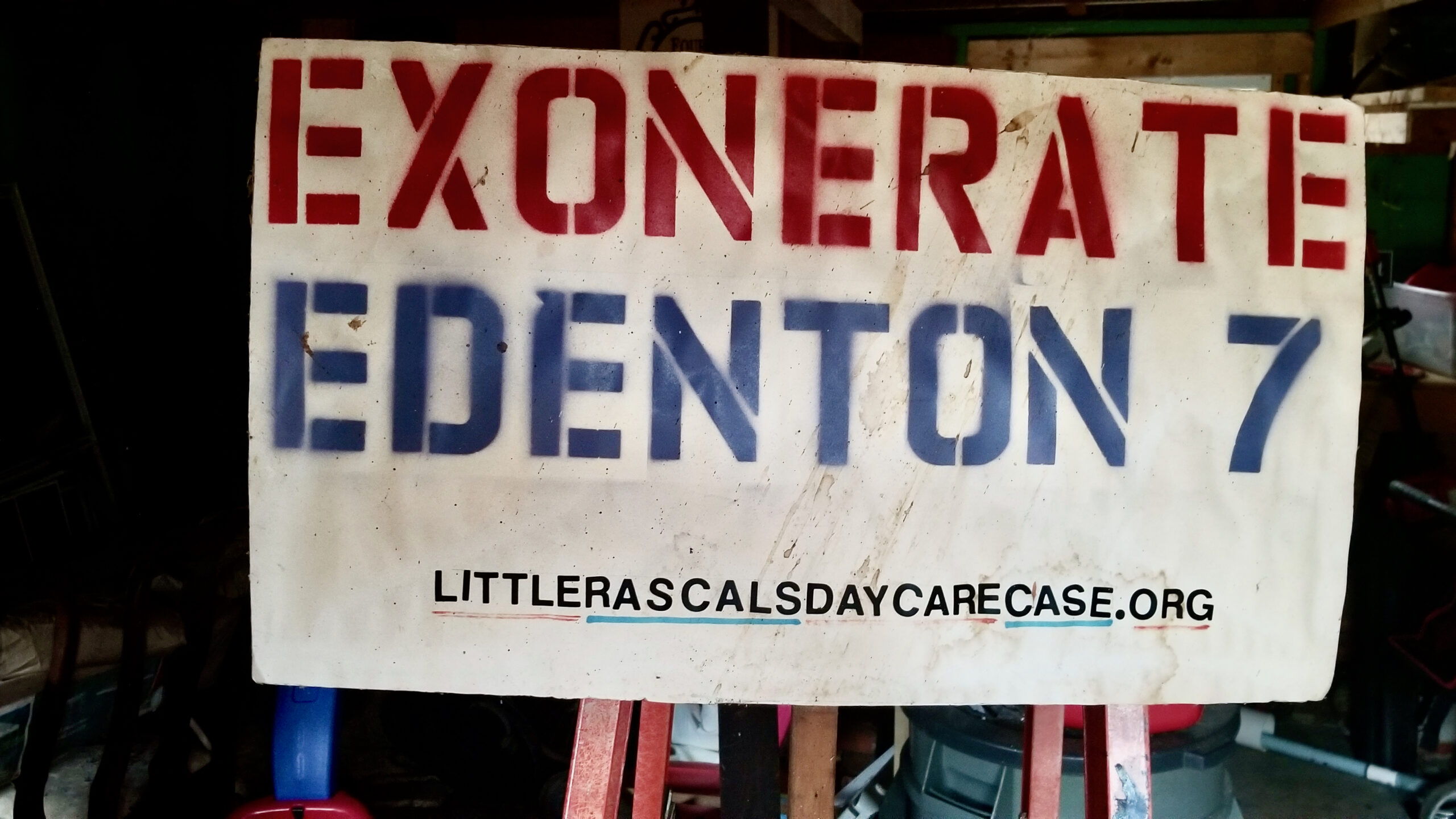
Among the alleged perpetrators: the sheriff and mayor. But prosecutors would charge only Robin Byrum, Darlene Harris, Elizabeth “Betsy” Kelly, Robert “Bob” Kelly, Willard Scott Privott, Shelley Stone and Dawn Wilson – the Edenton 7.
Along with sodomy and beatings, allegations included a baby killed with a handgun, a child being hung upside down from a tree and being set on fire and countless other fantastic incidents involving spaceships, hot air balloons, pirate ships and trained sharks.
By the time prosecutors dropped the last charges in 1997, Little Rascals had become North Carolina’s longest and most costly criminal trial. Prosecutors kept defendants jailed in hopes at least one would turn against their supposed co-conspirators. Remarkably, none did. Another shameful record: Five defendants had to wait longer to face their accusers in court than anyone else in North Carolina history.
Between 1991 and 1997, Ofra Bikel produced three extraordinary episodes on the Little Rascals case for the PBS series “Frontline.” Although “Innocence Lost” did not deter prosecutors, it exposed their tactics and fostered nationwide skepticism and dismay.
With each passing year, the absurdity of the Little Rascals charges has become more obvious. But no admission of error has ever come from prosecutors, police, interviewers or parents. This site is devoted to the issues raised by this case.
On Facebook


Little Rascals Day Care Case
This Facebook page is an offshoot of littlerascalsdaycarecase.org, which addresses the wrongful prosecution of the Edenton Seven and other such victims.

Meanwhile in Edenton....
This content isn't available right now
When this happens, it's usually because the owner only shared it with a small group of people, changed who can see it or it's been deleted.0 CommentsComment on Facebook
Allies for our cause!
This content isn't available right now
When this happens, it's usually because the owner only shared it with a small group of people, changed who can see it or it's been deleted.0 CommentsComment on Facebook
The courts have a long history of capriciously pulling the rug out from under Junior's appeals, but maybe this time....
This content isn't available right now
When this happens, it's usually because the owner only shared it with a small group of people, changed who can see it or it's been deleted.0 CommentsComment on Facebook
Click for earlier Facebook posts archived on this site
Click to go to

Today’s random selection from the Little Rascals Day Care archives….
Can we cope with seeing wrongful convictions?
 Feb. 20, 2015
“Exonerations, which were once exceedingly rare, have become regular features of the American justice system. The National Registry of Exonerations records 1,535 exonerations nationwide (including Bob Kelly and Dawn Wilson) since records began in 1989….
“The 125 wrongful convictions thrown out in 2014… might seem paltry compared to the estimated 1 million felony convictions per year, but the number of wrongful convictions is likely far higher. Many jurisdictions don’t devote the same level of resources towards exonerations that North Carolina does (with its Innocence Inquiry Commission), and even then the process can be achingly slow.
“For a justice system that exalts due process and the presumption of innocence, any wrongful conviction represents a serious breakdown of justice. Even a handful of high-profile wrongful convictions can ripple throughout the public consciousness, undermining confidence in the system. ‘The country is having to psychically cope with conclusive evidence that we make, with some regularity, errors in criminal trial outcomes,’ said (Mary Kelly Tate, director of the University of Richmond law school’s Institute for Actual Innocence).”
– From “Guilty, Then Proven Innocent” by Matt Ford at The Atlantic (Feb. 9)
‘Very sick…. very troubling…. very sad!’
May 29, 2013
“Very sick! There is clear evidence (the Edenton Seven) are guilty… Very troubling to know someone wastes their time writing about this every day. He’s just as sick as they were. Will pray for (him) and the others. Very sad! Think about the real victims here, they were the children (who) never can escape what they went through. Let it go.”
– Comment from “Believer” in response to “Retired Charlotte Observer Columnist Lew Powell Pursuing State’s Admission of Guilt in Witch Hunt of Wrongly Accused” at NewspaperAlum.com (Aug. 9, 2012)
Was Ben Franklin (or Ambrose Bierce?) correct that “You cannot reason a man out of a position he has not reasoned himself into”? If so, he could hardly have imagined a better example than continued belief in day-care ritual abuse.
Faller, Everson resist trend toward skepticism
 Sept. 24, 2012
The February 2012 special issue of the Journal of Child Sexual Abuse is devoted entirely to “Contested Issues in the Evaluation of Child Sexual Abuse Allegations.”
Ritual-abuse holdouts Kathleen Coulborn Faller and Mark D. Everson use the issue to vigorously push back against calls for greater diagnostic skepticism.
The object of their displeasure is “The Evaluation of Child Sexual Abuse Allegations: A Comprehensive Guide to Assessment and Testimony” (2009), edited by the late Kathryn Kuehnle and Mary Connell. Contributors to the Kuehnle-Connell volume advocate more reliance on forensic science and less on “unverified methods or conjecture” of the kind that enabled prosecution of the Edenton Seven. By contrast, Everson and Faller can be counted on to stretch the bounds of prosecution-worthy evidence, from finding “clinical usefulness” in anatomical dolls to granting universal credibility to child-witnesses.
From Everson’s response in the journal:
“Many critics of current forensic practice (emphasize) specificity over sensitivity…. Specificity (minimizing inclusion of false cases) and sensitivity (maximizing inclusion of true cases) are counterbalancing indices of decision accuracy. Favoring specificity over sensitivity means that overdiagnosing (child sexual abuse) is considered a more serious concern than failing to substantiate true cases of abuse….”
Yes, I’ll admit it: I consider the perils of overdiagnosis – putting innocent people in prison – much worse than those of underdiagnosis – letting a possible abuser go free, at least temporarily. However much Everson and Faller might wish otherwise, our system of justice does stipulate “reasonable doubt.”
‘The most fundamental questions of fairness’
July 5, 2013
“RALEIGH – During a hearing at the state Court of Appeals, Chief Judge Gerald Arnold repeatedly asked a state prosecutor about the fairness of testimony by (Bob) Kelly’s former attorney in Edenton. Arnold said the attorney had, in effect, testified that he believed in Kelly’s innocence until he learned his child had been abused.
“ ‘How can you argue that it was not extremely prejudicial?’ the judge asked.
“Associate Attorney General Ellen Scouten argued that Chris Bean did not divulge confidential information and did not violate an attorney-client relationship with Kelly. She said Bean testified as a parent and a crime victim.
“Arnold said Bean, now a district court judge, had gone beyond describing what he had seen and witnessed as a parent.
“ ‘This boils down to the most fundamental questions of fairness,’ Arnold said. ‘When you have an attorney testifying that “I was Mr. Kelly’s attorney and I believed in him very strongly until I learned the truth, that is to say that he’s guilty, and then I was shattered.” How can there be more prejudicial, stronger evidence put before a jury than to have a former attorney, the defendant’s attorney say that?’
“Scouten said that because the defense had contended that accusers in Edenton were hysterical people on a witch hunt it was fair to allow the state to show the type of people involved.
“ ‘Mr. Bean and his wife were reputable, respected thoughtful, educated people – not the type of people that would be swept up by community hysteria,’ she said.”
– From “Appeal of 2 defendants in Little Rascals case draws a crowd” in the News & Observer (Jan. 10, 1995)
Given this line of questioning, it came as no great surprise when four months later the Court of Appeals overturned the convictions of both Kelly and Dawn Wilson.
Bean’s unfettered opinionating was only one of three major defects cited by the court, the others being the withholding of exculpatory evidence by prosecutors and the testimony of parents as expert witnesses.
The prosecution got off light – the brief filed by appellate defender Mark Montgomery claimed no fewer than 222 potentially reversible errors.