Rascals case in brief
In the beginning, in 1989, more than 90 children at the Little Rascals Day Care Center in Edenton, North Carolina, accused a total of 20 adults with 429 instances of sexual abuse over a three-year period. It may have all begun with one parent’s complaint about punishment given her child.
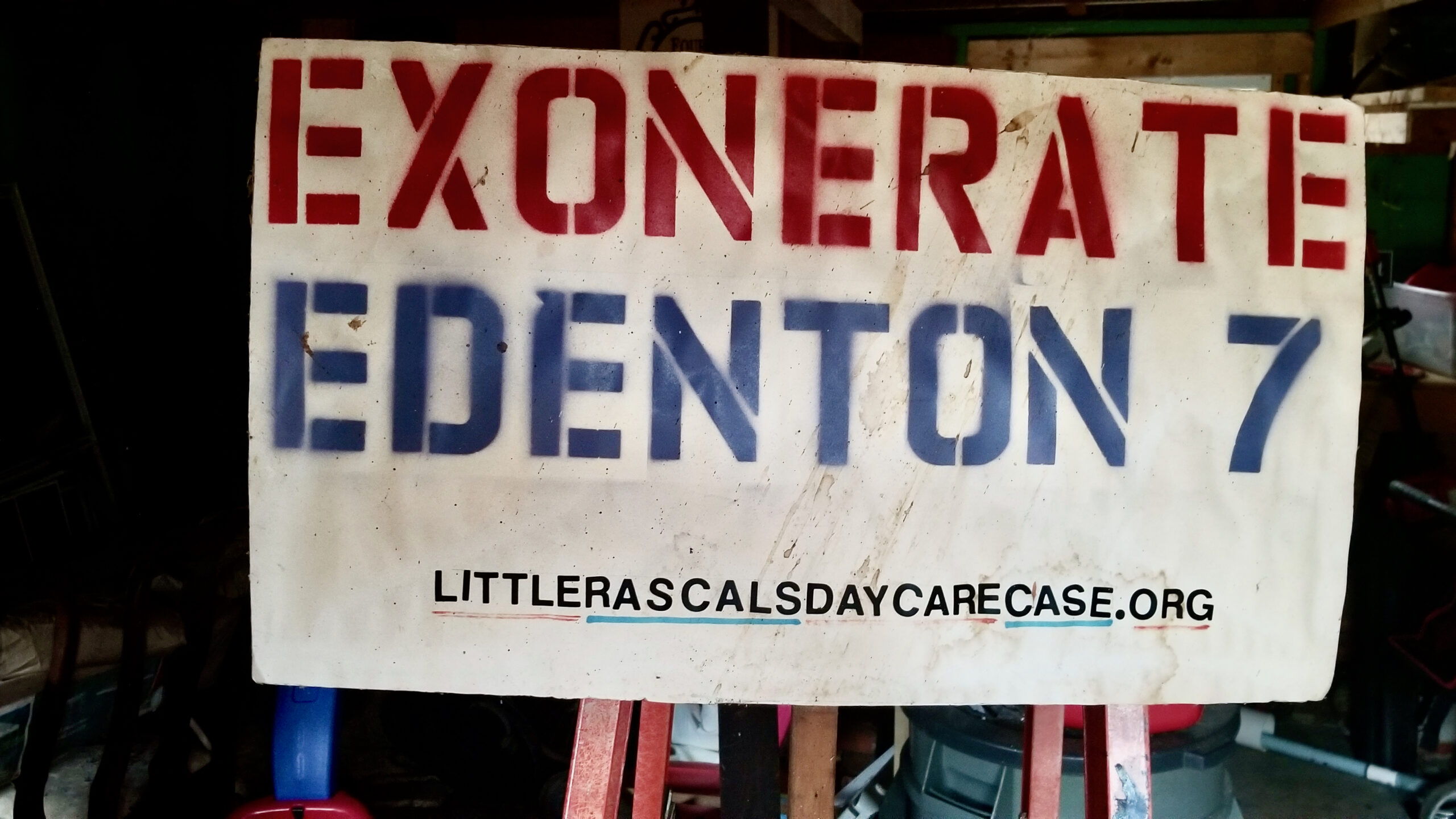
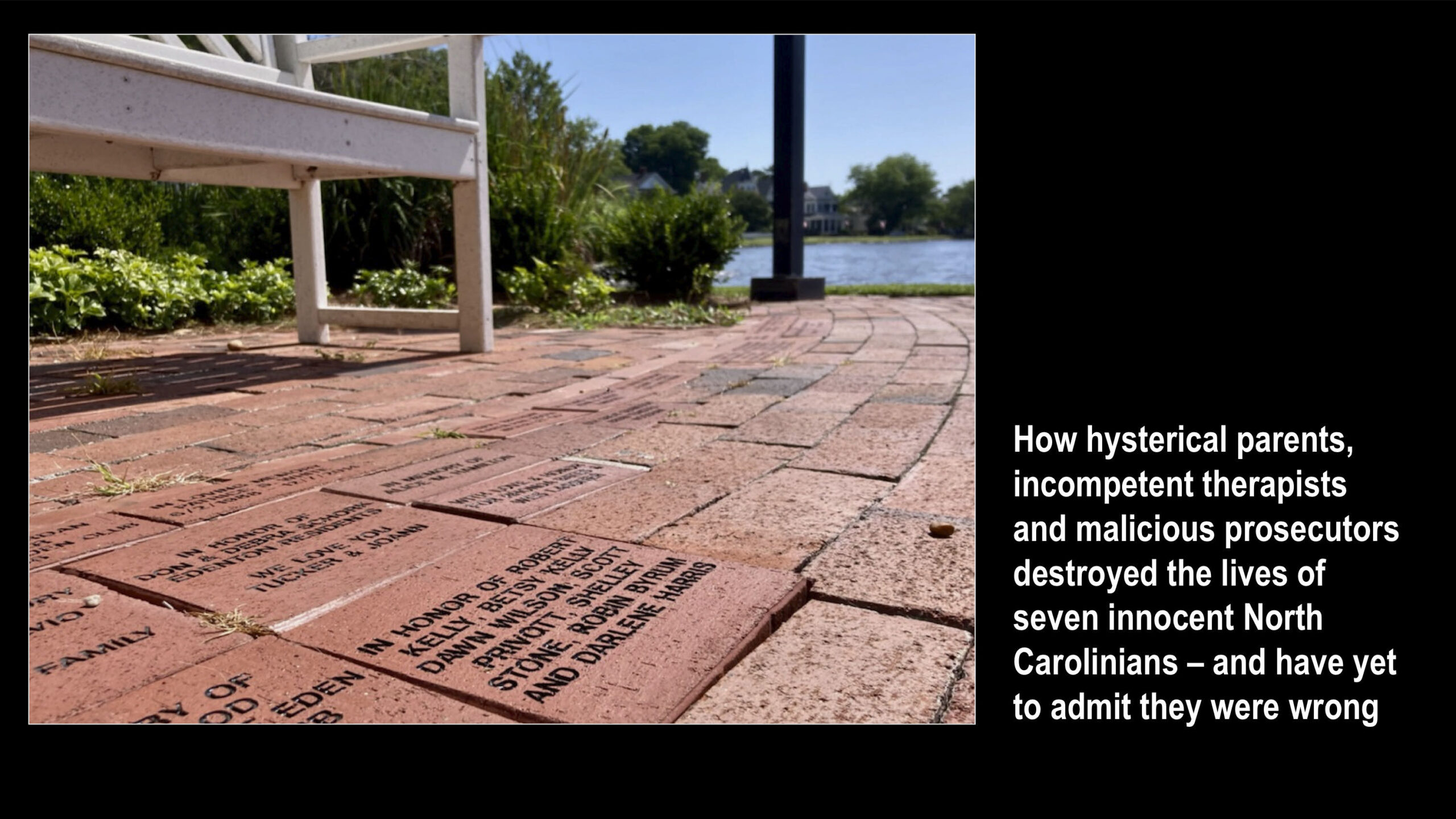
Among the alleged perpetrators: the sheriff and mayor. But prosecutors would charge only Robin Byrum, Darlene Harris, Elizabeth “Betsy” Kelly, Robert “Bob” Kelly, Willard Scott Privott, Shelley Stone and Dawn Wilson – the Edenton 7.
Along with sodomy and beatings, allegations included a baby killed with a handgun, a child being hung upside down from a tree and being set on fire and countless other fantastic incidents involving spaceships, hot air balloons, pirate ships and trained sharks.
By the time prosecutors dropped the last charges in 1997, Little Rascals had become North Carolina’s longest and most costly criminal trial. Prosecutors kept defendants jailed in hopes at least one would turn against their supposed co-conspirators. Remarkably, none did. Another shameful record: Five defendants had to wait longer to face their accusers in court than anyone else in North Carolina history.
Between 1991 and 1997, Ofra Bikel produced three extraordinary episodes on the Little Rascals case for the PBS series “Frontline.” Although “Innocence Lost” did not deter prosecutors, it exposed their tactics and fostered nationwide skepticism and dismay.
With each passing year, the absurdity of the Little Rascals charges has become more obvious. But no admission of error has ever come from prosecutors, police, interviewers or parents. This site is devoted to the issues raised by this case.
On Facebook


Little Rascals Day Care Case
This Facebook page is an offshoot of littlerascalsdaycarecase.org, which addresses the wrongful prosecution of the Edenton Seven and other such victims.

Meanwhile in Edenton....
This content isn't available right now
When this happens, it's usually because the owner only shared it with a small group of people, changed who can see it or it's been deleted.0 CommentsComment on Facebook
Allies for our cause!
This content isn't available right now
When this happens, it's usually because the owner only shared it with a small group of people, changed who can see it or it's been deleted.0 CommentsComment on Facebook
The courts have a long history of capriciously pulling the rug out from under Junior's appeals, but maybe this time....
This content isn't available right now
When this happens, it's usually because the owner only shared it with a small group of people, changed who can see it or it's been deleted.0 CommentsComment on Facebook
Click for earlier Facebook posts archived on this site
Click to go to

Today’s random selection from the Little Rascals Day Care archives….
‘Michelle Remembers’ spread its myth widely
 Nov. 15, 2015
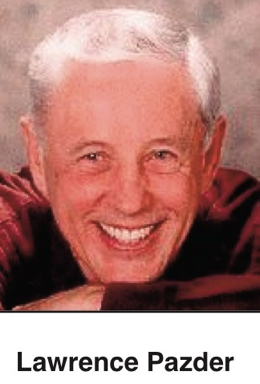
“In 1977 the Canadian psychotherapist Lawrence Pazder published a memoir of one of his patients, ‘Michelle Remembers.’…
“Michelle’s memoir had been preceded by a number of other books by survivors of child abuse, such as ‘The Three Faces of Eve’ (1952) and ‘Sybil’ (1973)…. What Michelle remembered, though, set her book apart. The narrative included lurid details of years of sexual abuse, satanic ritual, animal sacrifice, serial rape, baby killing and a climactic final battle between the devil (complete with horns and tail) and the Virgin Mary…
“Michelle had apparently repressed the memory of these events for something like 20 years. Only after sessions with her therapist (whom she later married) did the memories reemerge, from the couch to the printed page.
“‘Michelle Remembers’ was the first to really discover satan, and many of its narrative moments would recur, endlessly, in the following decade in a series of expanding claims of a secret satanic conspiracy for world domination. As one law enforcement official put it, ‘Before “Michelle Remembers,” there were no Satanic child prosecutions. Now the myth is everywhere.’ ”
– From “From History to Theory” by Kerwin Lee Klein (2011)
DA acknowledges junk science in arson conviction
Dec. 17, 2015
“Three men convicted of murder by arson for a 1980 fire in Brooklyn (were) exonerated on Wednesday….
“What carried the three men into prison was not reliable evidence of an intentionally set blaze, but rather an arson investigation that was more like shamanism than science, rooted in hunches and folklore and disconnected from the dynamics of actual fires. Like the comparisons of bite marks, hair and handwriting, it was a forensic practice that had the authority of white-coat laboratory science but virtually none of its rigor….”
– From “Between Guilt and Innocence, an Evolution in Fire Science”
by Jim Dwyer in the New York Times (Dec. 16)
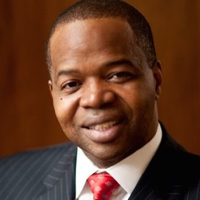
Hats off to District Attorney Ken Thompson, who moved to vacate the three convictions, citing “circumstantial evidence, outdated science and the testimony of a single, wholly unreliable witness….”
Columnist Dwyer is reminded of a statue at the University of Pennsylvania Law School depicting a mythological Chinese beast believed to have the ability to tell the guilty from the innocent by butting them. Inscribed on its base: “Slow and painful has been man’s progress from magic to law.”
“Slow and painful” indeed. Ask Junior Chandler, who has been imprisoned since April 17, 1987, for committing the magical crime of “satanic ritual abuse.”
‘We knew we had a secret’ (so we put Brenda on the case)
June 19, 2013
The Little Rascals parents insisted their children had “disclosed” mostly on their own, rather than a result of persistent interrogation. But this live interview, in the giddy moments after Bob Kelly’s convictions (April 22, 1992), suggests a different pattern:
CNN: How did you find out this happened? You were apparently the first parents to realize something was terribly wrong.
Mark Stever: Kyle, our son, told us in his own way, just different things, like ‘Mr. Bob doesn’t do it anymore. He does it to the other children.’
Audrey Stever: We knew he had a secret, and we knew it happened at nap time, but he couldn’t tell us what it was, and to escape talking about it he would say, ‘Oh, he doesn’t do it anymore, Mommy.’
CNN: And how did you finally bring it out of him exactly what he said had been happening?
Audrey Stever: Well, I approached a friend (Brenda Toppin) who was the investigating officer in the case… and things kind of went from there.
Seeking corroboration isn’t disrespectful – it’s useful
 Dec. 10, 2014
“More than a decade ago, I wrote about the McMartin preschool case, and other satanic ritual child abuse accusations that turned out to be false. Back then, the slogan many supporters of the accusations brandished was, ‘Believe the Children.’ It was an antidote to skepticism about real claims of child abuse, just as today, ‘Believe the Victims’ is a reaction to a long history of callous oversight of rape accusations.
“ ‘Believe the Victims’ makes sense as a starting presumption, but a presumption of belief should never preclude questions. It’s not wrong or disrespectful for reporters to ask for corroboration, or for editors to insist on it. Truth-seeking won’t undermine efforts to prevent campus sexual assault and protect its victims; it should make them stronger and more effective.”
– From “Reporting on Rape” by Margaret Talbot at newyorker.com (Dec. 7)
Given the prosecution’s strategic secrecy, the pursuit of corroboration in the Little Rascals case presented an enormous challenge. But news coverage could been far more skeptical and revealing – perhaps even game-changing. The editor of the News & Observer certainly thought so.