Rascals case in brief
In the beginning, in 1989, more than 90 children at the Little Rascals Day Care Center in Edenton, North Carolina, accused a total of 20 adults with 429 instances of sexual abuse over a three-year period. It may have all begun with one parent’s complaint about punishment given her child.
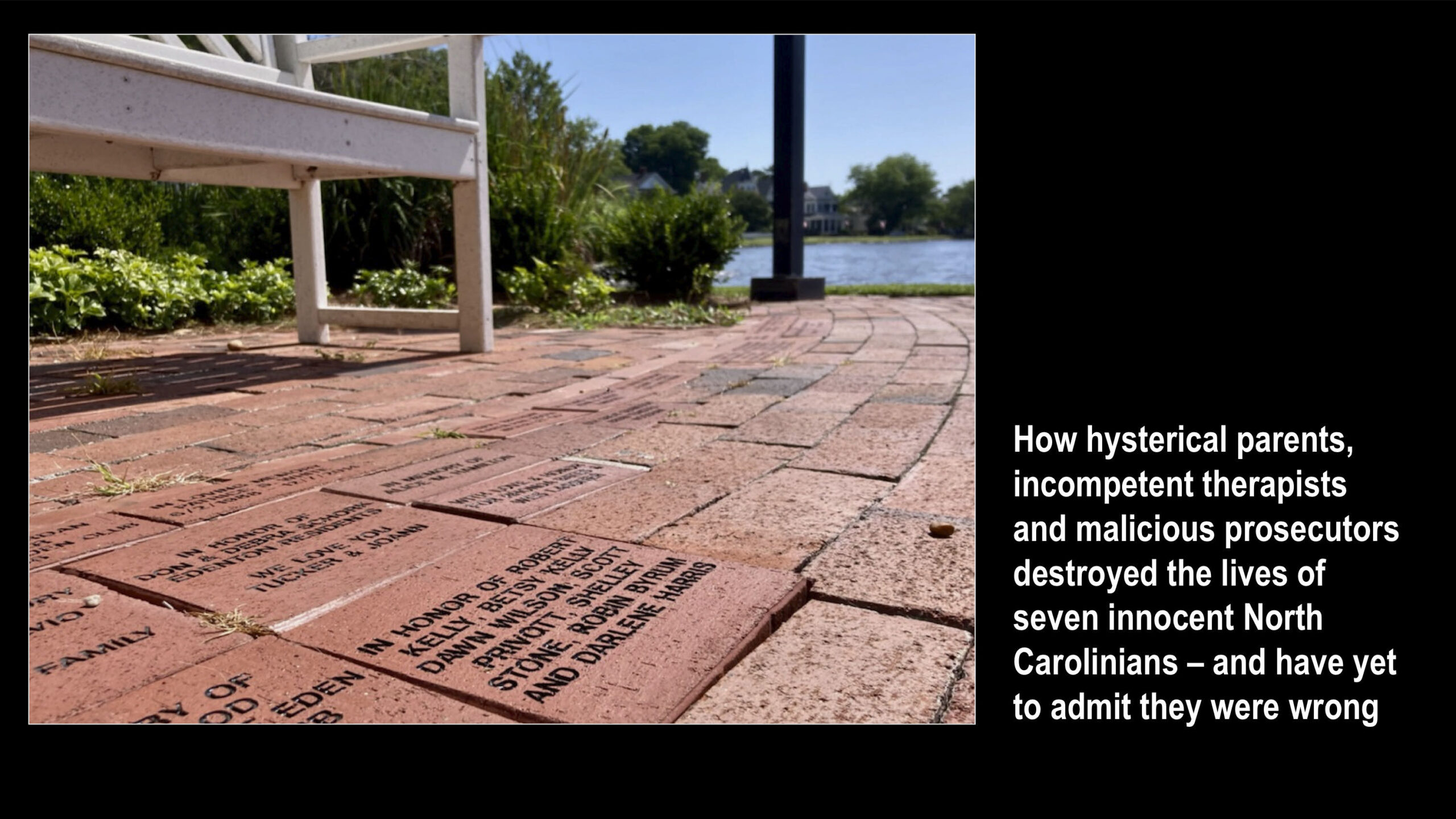
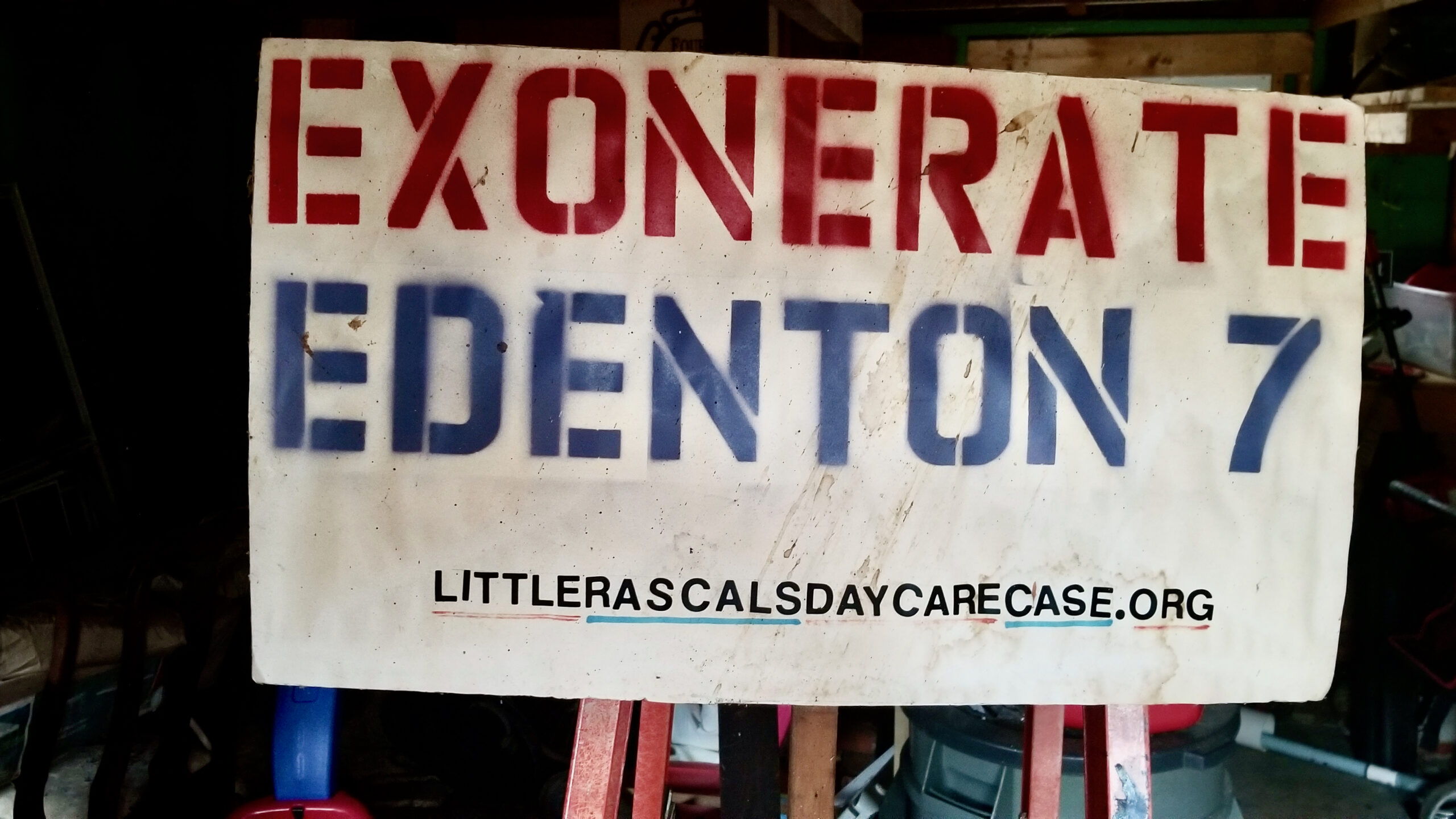
Among the alleged perpetrators: the sheriff and mayor. But prosecutors would charge only Robin Byrum, Darlene Harris, Elizabeth “Betsy” Kelly, Robert “Bob” Kelly, Willard Scott Privott, Shelley Stone and Dawn Wilson – the Edenton 7.
Along with sodomy and beatings, allegations included a baby killed with a handgun, a child being hung upside down from a tree and being set on fire and countless other fantastic incidents involving spaceships, hot air balloons, pirate ships and trained sharks.
By the time prosecutors dropped the last charges in 1997, Little Rascals had become North Carolina’s longest and most costly criminal trial. Prosecutors kept defendants jailed in hopes at least one would turn against their supposed co-conspirators. Remarkably, none did. Another shameful record: Five defendants had to wait longer to face their accusers in court than anyone else in North Carolina history.
Between 1991 and 1997, Ofra Bikel produced three extraordinary episodes on the Little Rascals case for the PBS series “Frontline.” Although “Innocence Lost” did not deter prosecutors, it exposed their tactics and fostered nationwide skepticism and dismay.
With each passing year, the absurdity of the Little Rascals charges has become more obvious. But no admission of error has ever come from prosecutors, police, interviewers or parents. This site is devoted to the issues raised by this case.
On Facebook


Little Rascals Day Care Case
This Facebook page is an offshoot of littlerascalsdaycarecase.org, which addresses the wrongful prosecution of the Edenton Seven and other such victims.

Meanwhile in Edenton....
This content isn't available right now
When this happens, it's usually because the owner only shared it with a small group of people, changed who can see it or it's been deleted.0 CommentsComment on Facebook
Allies for our cause!
This content isn't available right now
When this happens, it's usually because the owner only shared it with a small group of people, changed who can see it or it's been deleted.0 CommentsComment on Facebook
The courts have a long history of capriciously pulling the rug out from under Junior's appeals, but maybe this time....
This content isn't available right now
When this happens, it's usually because the owner only shared it with a small group of people, changed who can see it or it's been deleted.0 CommentsComment on Facebook
Click for earlier Facebook posts archived on this site
Click to go to

Today’s random selection from the Little Rascals Day Care archives….
‘Understanding and Assessing’ ritual-abuse mythology
May 28, 2012
How would Bruce A. Robinson, founder of the comprehensive and widely respected ReligiousTolerance.org, describe the credibility now given ritual abuse?
“I am unaware of any child psychologist or similar specialist who still believes ritual abuse happened in child care facilities. I think there is a consensus that repeated direct questioning of young children will get them to reveal stories about events that never happened. Over time, these stories often become ‘memories.’ ”
Mr. Robinson, meet Kathleen Coulborn Faller, professor in the School of Social Work at the University of Michigan.
As previously noted, Dr. Faller in “Understanding and Assessing Child Sexual Maltreatment” (second edition, 2003) identifies herself as a true believer. Here’s how she makes her case:
■ “Responses to allegations of ritual abuse have undergone a transformation in the last 10 years, so that any case… elicits great skepticism. In fact, it is no longer au courant to believe in the existence of ritual abuse.”
Au courant? Does she really consider scientific research into children’s testimony to be some kind of fad, like pet rocks?
■ “The vigor of the attack against ritual abuse… reinforces the belief of some professionals, myself included, that there is substance to ritual abuse….”
What!? And where are these other professionals?
■ “Ultimately the backlash… resulted in the reversal of some criminal convictions involving ritual abuse (New Jersey v. Michaels, 1994; North Carolina v. Kelly, 1995)… ”
In fact, these convictions were overthrown not because public and professional opinion had begun to shift, but because their many legal defects were obvious to appeals courts.
● ● ●
I’ve again asked Dr. Faller to respond.
N.C. justices to Junior Chandler: Drop dead
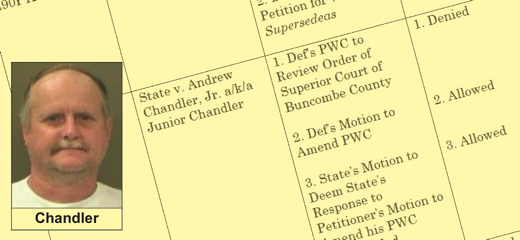 Oct. 5, 2012
Because today’s North Carolina Supreme Court decision on Junior Chandler’s appeal comprised three separate parts, I didn’t fully comprehend it.
“Is this good news or bad?” I emailed Mark Montgomery, Junior’s appellate lawyer.
“The worst,” he replied. “We’re out of court.”
Yes, this is the worst – the absolute, inexcusable, shameful worst.
The justices have denied Junior Chandler, probably the last still-imprisoned victim of the multiple-offender, multiple-victim ritual-abuse day-care panic, his final chance for a new trial. After 25 years behind bars – more than all the Little Rascals defendants combined! – he faces only more of the same.
If I were a lawyer, maybe I could understand how the North Carolina Supreme Court arrived at its decision.
How it was unmoved by Junior’s feeble representation early on.
How it was uninterested in the epochal progress made in limiting expert testimony.
How it was all too eager to find petty justifications for validating a prosecution rotten at the core.
But probably not.
Scholarship minus skepticism = academic sham
 April 20, 2012
David Finkelhor’s “Nursery Crimes: Sexual Abuse in Day Care” (1988) helped lay the foundation for the moral panic that would soon engulf Edenton and so many other ill-starred towns.
Finkelhor, a respected and widely published sociologist at the University of New Hampshire, built a Potemkin village of statistical tables – “Victim Characteristics by Type of Perpetrator,” etc. – that concealed the utter worthlessness of his data. He was wrong from the first chapter, accepting unsubstantiated claims of ritual abuse as reality, to the last, recommending that “parents, licensing and law-enforcement officials be educated to view females as potential sex-abusers.”
This is from a recent exchange Finkelhor and I had via email:
Q: In “Nursery Crimes” you accept that ritual sexual abuse did in fact occur at Little Rascals, McMartin, Wee Care, etc., and give little credence to the “backlash” against such prosecutions. Has your position changed?
A: This was a while ago and I have not revisited the case. Our research did not conduct any independent review of the evidence, but simply coded the conclusion of the investigator we interviewed. So I was neither an authority about the validity of claims at the time or at the present.
Q: Yes, I understand that your research and analysis relied entirely on “local investigating agencies (that) had decided that abuse had occurred” (p. 13).
But I’m not finding in “Nursery Crimes” any skepticism about these prosecutorial allegations. In fact, the book seems only to reinforce the belief that satanic ritual abuse was a frequent occurrence in the nation’s day cares. Am I misjudging it?
Stephen Ceci and Maggie Bruck are but two of the researchers who have detailed the contaminated interview techniques that supported each of these cases. And of course almost all the defendants eventually went free, either when charges were dropped or their guilty verdicts overturned.
Would you consider returning to this subject and, if you so chose, changing your public position? I know the defendants – innocent citizens who saw their lives crushed by unfounded charges – would appreciate it.
—
No response yet to my second question. If I receive one, I’ll post it.
Time for Truth and Reconciliation Commission
Three years ago a former Edenton resident told me: “The town leaders still have some things to answer for about Little Rascals, and I suspect that until there is a process of reconciliation, the town will remain a troubled place, though it does a good job putting on a facade.”
Edenton will elect its town officials Nov. 5. The predominant issues – population decline and the lack of a second supermarket – are clearly important, but I want to add another. This is from a query I sent all the candidates:
I don’t live in Edenton, but I’m reaching out to candidates for mayor and town council about a local issue of historic importance.
The Little Rascals Day Care case was Edenton’s most significant event of the 20th Century. The trial of Robert Kelly remains the longest and most expensive in North Carolina history. He served six years in prison before the North Carolina Court of Appeals overturned his conviction and that of Dawn Wilson. The lives of Kelly, Wilson and the five other defendants were profoundly harmed over allegations of “satanic ritual abuse” of children in their care.
The Little Rascals case, most prominently covered by eight hours of documentary coverage on PBS’s “Frontline,” also did nationwide damage to the town’s reputation. But Edenton has never reexamined, much less made amends for, the wrongful prosecution of the Edenton Seven. One way to move forward would be to create a Truth and Reconciliation Commission.
Fact-finding, non-judicial truth commissions first appeared in the 1970s and have since been used to foster honest discussion and to encourage reconciliation in the aftermath of community conflict.
In North Carolina the Greensboro Truth and Reconciliation Commission was an independent, seven-member body that sought to heal a city left divided and weakened by the “Greensboro Massacre” of 1979. The parallel to Edenton is inexact but undeniable.
If elected, would you consider supporting a Truth and Reconciliation Commission to address Edenton’s continuing divide over the Little Rascals Day Care case? Thank you for your time and attention. And good luck in your campaign.
The two candidates who have responded so far seem at least cautiously open to the idea. One day the Town of Edenton will surely find the courage to embark on its long-avoided “process of reconciliation” – let’s hope the Edenton Seven are around to see it.’
