Rascals case in brief
In the beginning, in 1989, more than 90 children at the Little Rascals Day Care Center in Edenton, North Carolina, accused a total of 20 adults with 429 instances of sexual abuse over a three-year period. It may have all begun with one parent’s complaint about punishment given her child.
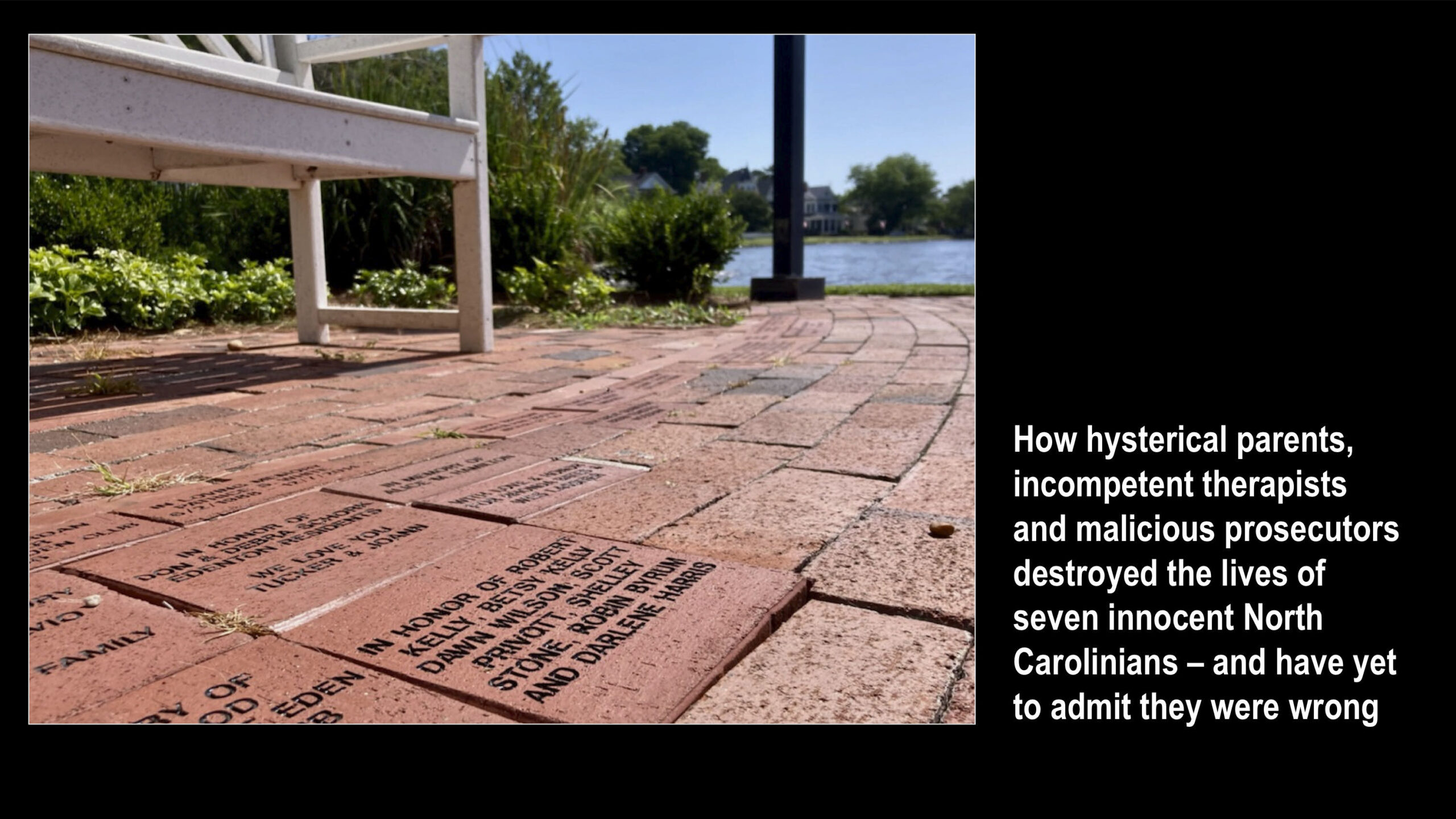
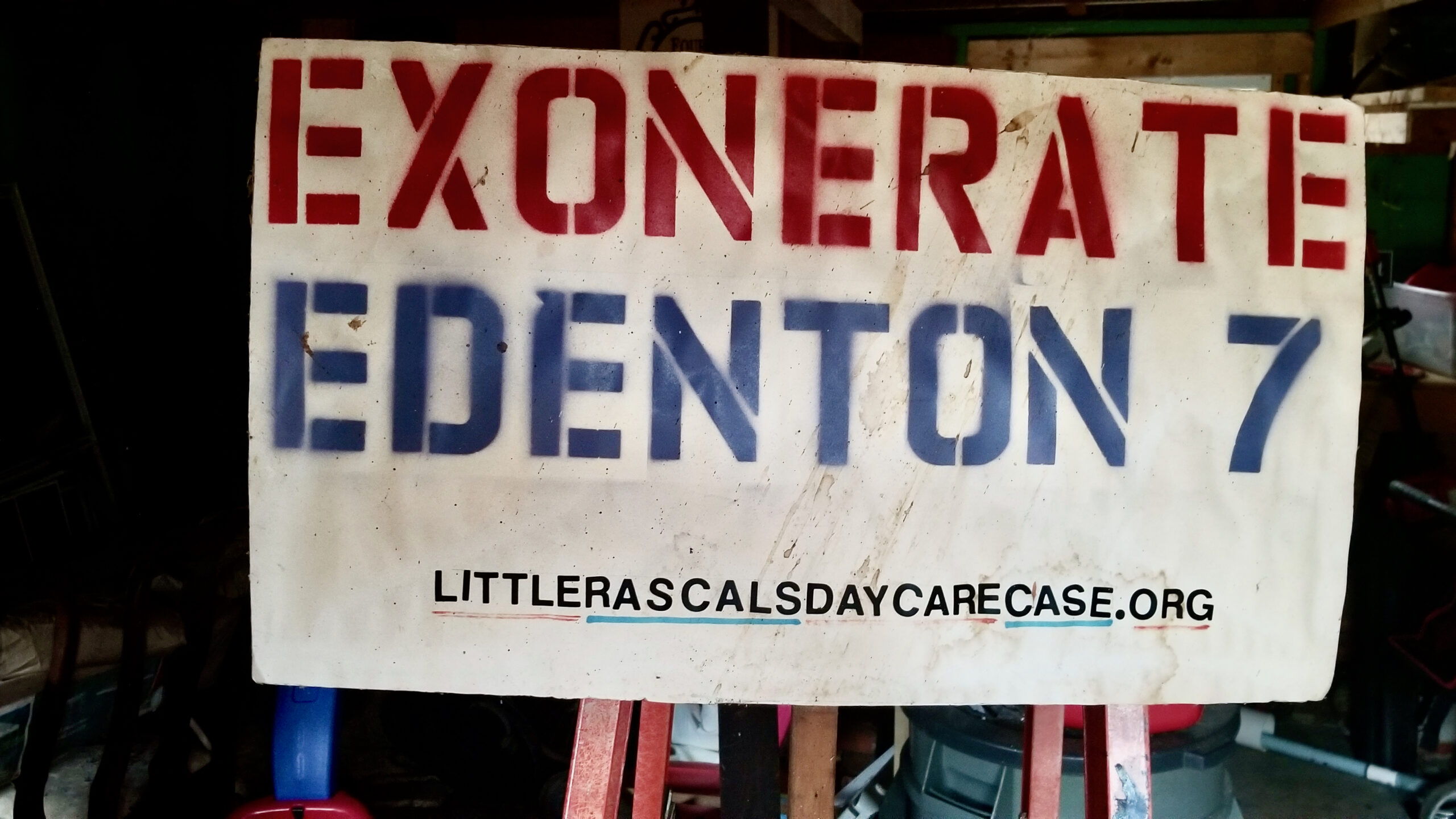
Among the alleged perpetrators: the sheriff and mayor. But prosecutors would charge only Robin Byrum, Darlene Harris, Elizabeth “Betsy” Kelly, Robert “Bob” Kelly, Willard Scott Privott, Shelley Stone and Dawn Wilson – the Edenton 7.
Along with sodomy and beatings, allegations included a baby killed with a handgun, a child being hung upside down from a tree and being set on fire and countless other fantastic incidents involving spaceships, hot air balloons, pirate ships and trained sharks.
By the time prosecutors dropped the last charges in 1997, Little Rascals had become North Carolina’s longest and most costly criminal trial. Prosecutors kept defendants jailed in hopes at least one would turn against their supposed co-conspirators. Remarkably, none did. Another shameful record: Five defendants had to wait longer to face their accusers in court than anyone else in North Carolina history.
Between 1991 and 1997, Ofra Bikel produced three extraordinary episodes on the Little Rascals case for the PBS series “Frontline.” Although “Innocence Lost” did not deter prosecutors, it exposed their tactics and fostered nationwide skepticism and dismay.
With each passing year, the absurdity of the Little Rascals charges has become more obvious. But no admission of error has ever come from prosecutors, police, interviewers or parents. This site is devoted to the issues raised by this case.
On Facebook


Little Rascals Day Care Case
This Facebook page is an offshoot of littlerascalsdaycarecase.org, which addresses the wrongful prosecution of the Edenton Seven and other such victims.

Meanwhile in Edenton....
This content isn't available right now
When this happens, it's usually because the owner only shared it with a small group of people, changed who can see it or it's been deleted.0 CommentsComment on Facebook
Allies for our cause!
This content isn't available right now
When this happens, it's usually because the owner only shared it with a small group of people, changed who can see it or it's been deleted.0 CommentsComment on Facebook
The courts have a long history of capriciously pulling the rug out from under Junior's appeals, but maybe this time....
This content isn't available right now
When this happens, it's usually because the owner only shared it with a small group of people, changed who can see it or it's been deleted.0 CommentsComment on Facebook
Click for earlier Facebook posts archived on this site
Click to go to

Today’s random selection from the Little Rascals Day Care archives….
‘Why hadn’t any of the suspects copped a plea?’ he wondered

Feb. 2, 2018
“In August 1983 [Manhattan Beach, Calif., police chief Harry] Kuhlmeyer was presented with the McMartin Preschool case. Therapists and medical doctors had identified dozens of McMartin children as sexual abuse victims. Raymond Buckey, the sole male teacher at the preschool owned by his grandmother Virginia McMartin, was the primary suspect….
“Parents demanded Buckey’s immediate arrest, but Kuhlmeyer refused. His detectives could find no corroborating evidence.
“ ‘Why hadn’t any of the suspects copped a plea, why no mea culpas, no suicides? No one got drunk and bared his soul. If everything the kids said happened, it looked like the perfect crime. Even the Mafia has snitches,’ Kuhlmeyer said.
“The Los Angeles County District Attorney’s office… drew up an arrest complaint about Buckey, but Kuhlmeyer refused to sign it. [The DA took the case to the grand jury, which routinely rubber stamps indictment requests.]
“Kuhlmeyer’s unpopular stance was vindicated seven years and $15 million in court costs later when two McMartin trials ended with no convictions.”
– From “Police chief during McMartin case refused to charge abuse suspects” by Kevin Cody in Easy Reader News (Jan. 31)
No such doubt, by either police or prosecutors, slowed the rush to put the Edenton Seven behind bars. The result, of course, was a disaster of McMartin dimensions.
Chief Kuhlmeyer died Jan. 12 in Santa Monica, Calif. He was 94.

APSAC’s child-protection record doesn’t inspire confidence
Sept. 28, 2016
“The American Professional Society on the Abuse of Children [is] presenting a ‘special issue’ of one of its publications devoted to [Differential response] – or rather, devoted to bashing DR….
“APSAC’s track record for getting child welfare issues right is less than distinguished. As Debbie Nathan and Michael Snedeker explain in Satan’s Silence, APSAC was formed in the 1980s largely by well-meaning ‘professionals’ who promoted claims of a supposed epidemic of mass molestation and satanic ritual abuse in day care centers.
“ ‘From its inception,’ Nathan and Snedeker write, ‘APSAC’s leadership roster was a veritable directory of ritual-abuse architects.’ Kee MacFarlane, who led the questioning of children in the notorious McMartin Preschool case, served on APSAC’s board – and received the group’s Outstanding Professional award – a decade after McMartin. And in 1997, three years after writing an article promoting the idea that there really were secret tunnels under the McMartin Preschool, Roland Summit, another former board member, received the group’s Lifetime Achievement award.”
– From “Opposition to Differential Response Dealt Heavy Blow” by Richard Wexler in the Chronicle of Social Change (Sept. 24)
Differential response – a less adversarial, more collaborative approach to reports of child abuse and neglect – isn’t a subject I’m well-informed on. But Wexler’s characterization of APSAC’s culpability for the day-care panic can’t be disputed.
Next: Has APSAC recanted about ‘satanic ritual abuse’?
‘Black helicopters’ over Edenton? Sure, why not?
Feb. 27, 2015
“…. A social worker from North Carolina informed the group (the Society for the Investigation, Treatment and Prevention of Ritual and Cult Abuse) that in the day-care sex-abuse case she was investigating, she thought she remembered the kids talking about black helicopters. She said she would look into it.”
– From “Conspiracy Theories and Paranoia: Notes from a Mind-Control Conference” by Evan Harrington in the Skeptical Inquirer (September-October 1996)
The “ritual and cult abuse” conference took place in Dallas in March 1995, several years after the trials of Bob Kelly and Dawn Wilson (and just a couple of months before the North Carolina Court of Appeals overturned their convictions). But I wouldn’t be surprised if the social worker chatting with Dr. Harrington was a prosecution therapist still eagerly accumulating and broadcasting claims … this one perhaps.
In search of ‘clues or indicators’ for ritual abuse
Dec. 28, 2012
Let’s not leave behind “Ritual Abuse: What It Is, Why It Happens, and How to Help” without considering Appendix B, “Similarities in the Lives of Ritual Abuse Survivors.”
Author Margaret Smith “asked survivors to note any clues or indicators in their lives that may have suggested they were ritually abused as a child.” She then “organize(d) these responses into meaningful categories.”
Like the symptom charts of psychologist Catherine Gould, these “meaningful categories” strain to make the wildly anecdotal seem scientific.
“Reactions to Objects That Trigger Memories,” for instance, includes not only “Preference for red meat,” but also “Hated read meat. I have been a vegetarians since I was a child.”
“Indicators from Childhood or Adult Behavior” covers both “Threw up a lot” and “Would never allow myself to vomit.”
And just what manner of abuse might be revealed by “clues” such as – I wish I were kidding – “Addicted to book reading”?