Rascals case in brief
In the beginning, in 1989, more than 90 children at the Little Rascals Day Care Center in Edenton, North Carolina, accused a total of 20 adults with 429 instances of sexual abuse over a three-year period. It may have all begun with one parent’s complaint about punishment given her child.
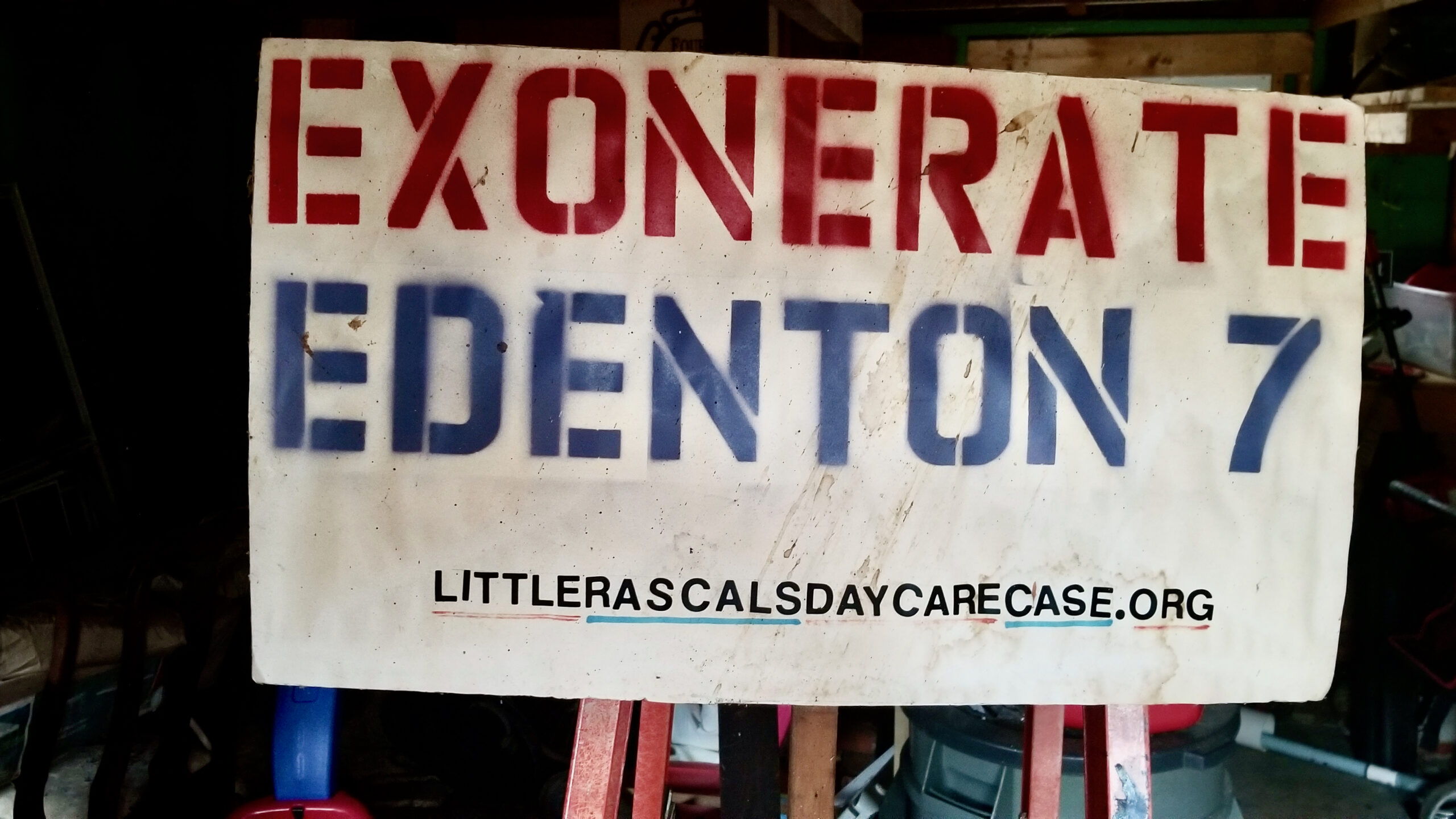
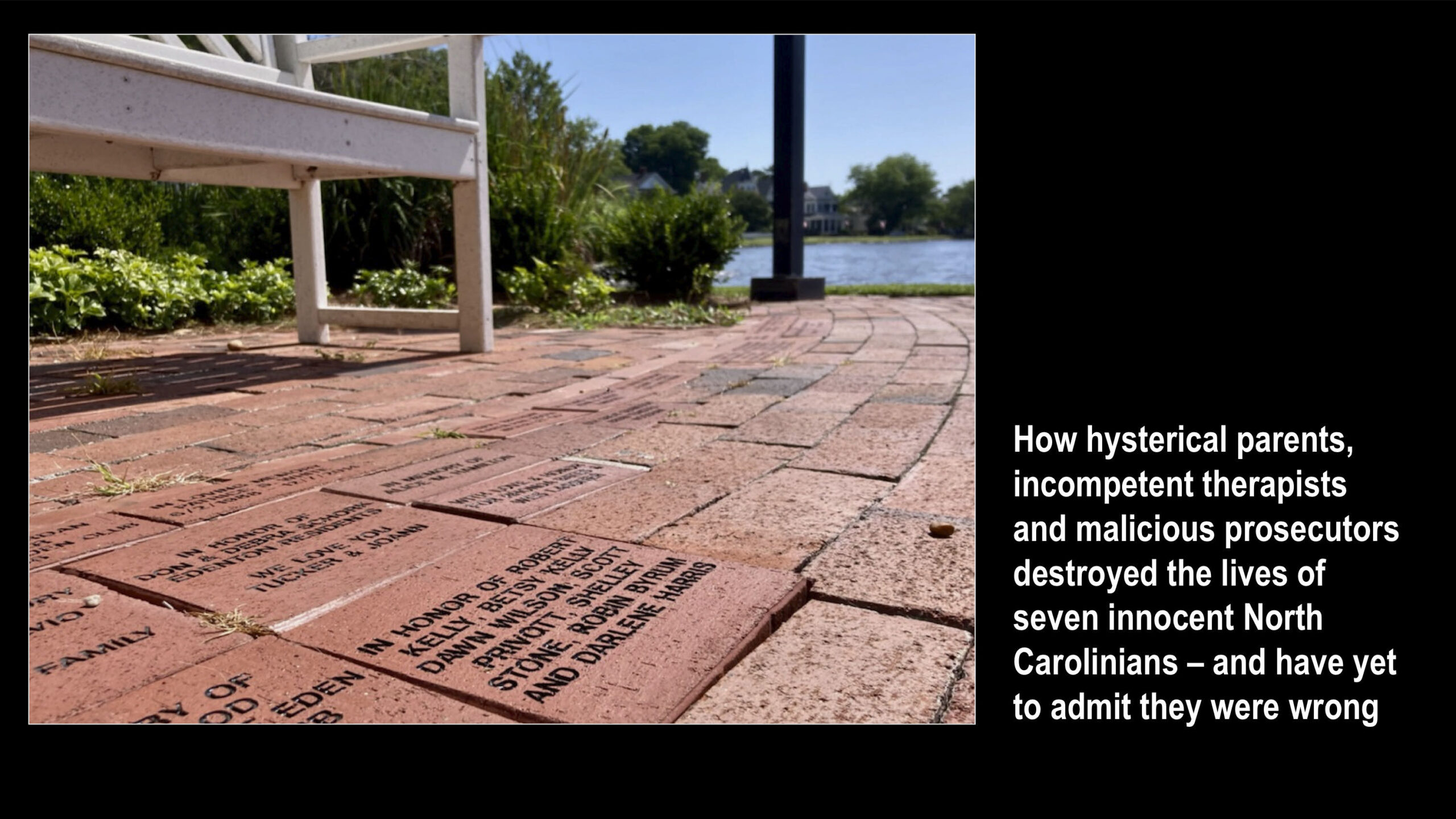
Among the alleged perpetrators: the sheriff and mayor. But prosecutors would charge only Robin Byrum, Darlene Harris, Elizabeth “Betsy” Kelly, Robert “Bob” Kelly, Willard Scott Privott, Shelley Stone and Dawn Wilson – the Edenton 7.
Along with sodomy and beatings, allegations included a baby killed with a handgun, a child being hung upside down from a tree and being set on fire and countless other fantastic incidents involving spaceships, hot air balloons, pirate ships and trained sharks.
By the time prosecutors dropped the last charges in 1997, Little Rascals had become North Carolina’s longest and most costly criminal trial. Prosecutors kept defendants jailed in hopes at least one would turn against their supposed co-conspirators. Remarkably, none did. Another shameful record: Five defendants had to wait longer to face their accusers in court than anyone else in North Carolina history.
Between 1991 and 1997, Ofra Bikel produced three extraordinary episodes on the Little Rascals case for the PBS series “Frontline.” Although “Innocence Lost” did not deter prosecutors, it exposed their tactics and fostered nationwide skepticism and dismay.
With each passing year, the absurdity of the Little Rascals charges has become more obvious. But no admission of error has ever come from prosecutors, police, interviewers or parents. This site is devoted to the issues raised by this case.
On Facebook


Little Rascals Day Care Case
This Facebook page is an offshoot of littlerascalsdaycarecase.org, which addresses the wrongful prosecution of the Edenton Seven and other such victims.

Meanwhile in Edenton....
This content isn't available right now
When this happens, it's usually because the owner only shared it with a small group of people, changed who can see it or it's been deleted.0 CommentsComment on Facebook
Allies for our cause!
This content isn't available right now
When this happens, it's usually because the owner only shared it with a small group of people, changed who can see it or it's been deleted.0 CommentsComment on Facebook
The courts have a long history of capriciously pulling the rug out from under Junior's appeals, but maybe this time....
This content isn't available right now
When this happens, it's usually because the owner only shared it with a small group of people, changed who can see it or it's been deleted.0 CommentsComment on Facebook
Click for earlier Facebook posts archived on this site
Click to go to

Today’s random selection from the Little Rascals Day Care archives….
A funny thing happened on the way to publication
March 7, 2014
Second of three posts
After our lengthy email exchange I took up editor Jon Conte on his offer to consider an expanded letter challenging the Journal of Interpersonal Violence’s past support of the “satanic ritual abuse” moral panic.
This is what I submitted on Oct. 25, 2013:
To the editor:
In December 1989 the Journal of Interpersonal Violence published “Stress Responses of Children to Sexual Abuse and Ritualistic Abuse in Day Care Centers” by Susan J. Kelley. In December 1990 it published “Ritualistic Child Abuse in a Neighborhood Setting” by Barbara Snow and Teena Sorensen. Both these articles endorsed, promoted and attempted to substantiate a concept that subsequent research has proven to be a quintessential moral panic. Today no respected social scientist will argue that satanic (or sadistic) ritual abuse ever existed in the nation’s day cares.
These articles in JIV, however, were unequivocally confident that it not only existed but also was widespread. From Kelley’s synopsis: “The purpose of this study was to examine the effects of sexual abuse and ritualistic abuse of children in day care settings. The sample was composed of 134 children; 67 children who were sexually abused and ritually abused in day care centers were compared on the Child Behavior Checklist with a carefully matched group of 67 nonabused children. Findings indicated that sexually abused children had significantly more behavior problems than did the nonabused children. Sexual abuse involving ritualistic abuse was associated with increased impact as well as increased severity in the extent of the sexual, physical, and psychological abuse the children experienced.”
Snow and Sorensen criticized “attempts to discredit victims and therapists” and seemed unaware that they were exposing the corruption of those therapists’ interviewing techniques when they wrote: “Disclosures were difficult and progressed slowly. The majority of children showed little symptomology at initial referral with significant increases during the disclosure process.”
The Little Rascals and McMartin cases were but two manifestations of this moral panic of the 1980s and early 1990s. Dozens of less publicized prosecutions occurred across North America and as far away as New Zealand and Germany. The extensive literature illuminating the day care moral panic includes “Satanic Panic: The Creation of a Contemporary Legend” by Jeffrey S. Victor, “Sex Panic and the Punitive State” by Roger N. Lancaster, “Moral Panic: Changing Concepts of the Child Molester in Modern America” by Philip Jenkins, “The Satanism Scare” by David G. Bromley, Joel Best and James T. Richardson, “Moral Panics: The Social Construction of Deviance ” by Erich Goode and Nachman Ben-Yehuda, “The Day Care Ritual Abuse Moral Panic” by Mary De Young and the latest edition of “Folk Devils and Moral Panics” by Stanley Cohen – who coined the term “moral panic” in 1972.
The Wall Street Journal’s Dorothy Rabinowitz won a Pulitzer Prize for her coverage of the Wee Care Day Nursery case in 1985. Among law enforcement reports debunking ritual abuse allegations the best known is “Investigator’s Guide to Allegations of ‘Ritual’ Child Abuse” by Kenneth Lanning, the FBI agent in the Behavioral Science Unit assigned to examine these cases. Similar reports have been issued in countries such as England (“Extent and Nature of Organised and Ritual Abuse” byJ. S. La Fontaine), the Netherlands (“Report of the Ritual Abuse Workgroup”) and Australia (“Royal Commission into the New South Wales Police Service”).
Eventually the convictions of most of the day care providers in the United States were overturned. Playing a major part in alerting appellate courts to the suggestibility of child witnesses was an amicus brief filed in the Wee Care case by pioneer researchers Stephen Ceci and Maggie Bruck.
Before the fever broke, however, untold harm was done to defendants, families and child-witnesses. In the words of sociologist Mary De Young:
“Innocent people have been accused and convicted; the autobiographies of children have been usurped (and some children, now adults, have completely retracted their allegations); professional reputations have been destroyed (and some of the loudest proponents of the idea of ritual abuse have since retracted their claims); tens of millions of dollars were wasted on investigations and trials; it distracted attention, time, money and energy from ‘real’ cases of sexual abuse and from the fathers, brothers and other family members who most likely were the perpetrators; it made quality day care harder to find and drove out male providers who could have been valuable role models to children, especially boys; it eroticized abuse by focusing on rituals and masked and hooded perpetrators; it added nothing – absolutely nothing – to a clinical or scientific understanding of the traumatic effects of abuse because the trauma children experienced in these cases was iatrogenic, i.e., caused by investigators, interviewers, prosecutors and hysterical parents; it broke up families; and even dropped property values and interfered with commerce; and it introduced distrust, cynicism and incivility into our lives and into legitimate work on helping abused kids.”
The Journal of Interpersonal Violence should not allow these misguided articles from 1989 and 1990 to stand as its last word on claims of day-care ritual abuse.
Lew Powell
Charlotte, North Carolina
Alas, publication in the JIV now seems unlikely. Dr. Conte has not responded to my follow-up emails and phone messages over the past four months. Why might that be?
Next: I’ll consider some possible answers.
Sheriff, mayor escaped prosecutors’ dragnet
May 22, 2013
“One of the biggest strengths for the prosecution was that these children would go home every night to a parent or parents fully aligned with the prosecution theory. The story line would be reinforced at dinner, bathtime, playtime, bedtime….
“The children were, of course, separated from further contact with the accused day care workers, and by the time of trial their young memories of the actual person had been replaced by the fictional person, if they could remember who the perpetrators were supposed to be at all.
“At one point, a Little Rascals child pointed to a picture of the sheriff as one of the defendants; this identification, of course, was selectively ignored.”
– From “The Metanarrative of Suspicion in Late Twentieth-Century America” by Sandra Baringer (2004)
Edenton’s mayor was also among the initially accused, who numbered either 20, 24 or “dozens,” depending on the source. The inevitable question: How did prosecutors come to choose the Edenton Seven? Who lucked out – and why?
Lessons from a Windshield Pitting Epidemic
 March 9, 2012
“This (Breezy Point Day School) case sounds like the Windshield Pitting Epidemic….
“In the early 1950s, people in the Tacoma-Seattle area began to notice little pits in the windshields of their cars. Rumors started – Martians were landing, it was from nuclear fallout.
“Well, it turns out those pits were always there – they are in every windshield – but no one noticed them until there was anxiety about nuclear testing. For the first time, they were looking at their windshields instead of through them….
“Anxiety makes things take on a different meaning.”
– Mass hysteria specialist Gary Small, psychiatrist at UCLA School of
Medicine, quoted in Philadelphia magazine (April 1991)
Child sex trafficking: 21st century’s moral panic?
 Aug. 21, 2013
“Some advocates have suggested secure facilities for America’s child sex trafficking victims…. Such facilities force troubled children into a system of care that may be just as exploitive as with a pimp/trafficker.
“Countless women continue to seek restitution for the sexual abuse by employees assigned to supervise them while in detention in the ’60s and ’70s – some of these women have children fathered by detention employees….
“So then why do we talk about secure facilities for child victims of sex trafficking? Because ‘sex is at issue’ in their victimization….
“Child sex trafficking is not the first social issue to create moral panic around physical and sexual abuse. In the ’80s, Satanic Ritual Abuse garnered self-proclaimed experts, national media attention, law enforcement mobilizations, federal funding, excitement and hysteria. By the ’90s official investigations produced no evidence of widespread conspiracies and only a small number of crimes were verified….”
– From “Residential Programs for America’s Child Sex Trafficking Victims: Secure or Non-Secure Facilities?” by Dr. Lois Lee, founder and president, Children of the Night, at Huffington Post (July 9, 2013)