Rascals case in brief
In the beginning, in 1989, more than 90 children at the Little Rascals Day Care Center in Edenton, North Carolina, accused a total of 20 adults with 429 instances of sexual abuse over a three-year period. It may have all begun with one parent’s complaint about punishment given her child.
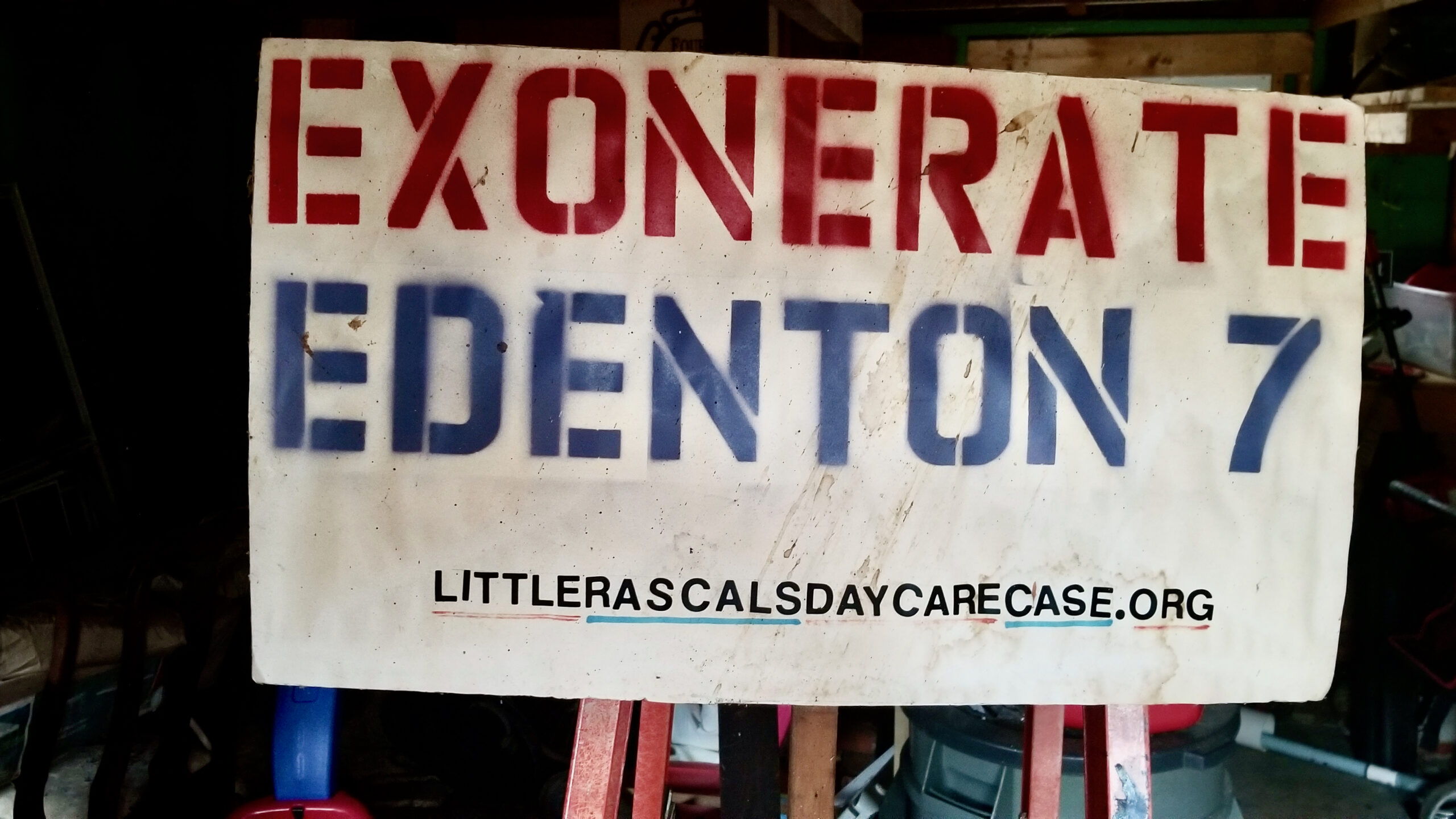
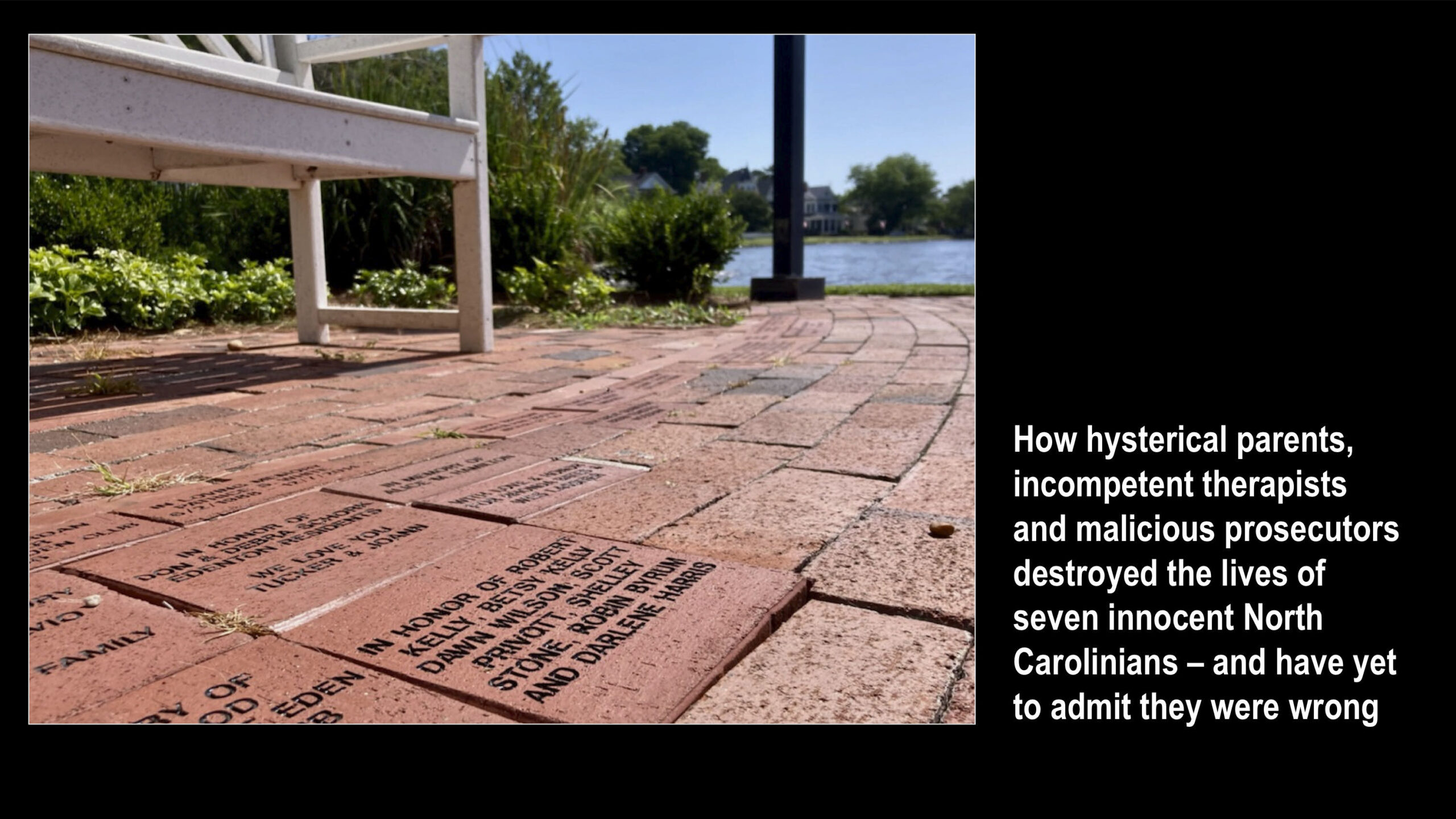
Among the alleged perpetrators: the sheriff and mayor. But prosecutors would charge only Robin Byrum, Darlene Harris, Elizabeth “Betsy” Kelly, Robert “Bob” Kelly, Willard Scott Privott, Shelley Stone and Dawn Wilson – the Edenton 7.
Along with sodomy and beatings, allegations included a baby killed with a handgun, a child being hung upside down from a tree and being set on fire and countless other fantastic incidents involving spaceships, hot air balloons, pirate ships and trained sharks.
By the time prosecutors dropped the last charges in 1997, Little Rascals had become North Carolina’s longest and most costly criminal trial. Prosecutors kept defendants jailed in hopes at least one would turn against their supposed co-conspirators. Remarkably, none did. Another shameful record: Five defendants had to wait longer to face their accusers in court than anyone else in North Carolina history.
Between 1991 and 1997, Ofra Bikel produced three extraordinary episodes on the Little Rascals case for the PBS series “Frontline.” Although “Innocence Lost” did not deter prosecutors, it exposed their tactics and fostered nationwide skepticism and dismay.
With each passing year, the absurdity of the Little Rascals charges has become more obvious. But no admission of error has ever come from prosecutors, police, interviewers or parents. This site is devoted to the issues raised by this case.
On Facebook


Little Rascals Day Care Case
This Facebook page is an offshoot of littlerascalsdaycarecase.org, which addresses the wrongful prosecution of the Edenton Seven and other such victims.

Meanwhile in Edenton....
This content isn't available right now
When this happens, it's usually because the owner only shared it with a small group of people, changed who can see it or it's been deleted.0 CommentsComment on Facebook
Allies for our cause!
This content isn't available right now
When this happens, it's usually because the owner only shared it with a small group of people, changed who can see it or it's been deleted.0 CommentsComment on Facebook
The courts have a long history of capriciously pulling the rug out from under Junior's appeals, but maybe this time....
This content isn't available right now
When this happens, it's usually because the owner only shared it with a small group of people, changed who can see it or it's been deleted.0 CommentsComment on Facebook
Click for earlier Facebook posts archived on this site
Click to go to

Today’s random selection from the Little Rascals Day Care archives….
Working ‘seven days a week’ in wrong direction
Sept. 14, 2012
“Judith Steltzner Abbott of Camden has become a moving force for the well-being of sexually abused children and their families across the state. Her presentations on child sexual abuse have become a part of nursing programs and hospital emergency room staff training and have been presented to law enforcement agencies, social services systems and members of the judiciary.
“When litigation developed from allegations of child sexual abuse at a day care center in a nearby area, Abbott worked seven days a week to provide counseling, guidance and support for children and parents….”
– From Judy Abbott’s citation as winner of the 1992 Distinguished Women of North Carolina Award, Public Service category, sponsored by the North Carolina Council for Women
Not only did the prosecution’s lead therapist avoid penalty for misdiagnosing 17 Little Rascals children, but also she became “a moving force…. across the state” in spreading her toxic mythology – and was honored for it!
Does the North Carolina Council for Women have a process for withdrawing its awards?
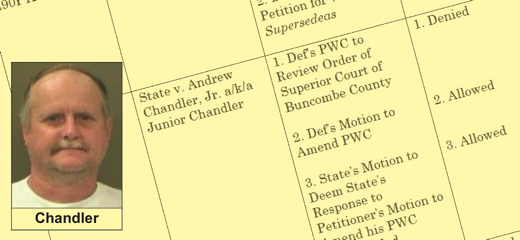
N.C. justices to Junior Chandler: Drop dead
 Oct. 5, 2012
Because today’s North Carolina Supreme Court decision on Junior Chandler’s appeal comprised three separate parts, I didn’t fully comprehend it.
“Is this good news or bad?” I emailed Mark Montgomery, Junior’s appellate lawyer.
“The worst,” he replied. “We’re out of court.”
Yes, this is the worst – the absolute, inexcusable, shameful worst.
The justices have denied Junior Chandler, probably the last still-imprisoned victim of the multiple-offender, multiple-victim ritual-abuse day-care panic, his final chance for a new trial. After 25 years behind bars – more than all the Little Rascals defendants combined! – he faces only more of the same.
If I were a lawyer, maybe I could understand how the North Carolina Supreme Court arrived at its decision.
How it was unmoved by Junior’s feeble representation early on.
How it was uninterested in the epochal progress made in limiting expert testimony.
How it was all too eager to find petty justifications for validating a prosecution rotten at the core.
But probably not.
Prognosis uncertain for misled child-witnesses
May 7, 2012
From an exchange with Stephen Ceci, author (with Maggie Bruck) of the landmark “Jeopardy in the Courtroom: A Scientific Analysis of Children’s Testimony” (1995):
Q: What may have happened to the child-witnesses as a result of being so profoundly misdiagnosed? One Little Rascals child-witness who responded anonymously to an advertisement I placed in the Edenton paper continues to say she was abused by Bob Kelly, although she admits to doubts about the female defendants.
A: We lack good scientific data on the long-term beliefs of individuals who as children were suggestively interviewed. A handful of studies, none of which resemble allegations of sexual abuse, seem to indicate that they grow up with the belief that they were abused, replete with the same psychological sequelae of true abuse survivors.
But you’ll note I use phrases such as “seem to indicate,” because the data are not uniform or consistent and the scenarios are not sex abuse ones. I think many, perhaps most, memory researchers would expect someone who was convinced as a child that he or she was victimized to grow into an adult with the same problems seen in actual victims, e.g., distrust of authority figures, insecurity, etc..
–
What extreme caution Dr. Ceci, an unsurpassed authority on child abuse, uses not to present theory and speculation as fact…. If only the therapists and theoreticians behind the day-care-abuse mania had shown half the professional uncertainty….
Duke Law project examining Chandler’s case
 Sept. 23, 2014
The Duke Law School Wrongful Convictions Clinic was a crucial ally of defense attorney Sean Devereux in the recent exoneration of Michael Alan Parker, whose “satanic ritual abuse” conviction bears many fundamental similarities to Junior Chandler’s.
Now, co-director Theresa Newman tells me the clinic “is reviewing the case file to determine if we can help Mr. Chandler prove his innocence.
“We are at the VERY early stages of our review, so we do not have a good sense of things yet and cannot even estimate a timeline for the review. The file is large and the case is complicated, so the review will take some time.
“That said, we are mindful of how long Mr. Chandler has been imprisoned and, to the extent possible, will try to conduct the review without undue delay.”
Even given Ms. Newman’s cautious caveats, this review must be seen as opening new possibilities for Junior Chandler.
As many doors as the legal system has slammed in Junior’s face, there has always seemed to be one more. Thank you, Wrongful Convictions Clinic.