Rascals case in brief
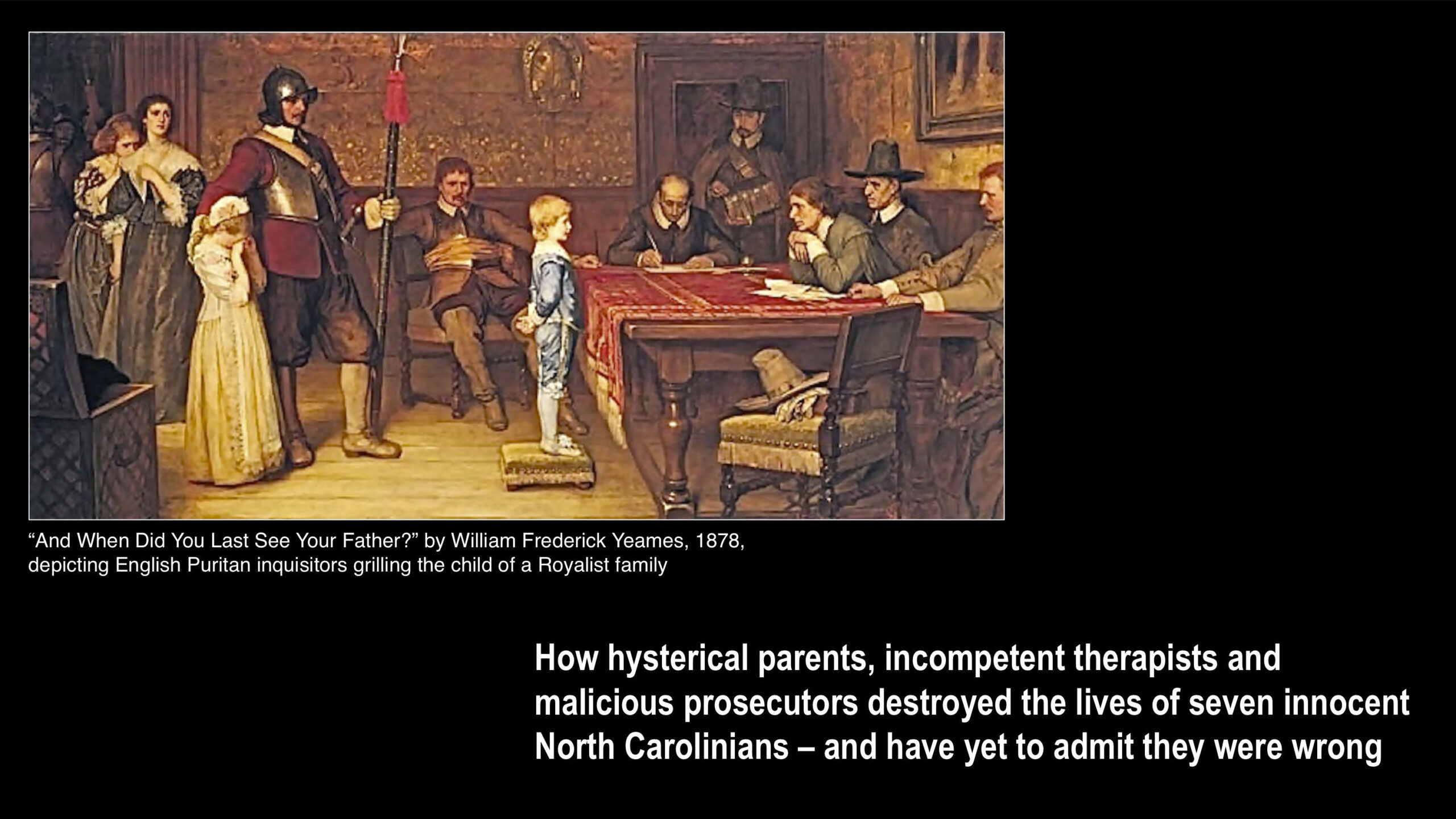
In the beginning, in 1989, more than 90 children at the Little Rascals Day Care Center in Edenton, North Carolina, accused a total of 20 adults with 429 instances of sexual abuse over a three-year period. It may have all begun with one parent’s complaint about punishment given her child.
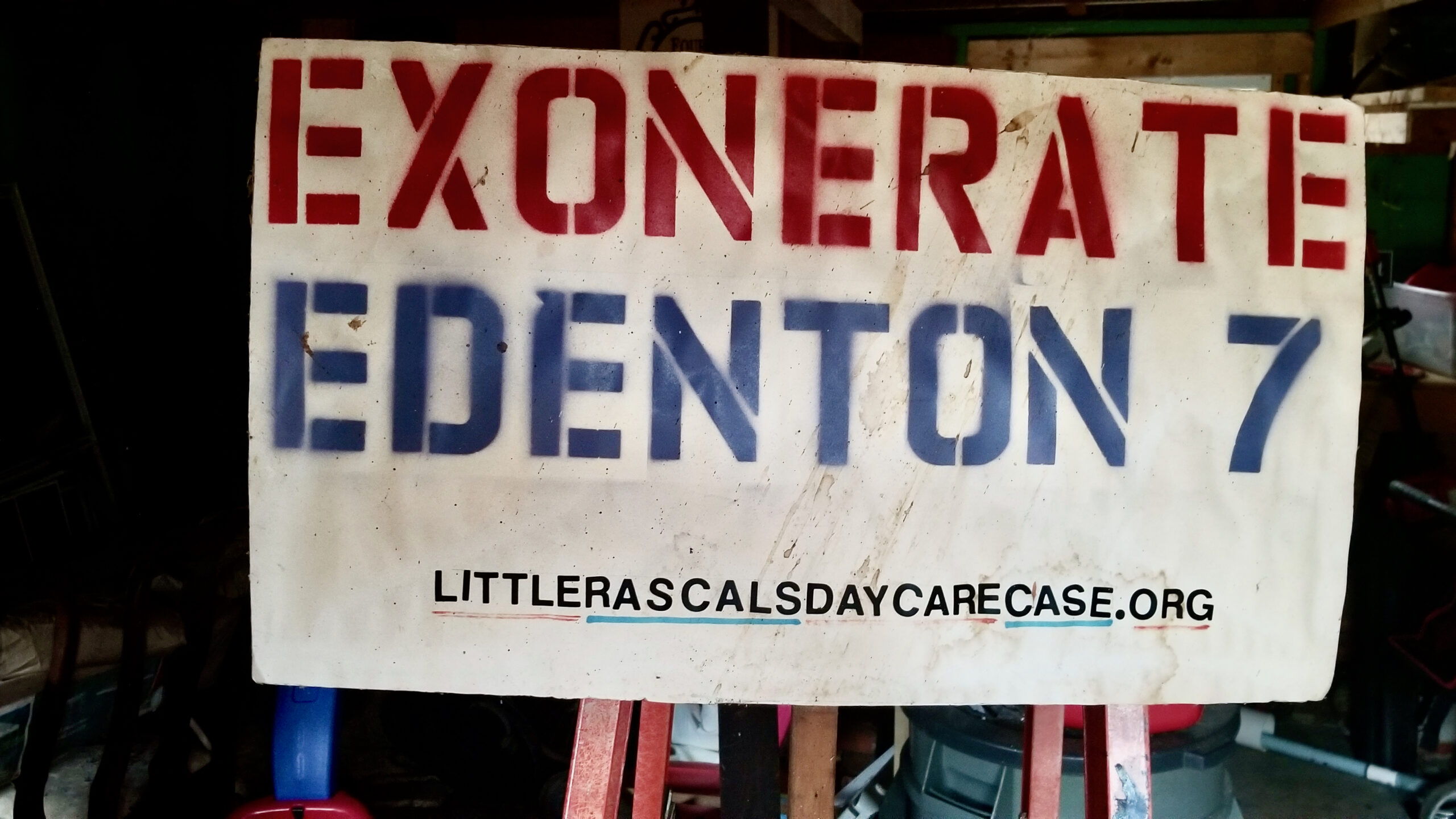
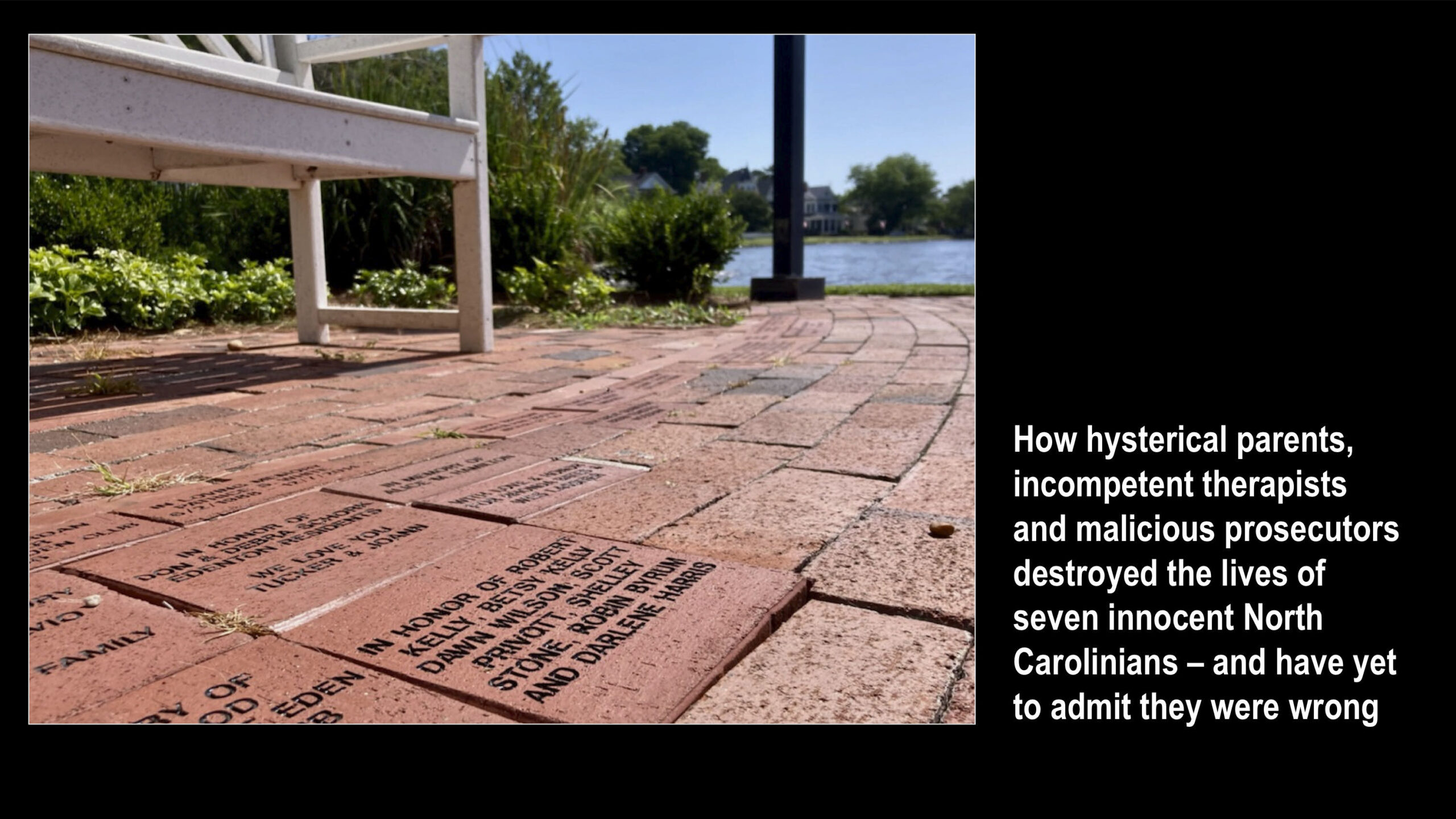
Among the alleged perpetrators: the sheriff and mayor. But prosecutors would charge only Robin Byrum, Darlene Harris, Elizabeth “Betsy” Kelly, Robert “Bob” Kelly, Willard Scott Privott, Shelley Stone and Dawn Wilson – the Edenton 7.
Along with sodomy and beatings, allegations included a baby killed with a handgun, a child being hung upside down from a tree and being set on fire and countless other fantastic incidents involving spaceships, hot air balloons, pirate ships and trained sharks.
By the time prosecutors dropped the last charges in 1997, Little Rascals had become North Carolina’s longest and most costly criminal trial. Prosecutors kept defendants jailed in hopes at least one would turn against their supposed co-conspirators. Remarkably, none did. Another shameful record: Five defendants had to wait longer to face their accusers in court than anyone else in North Carolina history.
Between 1991 and 1997, Ofra Bikel produced three extraordinary episodes on the Little Rascals case for the PBS series “Frontline.” Although “Innocence Lost” did not deter prosecutors, it exposed their tactics and fostered nationwide skepticism and dismay.
With each passing year, the absurdity of the Little Rascals charges has become more obvious. But no admission of error has ever come from prosecutors, police, interviewers or parents. This site is devoted to the issues raised by this case.
On Facebook


Little Rascals Day Care Case
This Facebook page is an offshoot of littlerascalsdaycarecase.org, which addresses the wrongful prosecution of the Edenton Seven and other such victims.

Meanwhile in Edenton....
This content isn't available right now
When this happens, it's usually because the owner only shared it with a small group of people, changed who can see it or it's been deleted.0 CommentsComment on Facebook
Allies for our cause!
This content isn't available right now
When this happens, it's usually because the owner only shared it with a small group of people, changed who can see it or it's been deleted.0 CommentsComment on Facebook
The courts have a long history of capriciously pulling the rug out from under Junior's appeals, but maybe this time....
This content isn't available right now
When this happens, it's usually because the owner only shared it with a small group of people, changed who can see it or it's been deleted.0 CommentsComment on Facebook
Click for earlier Facebook posts archived on this site
Click to go to

Today’s random selection from the Little Rascals Day Care archives….
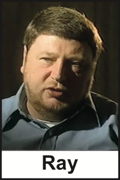
That was Dennis T. Ray’s story, and he was sticking to it
 Aug. 14, 2013
“FARMVILLE – A juror in the trial of Robert F. Kelly Jr. testified Wednesday that it was an ‘amazing coincidence’ that information from a magazine article appeared in his notes about jury deliberations.
“Dennis T. Ray insisted during a hearing on Kelly’s bid for a new trial that he did not use information from a Redbook article about child molestation to evaluate Kelly’s guilt. Ray denied that he compared Kelly to characteristics of a molester listed in the article.
“But defense attorney David Rudolf vigorously attacked Ray’s credibility by referring to notes Ray made during the deliberations. Rudolf cited numerous phrases from the magazine article, such as ‘vast amount of child pornography’ and ‘sex fiend’ which were identical to phrases in Ray’s notes.
“Rudolf, his voice rising, asked Ray whether it was just coincidence that so many phrases from the magazine appeared word-for-word in his notes. Ray replied that ‘it must be’ because jurors did not have the article in the jury room. ‘The only explanation you have for this is that it is an amazing coincidence?’ Rudolf asked. ‘Yes, sir,’ Ray said.
“In another sharp exchange, Rudolf questioned Ray’s contention that he did not describe the article in an interview with a producer for (“Innocence Lost”). Ray said he told her (only) that there were books in the jury room. Rudolf: ‘You are under oath, sir.’ Ray: ‘I do not remember saying that to her. No, sir.’ Rudolf: ‘Did you say it or not? You are under oath.’ Ray: ‘I do not believe that I did.’
“Rudolf then played video tapes of the program that showed Ray describing the article. Ray said after viewing the video that he did not remember it.”
– From “Kelly lawyer attacks juror’s credibility” in the News & Observer (Jan. 20, 1994)
Dennis T. Ray seems to have been quite a loose cannon in the jury room. In addition to the “amazing coincidence” of the Redbook article, Ray also (according to other jurors cited in Bob Kelly’s appellate brief) “made visits to Edenton despite instructions by the trial court not to.
Mr. Ray also claimed to have talked with an inmate at Eastern Correctional Institution. According to Mr. Ray, the inmate, a convicted child molester, claimed to know Bob Kelly, and to have personal knowledge of Mr. Kelly’s guilt. The jurors said that Mr. Ray also displayed some sort of object that he claimed to be a ‘magic key’ referred to by several children.”
Unpersuaded that any of this mischief might have contaminated the jury’s decision-making, Judge Marsh McLelland rejected Bob Kelly’s motion for a new trial.
A bit of doubt creeps into claims of child abuse
Dec. 26, 2012
By 1993 the moral panic was at last retreating from therapists’ offices, courtrooms and the media. That timing gives “Ritual Abuse: What It Is, Why It Happens, and How to Help” a peculiar place in its genre.
Although the pseudonymous “Margaret Smith” is a supposed “survivor and researcher of ritual abuse,” her advocacy lacks the blind certitude of a “Nursery Crimes: Sexual Abuse in Day Care” (1988) or a “Don’t Make Me Go Back, Mommy: A Child’s Book about Satanic Ritual Abuse” (1990).
“If there is even a small chance that one ritual abuse claim is true,” Smith begins, “we owe it to all potential victims to explore the problem of ritual abuse in greater depth.” Such unexpected tentativeness! Is she doubting even her own claim of victimhood? Or did an editor at HarperSanFrancisco awaken just in time to insist on at least a façade of rationality?
Unfortunately, the rest of the book alternates Smith’s first-person accounts of her ritual-abuse-caused “multiple personality disorder” with a predictable rollout of junk statistics. Could anyone be surprised, for instance, that among “adult survivors of ritual abuse,” fully 84 percent reported having witnessed “mutilation or killing of animals/humans”?
What? ‘A hotel that doesn’t take American Express?’
May 17, 2013
From Betsy Kelly’s comments at the ceremony awarding Ofra Bikel the 2007 John Chancellor Award for Excellence in Journalism:
“I stand before you tonight because of Ofra Bikel. She spent many hours with my family and with some of the most hurtful and hateful people. She turned many (viewers) around to believe in the truth. The day she walked into my life I had somebody to hold onto… and she opened the door and she led me out…..”
From Nancy Smith Barrow’s comments:
“I thought: She comes from another planet, she doesn’t speak Southern, what can she do?
“I couldn’t understand why anyone would want to climb into that hole we were in…
“Ofra took us where we were, where hell was raining down, where people who have known us since we were born would cross the street not to meet us….
“Ofra, I owe you for the most precious thing in my life (my sister), you brought her back…..”
From Ofra Bikel’s comments:
 “I was this close to not doing (‘Innocence Lost’). I said (to assistant Rachel Dretzin), ‘Are you crazy? What are we going to do in a little town with a little hotel that doesn’t take American Express?’…. Anyway, we went, and the first day I realized we were staying….
“The whole country was awash in sexual abuse stories, but there was nothing less likely than for Edenton, North Carolina, to be involved in this satanic conspiracy… The town was calm on outside but seething on the inside with these rumors of terrible sexual abuse, started by one kid, then three kids, then 10 kids, then 80 and then close to a hundred… until they decided to close the list….
“(After the last Little Rascals charges were dropped) I was left with two very strong feelings: how many things can go wrong in the justice system…. and what a powerful tool we had in our hands with the television documentary….”
Journalists, too, suffer ‘incurable blind spots’
Jan. 4, 2012
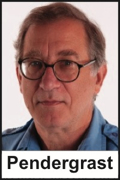 “A few years back, I met a fellow investigative journalist in North Carolina….The subject came around to the Little Rascals case. He assured me the day care workers were guilty….
“I told him about how the McMartin case in California had been the first nationally publicized case to use interviews that practically bullied children into reporting mythical, often totally implausible abuse. Little Rascals was a textbook case of the same kind of tactics, and Ofra Bikel’s three fine documentaries left no doubt about this terrible miscarriage of justice.
“Yet my friend refused to listen to any other evidence or point of view. It transpired that his wife had recovered ‘memories’ of sexual abuse – another subject on which he would hear no other evidence….
“I tell you this just to let you know I am familiar with cases in which otherwise objective journalists develop seemingly incurable blind spots.”
– From a 1997 letter to Columbia Journalism Review by Mark Pendergrast, author of “Victims of Memory,” challenging criticism of the False Memory Syndrome Foundation