Rascals case in brief
In the beginning, in 1989, more than 90 children at the Little Rascals Day Care Center in Edenton, North Carolina, accused a total of 20 adults with 429 instances of sexual abuse over a three-year period. It may have all begun with one parent’s complaint about punishment given her child.
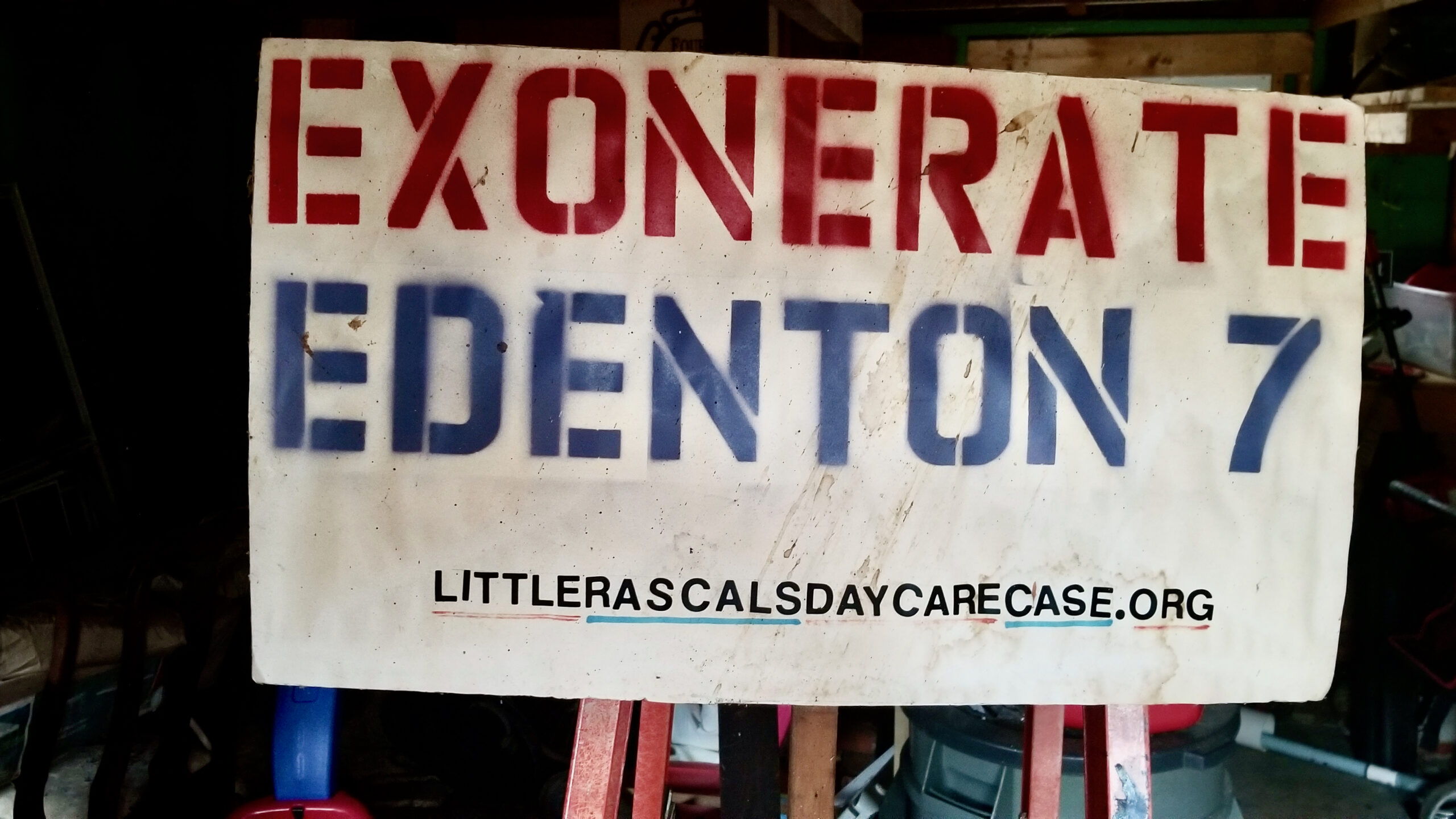
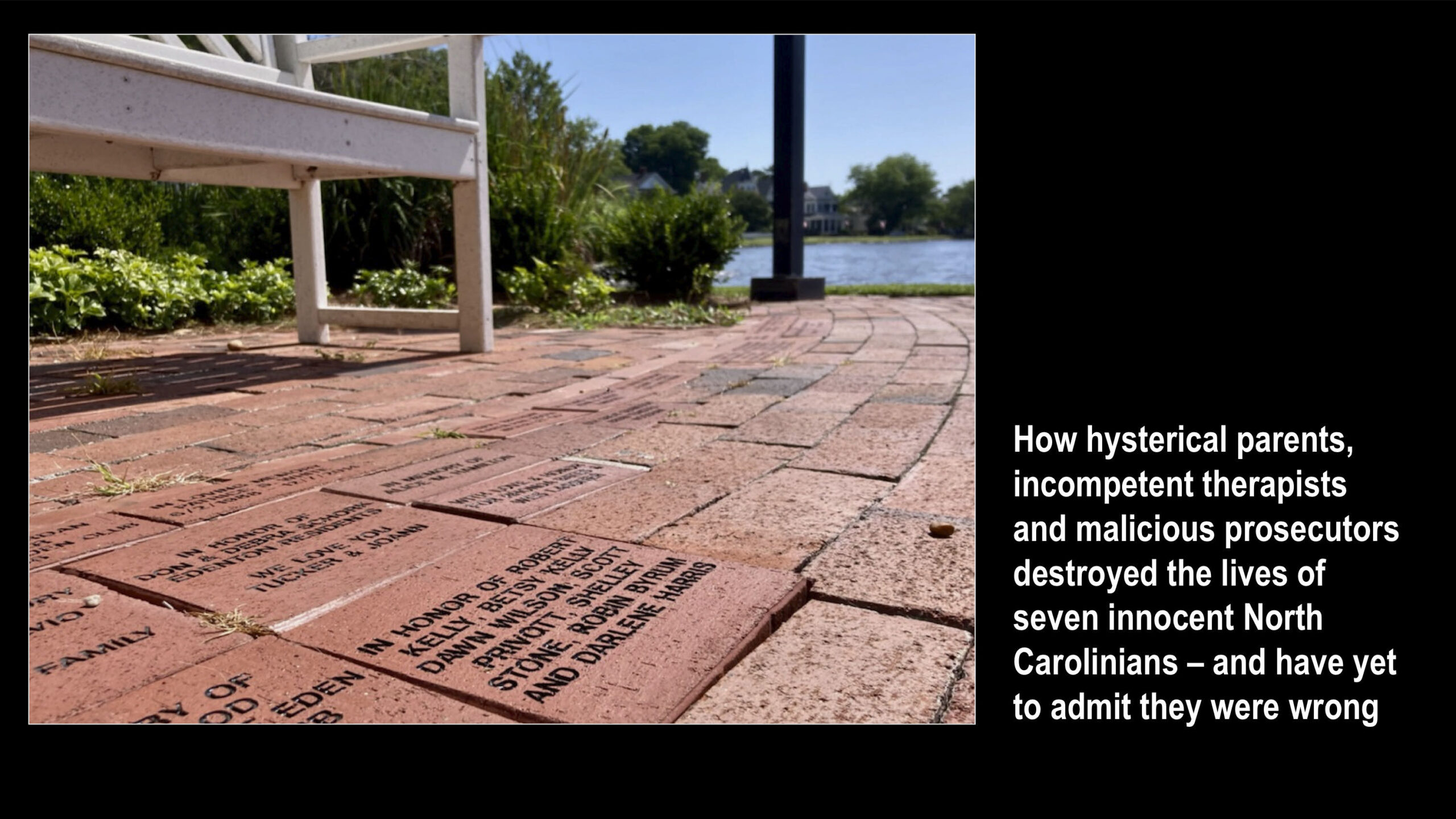
Among the alleged perpetrators: the sheriff and mayor. But prosecutors would charge only Robin Byrum, Darlene Harris, Elizabeth “Betsy” Kelly, Robert “Bob” Kelly, Willard Scott Privott, Shelley Stone and Dawn Wilson – the Edenton 7.
Along with sodomy and beatings, allegations included a baby killed with a handgun, a child being hung upside down from a tree and being set on fire and countless other fantastic incidents involving spaceships, hot air balloons, pirate ships and trained sharks.
By the time prosecutors dropped the last charges in 1997, Little Rascals had become North Carolina’s longest and most costly criminal trial. Prosecutors kept defendants jailed in hopes at least one would turn against their supposed co-conspirators. Remarkably, none did. Another shameful record: Five defendants had to wait longer to face their accusers in court than anyone else in North Carolina history.
Between 1991 and 1997, Ofra Bikel produced three extraordinary episodes on the Little Rascals case for the PBS series “Frontline.” Although “Innocence Lost” did not deter prosecutors, it exposed their tactics and fostered nationwide skepticism and dismay.
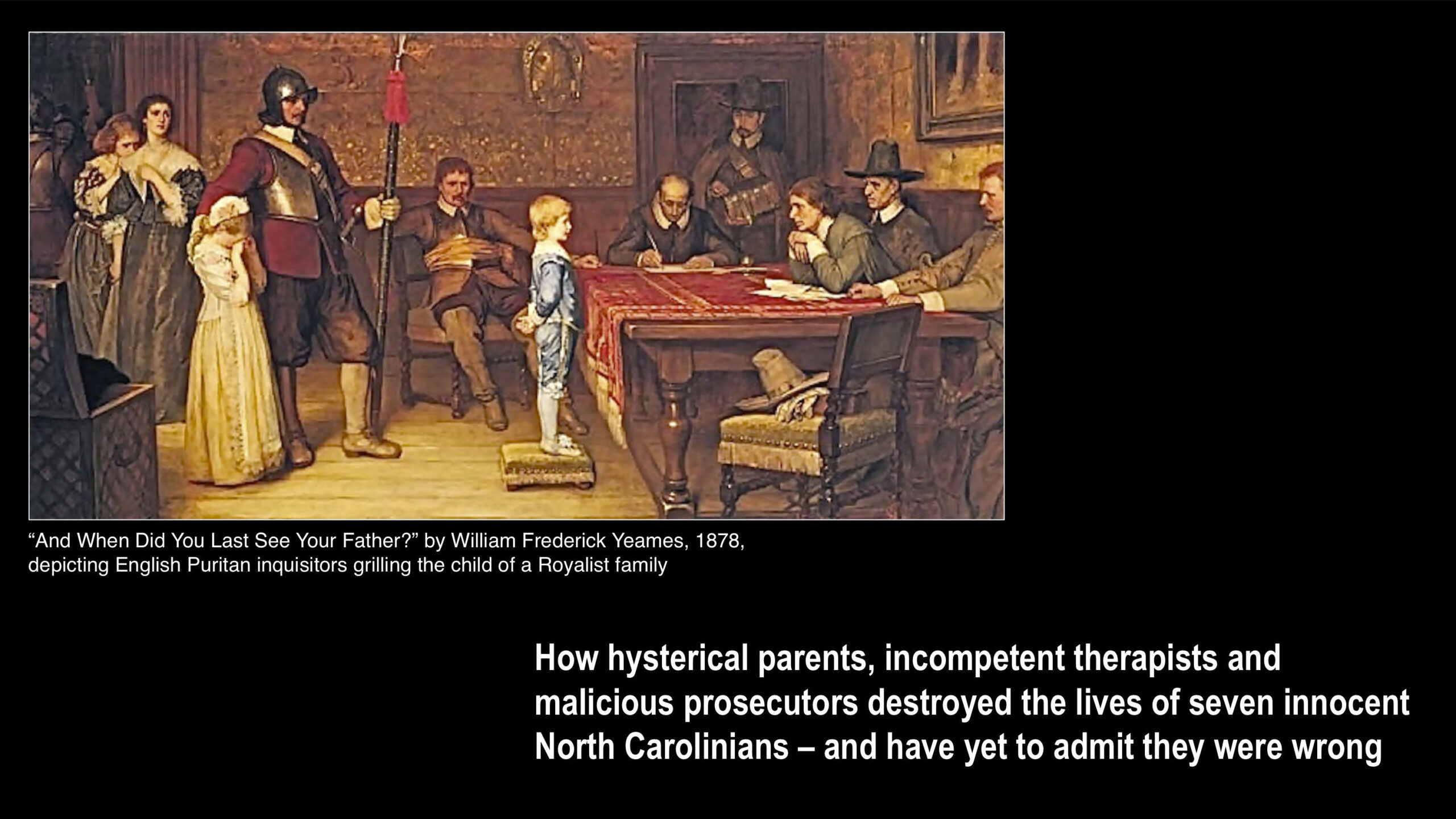
With each passing year, the absurdity of the Little Rascals charges has become more obvious. But no admission of error has ever come from prosecutors, police, interviewers or parents. This site is devoted to the issues raised by this case.
On Facebook


Little Rascals Day Care Case
This Facebook page is an offshoot of littlerascalsdaycarecase.org, which addresses the wrongful prosecution of the Edenton Seven and other such victims.

Meanwhile in Edenton....
This content isn't available right now
When this happens, it's usually because the owner only shared it with a small group of people, changed who can see it or it's been deleted.0 CommentsComment on Facebook
Allies for our cause!
This content isn't available right now
When this happens, it's usually because the owner only shared it with a small group of people, changed who can see it or it's been deleted.0 CommentsComment on Facebook
The courts have a long history of capriciously pulling the rug out from under Junior's appeals, but maybe this time....
This content isn't available right now
When this happens, it's usually because the owner only shared it with a small group of people, changed who can see it or it's been deleted.0 CommentsComment on Facebook
Click for earlier Facebook posts archived on this site
Click to go to

Today’s random selection from the Little Rascals Day Care archives….
Prosecution kept its eye on the (wrong) target
Dec. 28, 2011
“Throughout the trial, prosecuting attorneys (in the Little Rascals case) repeatedly pursued their hunches without an apparent desire to test an alternate theory. This resulted in a rather spectacular false admission by 6-year-old Andy, who had been a 3-year-old at the time of the alleged sexual abuse by Bob Kelly.
 “ ‘Prosecutor: Do you remember a time where you ever had to do anything to Mr. Bob’s hiney with your mouth?
“ ‘Andy: No, ma’am.
“ ‘Prosecutor: Do you remember telling Dr. Betty that one time you had to lick Mr. Bob’s hiney? Did that happen? Did you ever have to do that, that you didn’t want to do it?
“ ‘Andy: Yes, ma’am.’
“In reality, the prosecutor had made a mistake, thinking that the charge was that Andy had sodomized Bob Kelly, rather than the other way around. The state dropped this charge after it realized Andy had admitted to the wrong charge.
“This ought to have sensitized the prosecution to the very real dangers of pursuing a single hypothesis in the relentless manner we have described, but unfortunately it did not appear to have done so.”
– From “Jeopardy in the Courtroom: A Scientific Analysis of Children’s Testimony”
by Stephen J. Ceci and Maggie Bruck (1995)
MPD renamed DID – but it’s still bunk
May 31, 2013
“After the DSM-III, often called the ‘Bible’ of psychiatric diagnosis, included (Multiple Personality Disorder) in 1980, thousands of spurious cases emerged in the next two decades, and special psychiatric clinics arose to treat them. Yet faced with evidence of this disastrous epidemic, the DSM-IV did not delete the diagnosis. Instead, the manual renamed it Dissociative Identity Disorder.
“ ‘MPD presented a dilemma for me,’ says (psychiatrist Allen Frances, who oversaw DSM-IV). ‘We took scrupulous pains to present both sides of the controversy as fairly and effectively as possible – even though I believed one side was complete bunk.’ How do you ‘fairly’ argue for a diagnosis you think is complete bunk? Where’s the methodological rigor? Why did it take malpractice suits to close the psychiatric MPD clinics and not the presumed voice of scientific authority, the DSM? Dissociative Identity Disorder remains in the DSM-5.”
– From “How Psychiatry Went Crazy” by Carol Tavris in the Wall Street Journal (May 17, 2013)
“Another disturbing by-product of the MPD diagnosis is the prevalence of alleged repressed memories of satanic ritual abuse. The association of satanic ritual abuse in MPD diagnoses has been attributed to the belief by numerous MPD adherents in the existence of an intergenerational satanic cult conspiracy that has murdered thousands without leaving a trace of evidence.”
– From “Repressed Memory, Multiple Personality Disorder and Satanic Ritual Abuse,” an amicus brief filed in Supreme Court of Georgia, Kahout v. Charter Peachford Behavioral Health System (September 1998)
Potent weapon for N.C. DAs: court calendar
March 20, 2013
“Unlike their counterparts in every other state, North Carolina prosecutors have control over criminal court calendars.
“In the Little Rascals case, prosecutors used their trial-scheduling authority to let defendants wait for years before proceeding with their cases. They have held the power of the calendar over (Bob) Kelly for a decade without having to account to any other government authority.”
– From “Little Rascals Day Care case still not over” in the Raleigh News & Observer (Jan. 4, 1999)
Almost nine more months would pass before prosecutors dropped the last charges against Bob Kelly.
Despite efforts at reform, district attorneys in North Carolina still maintain near total control over court calendars.
Prosecution waited futilely for defendant to roll
July 4, 2012
“The state has done me wrong and imprisoned me for over six years,” Bob Kelly said in 1995 after his conviction was overturned and prosecutors were deciding whether to try him again.
“They want me to take a plea so they can save face. It will never happen.”
Oh, how the prosecution dreamed of at least one of the Edenton Seven rolling over, pointing a finger at a fellow defendant.
Never happened, despite their being held under vague charges for endless months – and later offered every inducement short of a trip to Disney World.
Even when Betsy Kelly and Scott Privott took pleas to reduce their prison time, they continued to insist on their innocence.
There’s painfully little to admire in the story of the Little Rascals case, but the defendants’ strength under pressure was extraordinary.