Rascals case in brief
In the beginning, in 1989, more than 90 children at the Little Rascals Day Care Center in Edenton, North Carolina, accused a total of 20 adults with 429 instances of sexual abuse over a three-year period. It may have all begun with one parent’s complaint about punishment given her child.
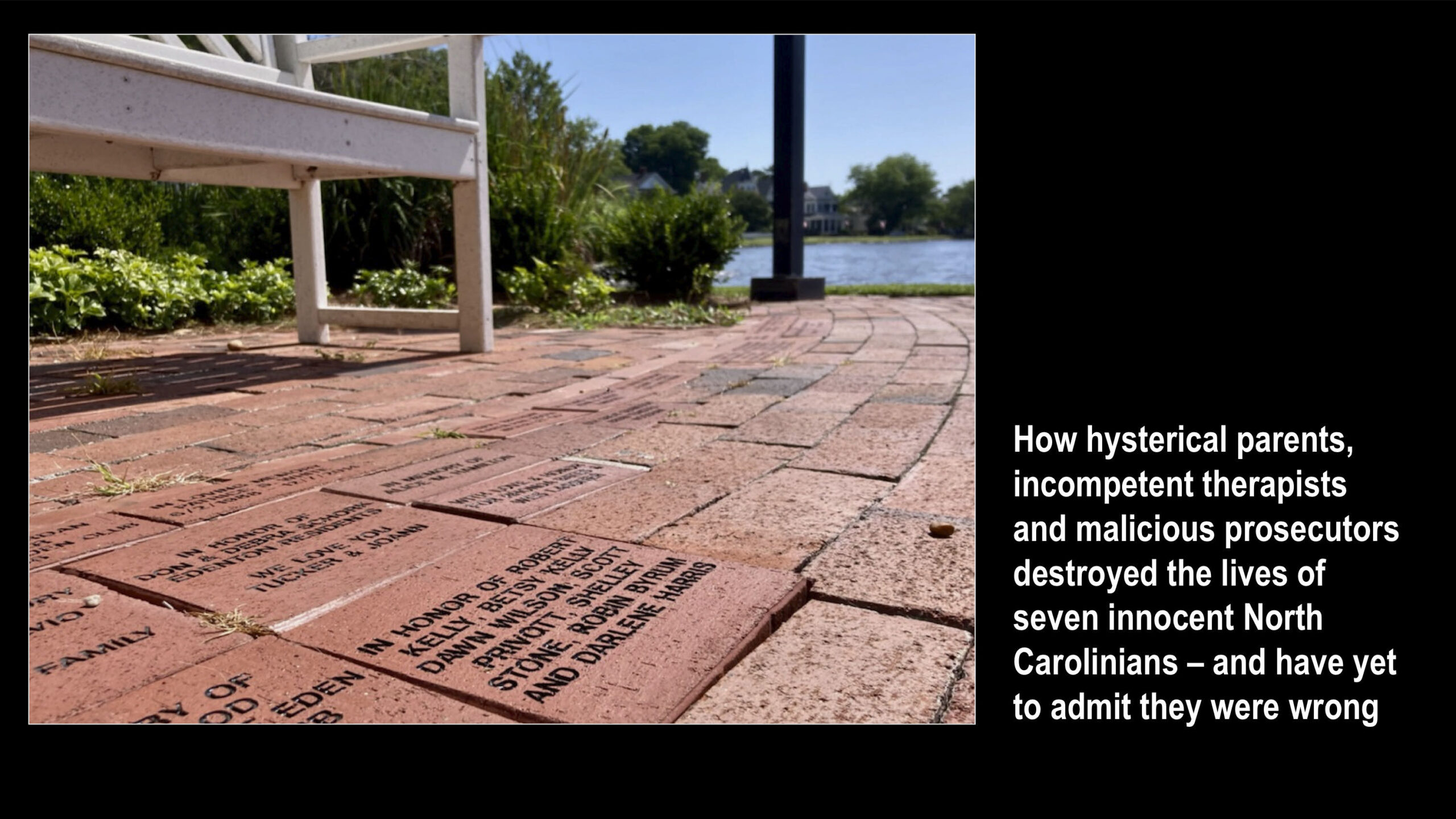
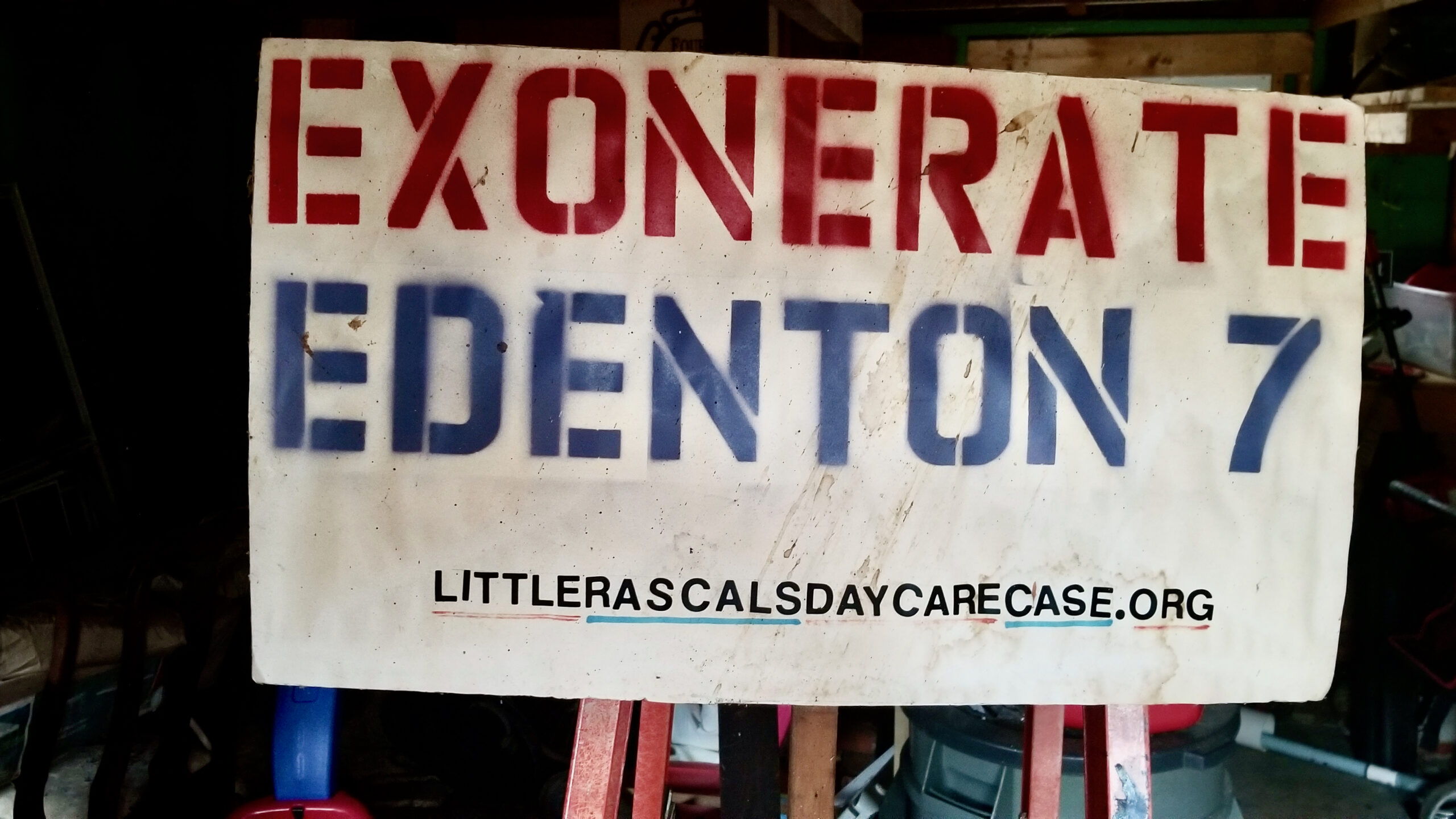
Among the alleged perpetrators: the sheriff and mayor. But prosecutors would charge only Robin Byrum, Darlene Harris, Elizabeth “Betsy” Kelly, Robert “Bob” Kelly, Willard Scott Privott, Shelley Stone and Dawn Wilson – the Edenton 7.
Along with sodomy and beatings, allegations included a baby killed with a handgun, a child being hung upside down from a tree and being set on fire and countless other fantastic incidents involving spaceships, hot air balloons, pirate ships and trained sharks.
By the time prosecutors dropped the last charges in 1997, Little Rascals had become North Carolina’s longest and most costly criminal trial. Prosecutors kept defendants jailed in hopes at least one would turn against their supposed co-conspirators. Remarkably, none did. Another shameful record: Five defendants had to wait longer to face their accusers in court than anyone else in North Carolina history.
Between 1991 and 1997, Ofra Bikel produced three extraordinary episodes on the Little Rascals case for the PBS series “Frontline.” Although “Innocence Lost” did not deter prosecutors, it exposed their tactics and fostered nationwide skepticism and dismay.
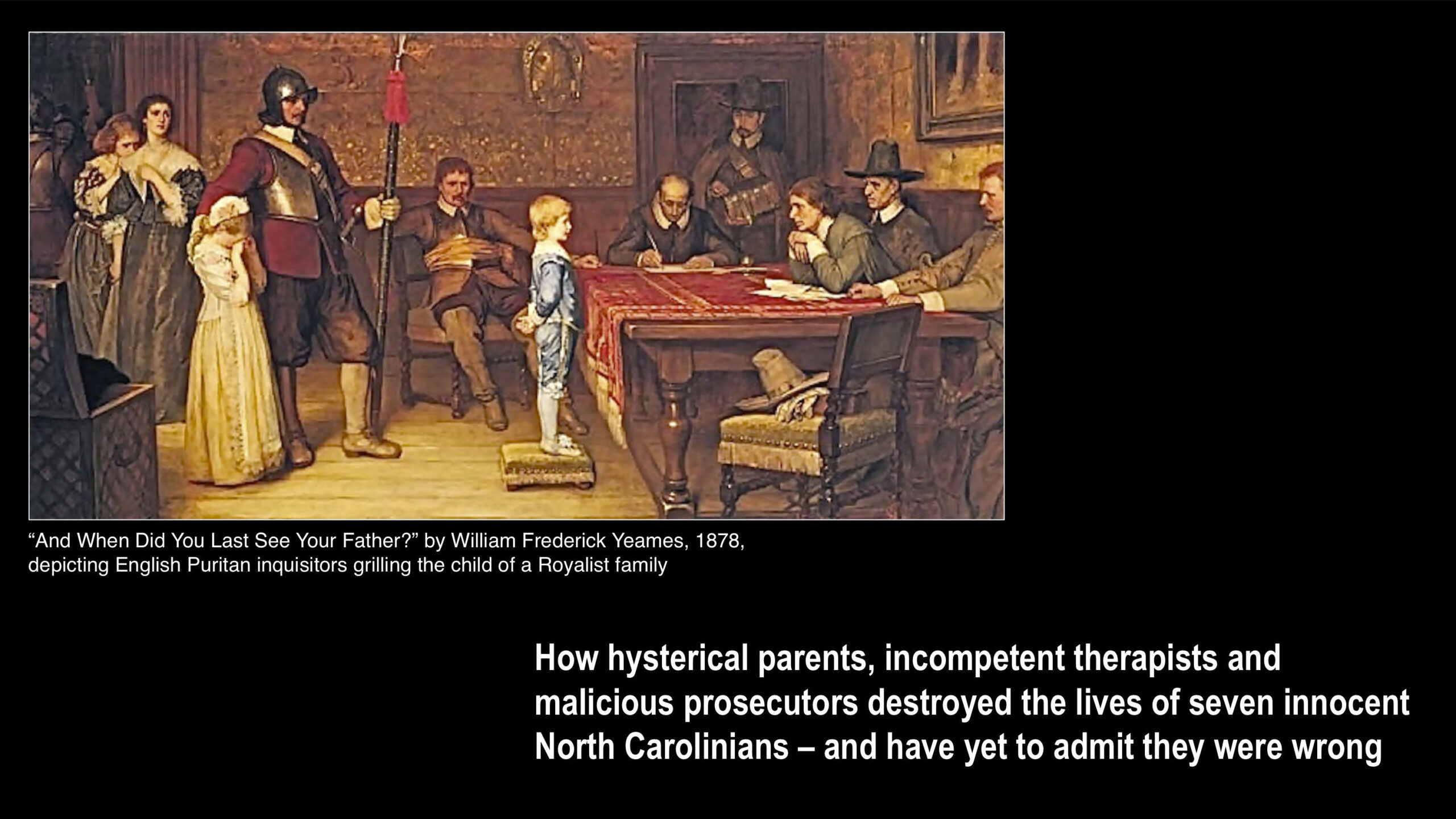
With each passing year, the absurdity of the Little Rascals charges has become more obvious. But no admission of error has ever come from prosecutors, police, interviewers or parents. This site is devoted to the issues raised by this case.
On Facebook


Little Rascals Day Care Case
This Facebook page is an offshoot of littlerascalsdaycarecase.org, which addresses the wrongful prosecution of the Edenton Seven and other such victims.

Meanwhile in Edenton....
This content isn't available right now
When this happens, it's usually because the owner only shared it with a small group of people, changed who can see it or it's been deleted.0 CommentsComment on Facebook
Allies for our cause!
This content isn't available right now
When this happens, it's usually because the owner only shared it with a small group of people, changed who can see it or it's been deleted.0 CommentsComment on Facebook
The courts have a long history of capriciously pulling the rug out from under Junior's appeals, but maybe this time....
This content isn't available right now
When this happens, it's usually because the owner only shared it with a small group of people, changed who can see it or it's been deleted.0 CommentsComment on Facebook
Click for earlier Facebook posts archived on this site
Click to go to

Today’s random selection from the Little Rascals Day Care archives….
‘They saw themselves as the good guys….’
May 21, 2012
Lee Coleman, a Berkeley, Calif., psychiatrist and co-author of “Has a Child Been Molested?” (2000), served as a consultant to the Little Rascals defense.
“When I examined the terrible interviewing methods,” he recalls, “it quickly became obvious that (Little Rascals) was like the McMartin and Kelly Michaels cases: a complete fabrication.”
How does Dr. Coleman account for therapists’ and prosecutors’ “unwillingness to see what was in front of their faces”?
“[(McMartin therapist) Kee MacFarlane became a national figure by claiming to know how to talk to kids to help them describe abuse. There followed a cadre of young, bushy-tailed professionals who saw themselves as the good guys of a movement. They were glamorous and self-righteous, and they had nothing left to think with. What if a child hadn’t been molested? They never thought about it….
“Then they led meetings across the country, where they taught their system to others, who applied it locally…”
Dr. Coleman’s characterization captures precisely the origin of the Little Rascals allegations, in which a seminar led by “sex rings” alarmist Ann Burgess attracted prosecutor H.P. Williams, therapist Judy Abbott and police dispatcher Brenda Toppin.
If only reality had offered such vivid details….
 Jan. 9, 2013
“One question that arises from studies on children’s suggestibility is whether they document false memories or merely false reports. Do children really believe that the fictional events happened? Or do they merely say so to please the interviewers?
“Consistent with the false memory interpretation, approximately one-third of the children in these studies continued to insist that particular events had really happened to them even after they were told those events were not real….
“Lacking any obvious motivation to lie, these children appeared to have developed false memories, perhaps confusing the products of their repeated attempts to visualize the events with the products of direct experience….
“Professionals were no better than chance at discriminating false from true reports. The credibility of a child’s account was related to the amount of perceptual detail mentioned in the child’s narrative. The more details, the more professional tended to believe the narrative, regardless of whether it was true.”
– From “Remembering Trauma” by Richard J. McNally (2003)
To better understand how the Little Rascals therapists went so wildly astray, give that last paragraph a second reading. “Professionals were no better than chance at discriminating false from true reports” – and they were mesmerized by the “perceptual detail” in those tales of sharks and spaceships.
Why there’s a littlerascalsdaycarecase.org
 Aug. 8, 2012
Five reasons the Little Rascals Day Care case has never attracted the attention it deserves:
■ Overshadowed by McMartin case.
■ No racial angle.
■ Remote location.
■ No death penalty.
■ No DNA.
One reason the case has attracted as much attention as it has:
■ “Innocence Lost” on “Frontline.” Thanks again, Ofra Bikel.
An expertise ‘contrary to science and common sense’
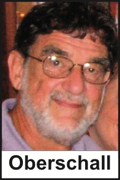 March 7, 2013
Anthony Oberschall’s “Why False Beliefs Prevail: the Little Rascals Child Sex Abuse Prosecutions” appeared in “Essays in Honor of Raymond Boudon” (2000).
Most saliently, the UNC sociologist argues that “hysteria” and “moral panic” are inadequate to describe what happened in Edenton. Rather, he sees the town – and the Little Rascals defendants – as victims of the purveyors of “pseudoscience”:
“When child sexual abuse became a national issue, the medical profession, academic psychology and social science were just starting to study it scientifically…. The legal profession lacked experience with trial testimony of pre-schoolers and admission of hearsay testimony by parents and therapists….Meanwhile thousands of child sex abuse allegations had to be dealt with.
“In the absence of proven knowledge, a child sex abuse industry of self-appointed ‘experts’ based on pseudo-science filled the demand for training and informing child protection service workers, social workers, police investigators, prosecutors, therapists and others…. They were convinced they were saving America’s children, even though their methods and knowledge were contrary to science and to common sense. In Edenton, the prosecution and the investigators relentlessly labored to supplant common sense with false beliefs based on pseudo-science, (and) they succeeded….”
Working with UNC journalism student David Loomis on his master’s thesis detailing news coverage of the case, Oberschall “tried to survey Edenton households by mail (picked names at random from a phone book), but got less than a 10 percent return rate. It was obvious people there didn’t want anything to do with an outsider, a scholar.”
Rebuffed, Oberschall drove to Edenton himself and conducted perhaps a dozen interviews, which he made use of both in “Why False Beliefs Prevail” and in this more detailed draft working paper from 2010.