
Rascals case in brief
In the beginning, in 1989, more than 90 children at the Little Rascals Day Care Center in Edenton, North Carolina, accused a total of 20 adults with 429 instances of sexual abuse over a three-year period. It may have all begun with one parent’s complaint about punishment given her child.
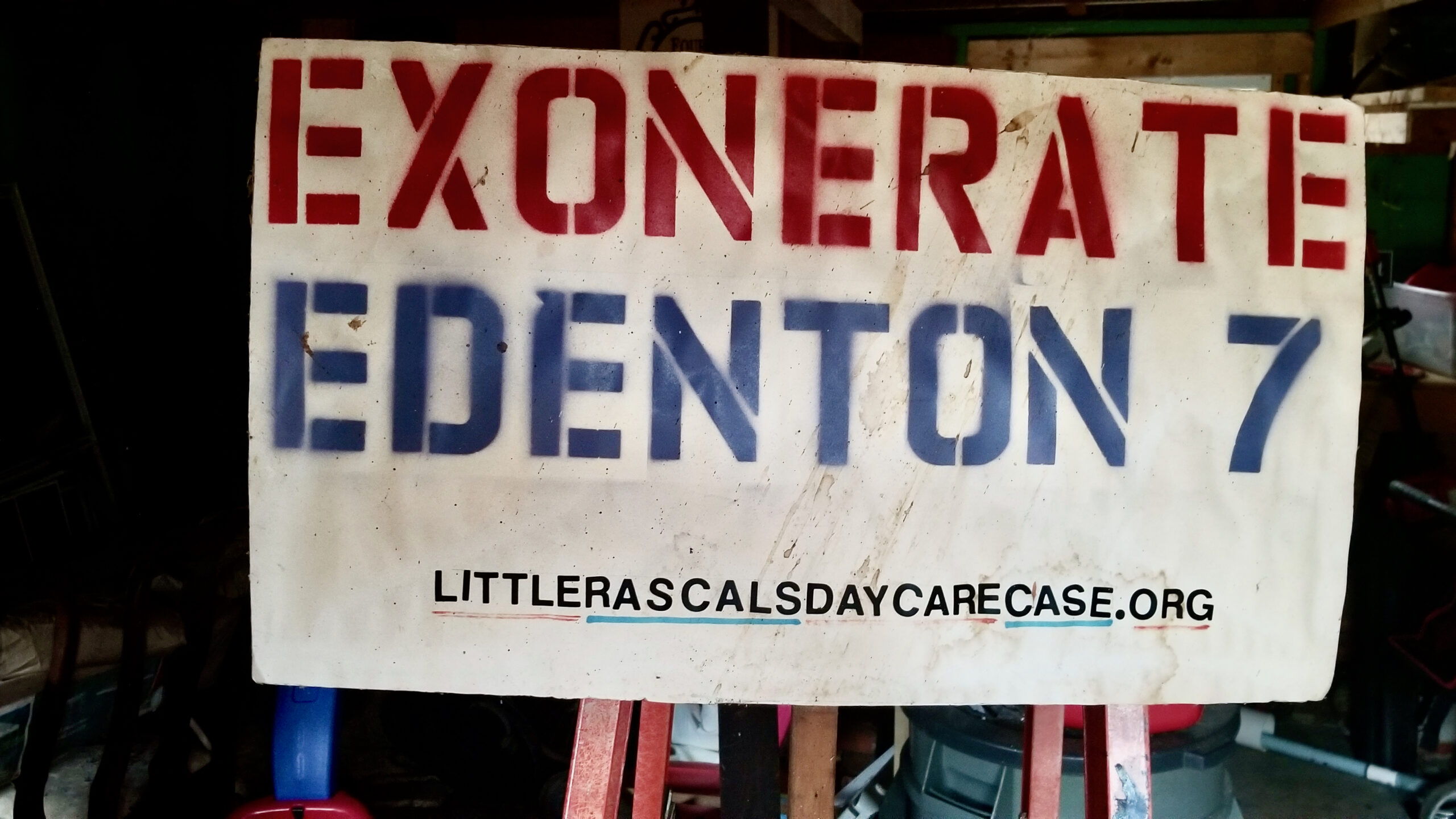
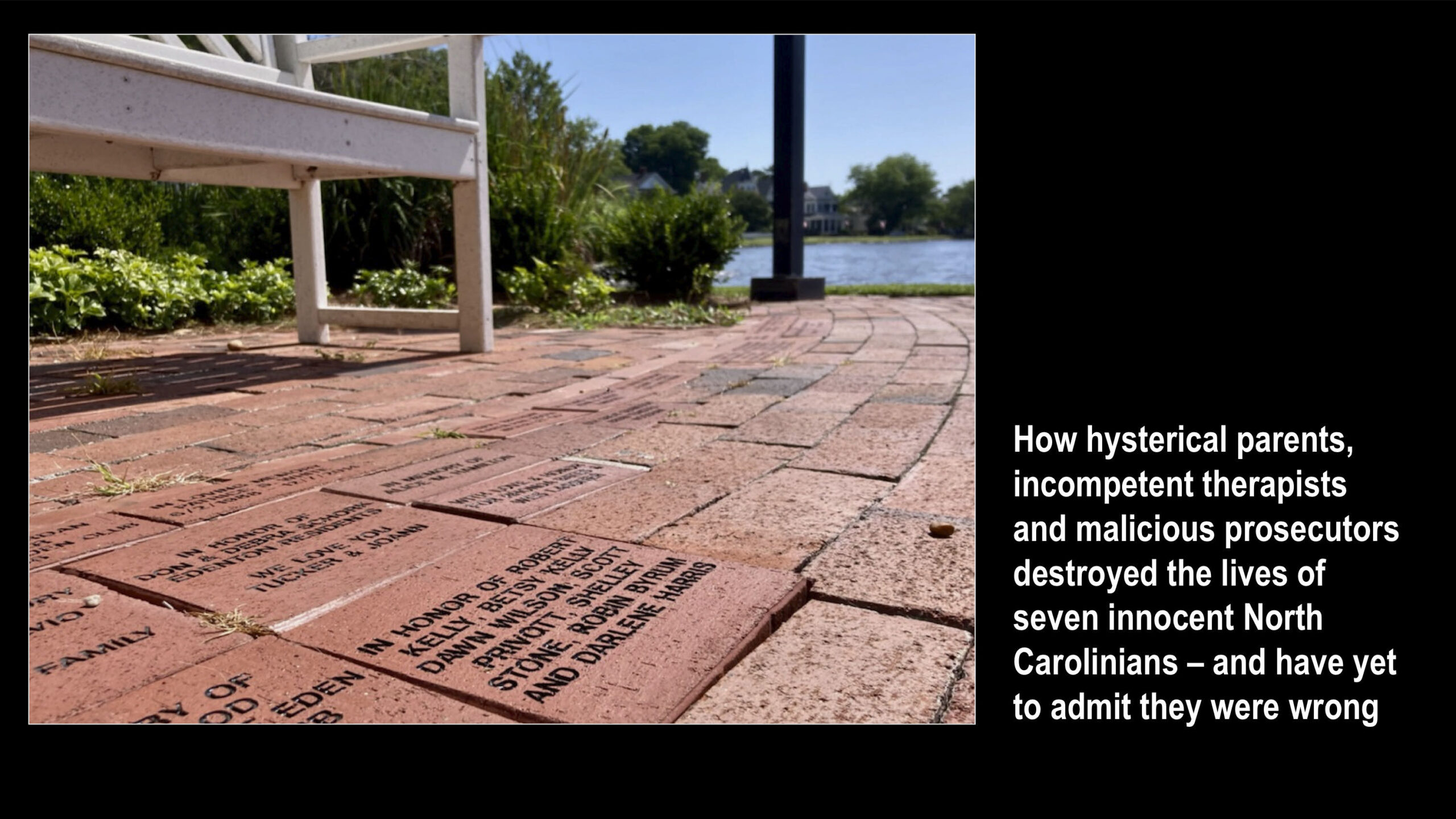
Among the alleged perpetrators: the sheriff and mayor. But prosecutors would charge only Robin Byrum, Darlene Harris, Elizabeth “Betsy” Kelly, Robert “Bob” Kelly, Willard Scott Privott, Shelley Stone and Dawn Wilson – the Edenton 7.
Along with sodomy and beatings, allegations included a baby killed with a handgun, a child being hung upside down from a tree and being set on fire and countless other fantastic incidents involving spaceships, hot air balloons, pirate ships and trained sharks.
By the time prosecutors dropped the last charges in 1997, Little Rascals had become North Carolina’s longest and most costly criminal trial. Prosecutors kept defendants jailed in hopes at least one would turn against their supposed co-conspirators. Remarkably, none did. Another shameful record: Five defendants had to wait longer to face their accusers in court than anyone else in North Carolina history.
Between 1991 and 1997, Ofra Bikel produced three extraordinary episodes on the Little Rascals case for the PBS series “Frontline.” Although “Innocence Lost” did not deter prosecutors, it exposed their tactics and fostered nationwide skepticism and dismay.
With each passing year, the absurdity of the Little Rascals charges has become more obvious. But no admission of error has ever come from prosecutors, police, interviewers or parents. This site is devoted to the issues raised by this case.
On Facebook


Little Rascals Day Care Case
This Facebook page is an offshoot of littlerascalsdaycarecase.org, which addresses the wrongful prosecution of the Edenton Seven and other such victims.

Meanwhile in Edenton....
This content isn't available right now
When this happens, it's usually because the owner only shared it with a small group of people, changed who can see it or it's been deleted.0 CommentsComment on Facebook
Allies for our cause!
This content isn't available right now
When this happens, it's usually because the owner only shared it with a small group of people, changed who can see it or it's been deleted.0 CommentsComment on Facebook
The courts have a long history of capriciously pulling the rug out from under Junior's appeals, but maybe this time....
This content isn't available right now
When this happens, it's usually because the owner only shared it with a small group of people, changed who can see it or it's been deleted.0 CommentsComment on Facebook
Click for earlier Facebook posts archived on this site
Click to go to

Today’s random selection from the Little Rascals Day Care archives….
Betsy Kelly: Still innocent, but no longer believing
 Jan. 7, 2013
““When I began this journey almost five years ago, I was a very strong, very optimistic, very believing and very innocent person. As I stand here today, I have become very tired, very disillusioned, very unbelieving but very much the innocent woman I was.
“When I lost my home, my job and business, my worldly possessions – then my husband and friend – I realized that what I had believed in and held onto as truth and justice no longer existed. But with the love and concern and total support of my family, my attorneys and very dear friends, I have come to realize that although prison is some place I do not want to return to, there are many worse prisons to endure out in the free world.
“I can now, for the first time in five years, look my precious daughter in the eyes and tell her that this will all be over soon and that (the) life that we have dreamed about but never dared to believe in is going to come true.
“No one in this courtroom can truly understand why I chose this pathway at this time – but I am at peace with the only true person that matters.”
– From Betsy Kelly’s statement to the court (Jan. 21, 1994), as she entered a no contest plea to 30 counts of child molestation
When therapists ignore what researchers have learned….
 May 16, 2012
“The researcher-therapist gap came to public attention because of three psychological epidemics, which spread like wildfire during the 1980s and ’90s: recovered memory, multiple-personality disorder and sex-abuse allegations at day-care centers. Each phenomenon was supported by clinical opinion; each has been discredited by empirical research.
“Of course, research never provides ‘the’ answer in a case; and, of course, clinical opinion is sometimes correct. But research does provide ways of correcting biases and testing assumptions. For example, the day-care scandals, from the McMartin case in California to Margaret Kelly Michaels in New Jersey to the Amiraults in Massachusetts, were perpetuated by therapists who testified that children never lie about sexual abuse and aren’t curious about sex unless they have been molested, that masturbation is a sign of sexual abuse and that abuse can be diagnosed by observing how children play with anatomically correct dolls. But each claim has been disproved by research on the cognitive abilities of children, on factors that increase suggestibility, on the normalcy of masturbation and sex play among children and on the way nonabused children play with the dolls….
“The researcher-therapist gap has been institutionalized by the rapid rise of free-standing schools of therapy not connected to university psychology departments. Graduates of these schools typically learn only to do therapy and seldom learn about other areas of psychology relevant to their work – like the limitations of hypnosis, the fallibility of memory or the normal process of suggestion in therapy.”
– From “A Widening Gulf Splits Lab and Couch” by Carol Tavris
in the New York Times (June 21, 1998)
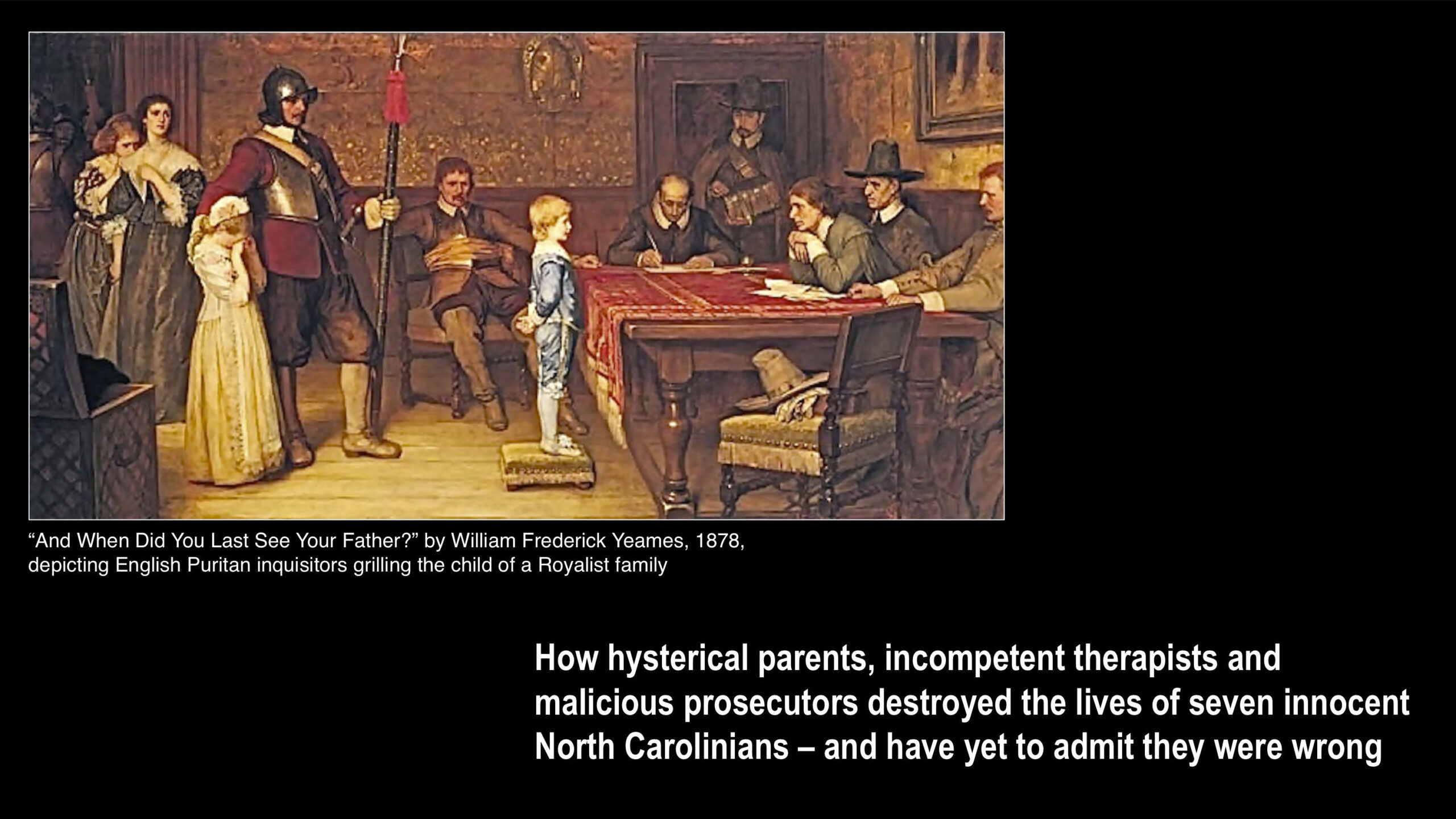
Day-care prosecutors ‘become like a torturer’
Aug. 17, 2012
“I’ve wondered how the prosecutors (in ritual-abuse day-care cases) could live with themselves.
“Says Debbie Nathan (coauthor of “Satan’s Silence: Ritual Abuse and the Making of a Modern American Witch Hunt”): ‘There was a time – and it lasted eight or nine years – when there was an entire body of expert opinion that these things could happen.’ It was a time, she says, when pseudoscience had raced ahead of science, when best-selling books that had yet to be contradicted asserted that the inability to remember a trauma was the strongest proof of it, when doctors trying to be helpful established as a baseline a model virginal hymen so perfectly smooth and shaped that it allowed any actual hymen to be construed as traumatized.
“ ‘Our culture is still really atavistic,’ says Nathan, ‘but there’s an overlay of science on it. Mix the totally primeval stuff with science and you’ve got this mix that can’t be beat.’ Prosecutors, she says, ‘are just as naive as anyone else, but they also know how to sway people. They have all the techniques down pat. “Suffer the little children.” “Innocence defiled.” “Worse than murder.” ‘
“But why, as science and truth become clearer, is it so hard for so many prosecutors to recant?… ‘Maybe it’s because the whole process of constructing one of these innocent people as a really demonically evil sexual pervert who sadistically violates lots of kids – the whole process of constructing this character on a real person is torture. You have to be very invasive. It’s a very sadistic enterprise. You become like a torturer.’ ”
– From “Why Can’t They Admit They Were Wrong?” by John Conroy
in the Chicago Reader (Aug. 1, 2003)
When rationalizing is mistaken for reasoning
 June 2, 2015
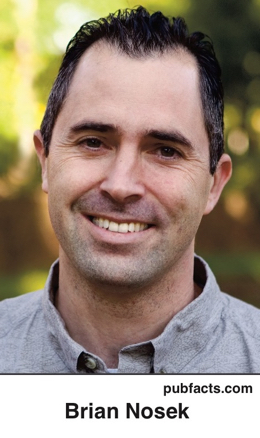
“Psychologist Brian Nosek of the University of Virginia says that the most common and problematic bias in science is ‘motivated reasoning’: We interpret observations to fit a particular idea.
“Psychologists have shown that ‘most of our reasoning is in fact rationalization,’ he says. In other words, we have already made the decision about what to do or to think, and our ‘explanation’ of our reasoning is really a justification for doing what we wanted to do – or to believe – anyway.”
– From “The Trouble With Scientists: How one psychologist is tackling human biases in science” by Philip Ball at Nautilus (May 14)
“Motivated reasoning” ran amok during the “satanic ritual abuse” day-care panic, resulting in journal articles such as “Stress Responses of Children to Sexual Abuse and Ritualistic Abuse in Day Care Centers” and “Satanic Ritual Abuse: A Cause of Multiple Personality Disorder” – and legitimizing testimony by the prosecution’s expert witnesses.
Not surprisingly, Dr. Nosek has found examples of “motivated reasoning” in claims of recovered memory.
“In my intro psych course,” he told me, “I have one lecture that is centered around Lawrence Wright’s fascinating ‘Remembering Satan’….” (about a 1988 case in Olympia, Wash., involving not only SRA allegations but also false confession).