
Rascals case in brief
In the beginning, in 1989, more than 90 children at the Little Rascals Day Care Center in Edenton, North Carolina, accused a total of 20 adults with 429 instances of sexual abuse over a three-year period. It may have all begun with one parent’s complaint about punishment given her child.
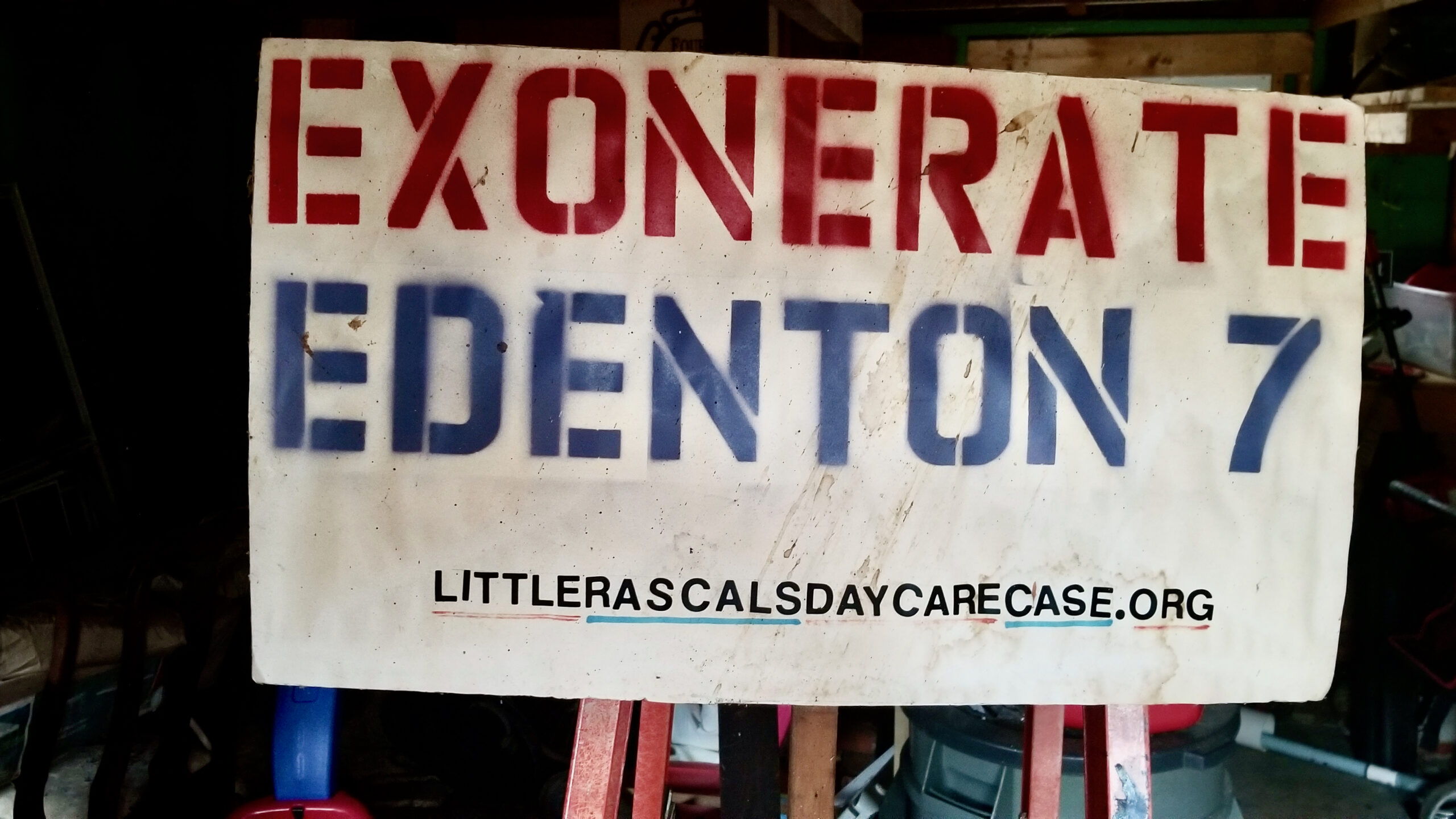
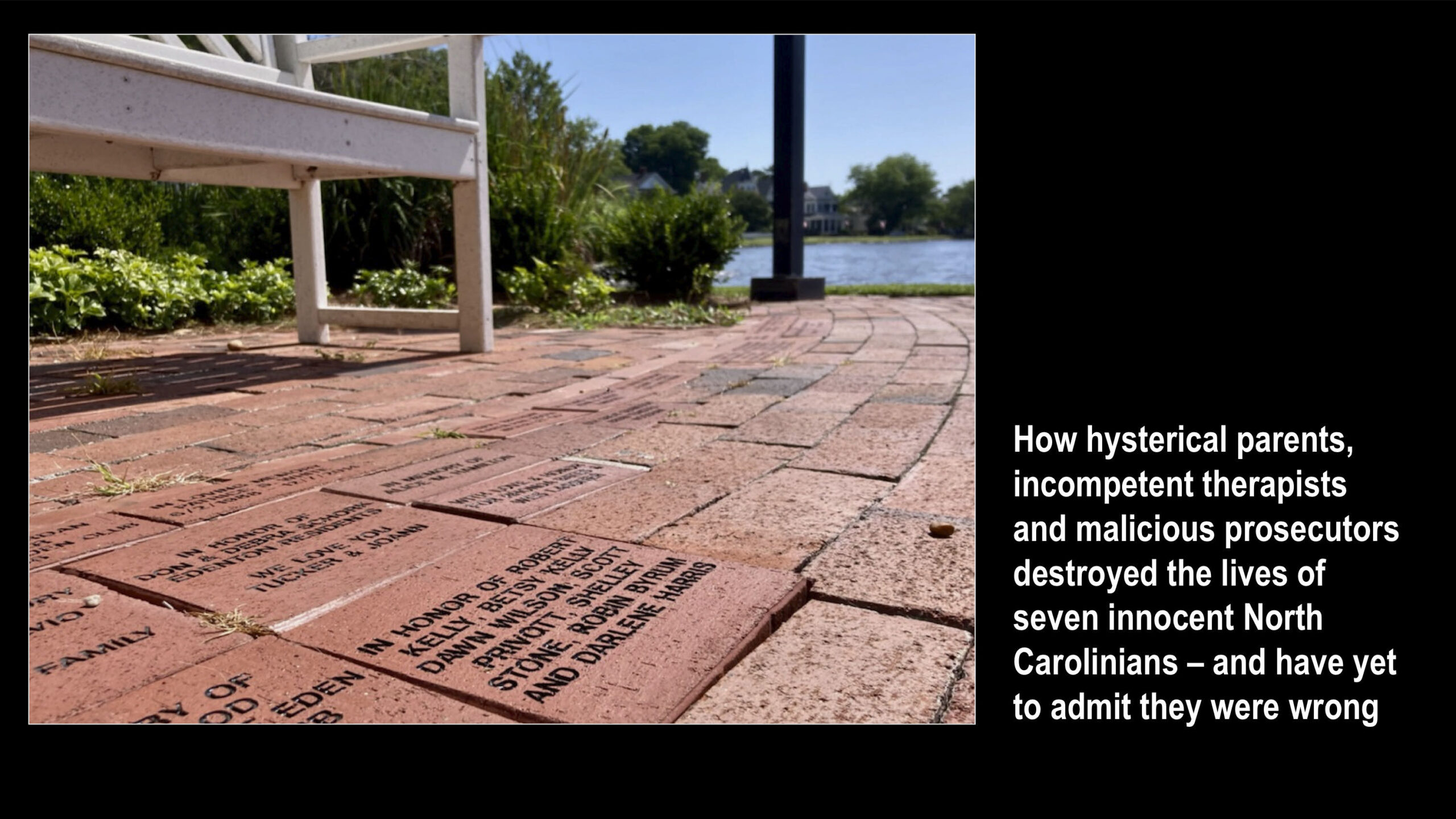
Among the alleged perpetrators: the sheriff and mayor. But prosecutors would charge only Robin Byrum, Darlene Harris, Elizabeth “Betsy” Kelly, Robert “Bob” Kelly, Willard Scott Privott, Shelley Stone and Dawn Wilson – the Edenton 7.
Along with sodomy and beatings, allegations included a baby killed with a handgun, a child being hung upside down from a tree and being set on fire and countless other fantastic incidents involving spaceships, hot air balloons, pirate ships and trained sharks.
By the time prosecutors dropped the last charges in 1997, Little Rascals had become North Carolina’s longest and most costly criminal trial. Prosecutors kept defendants jailed in hopes at least one would turn against their supposed co-conspirators. Remarkably, none did. Another shameful record: Five defendants had to wait longer to face their accusers in court than anyone else in North Carolina history.
Between 1991 and 1997, Ofra Bikel produced three extraordinary episodes on the Little Rascals case for the PBS series “Frontline.” Although “Innocence Lost” did not deter prosecutors, it exposed their tactics and fostered nationwide skepticism and dismay.
With each passing year, the absurdity of the Little Rascals charges has become more obvious. But no admission of error has ever come from prosecutors, police, interviewers or parents. This site is devoted to the issues raised by this case.
On Facebook


Little Rascals Day Care Case
This Facebook page is an offshoot of littlerascalsdaycarecase.org, which addresses the wrongful prosecution of the Edenton Seven and other such victims.

Meanwhile in Edenton....
This content isn't available right now
When this happens, it's usually because the owner only shared it with a small group of people, changed who can see it or it's been deleted.0 CommentsComment on Facebook
Allies for our cause!
This content isn't available right now
When this happens, it's usually because the owner only shared it with a small group of people, changed who can see it or it's been deleted.0 CommentsComment on Facebook
The courts have a long history of capriciously pulling the rug out from under Junior's appeals, but maybe this time....
This content isn't available right now
When this happens, it's usually because the owner only shared it with a small group of people, changed who can see it or it's been deleted.0 CommentsComment on Facebook
Click for earlier Facebook posts archived on this site
Click to go to

Today’s random selection from the Little Rascals Day Care archives….
Betsy Kelly wouldn’t succumb to state’s torture
 July 16, 2012
“Elizabeth Kelly was denied parole Friday, three months after pleading no contest to charges of sexually abusing children at her Edenton day care.
“Mrs. Kelly, sentenced to seven years, was eligible for parole upon entering prison because she had already served more than two years while awaiting trial.
“Prosecutor Bill Hart said opposition to Mrs. Kelly’s release was heightened by her statements of innocence after entering her plea.
“‘From my work dealing with sex offenders there is no way you can treat a sex offender and restore them to the community until that person admits the wrongness of her actions and takes responsibility….’”
– From the Associated Press, April 16, 1994
From the beginning, the prosecution never missed a chance to tighten the thumbscrews on Betsy Kelly: Plead guilty, implicate your husband or suffer grave consequences. Although she eventually took a plea bargain, she never accommodated Bill Hart’s pious insistence that she admit “the wrongness of her actions.”
In October 1989, about six weeks after her arrest, a hearing had been held in Raleigh on whether Kelly should be forced to move from a mental health unit into Dorm C at women’s prison.
Recalls Faye Sultan, a Charlotte forensic psychologist who testified on her behalf: “She had been found guilty of nothing at that point, but she was being housed in the most isolated, restrictive facility in the prison, where Death Row and disciplinary inmates were housed. Seems a bit unfair, no?”
Sultan testified that Kelly’s “psychological condition is rapidly deteriorating, and in fact she is on the edge of becoming psychotic.”
Why would the state insist on moving a pretrial “safekeeping” defendant to such a hostile environment? “The reason was to pressure Betsy,” says Joe Cheshire, her lawyer. “They didn’t know her very well, did they?”
When therapists ignore what researchers have learned….
 May 16, 2012
“The researcher-therapist gap came to public attention because of three psychological epidemics, which spread like wildfire during the 1980s and ’90s: recovered memory, multiple-personality disorder and sex-abuse allegations at day-care centers. Each phenomenon was supported by clinical opinion; each has been discredited by empirical research.
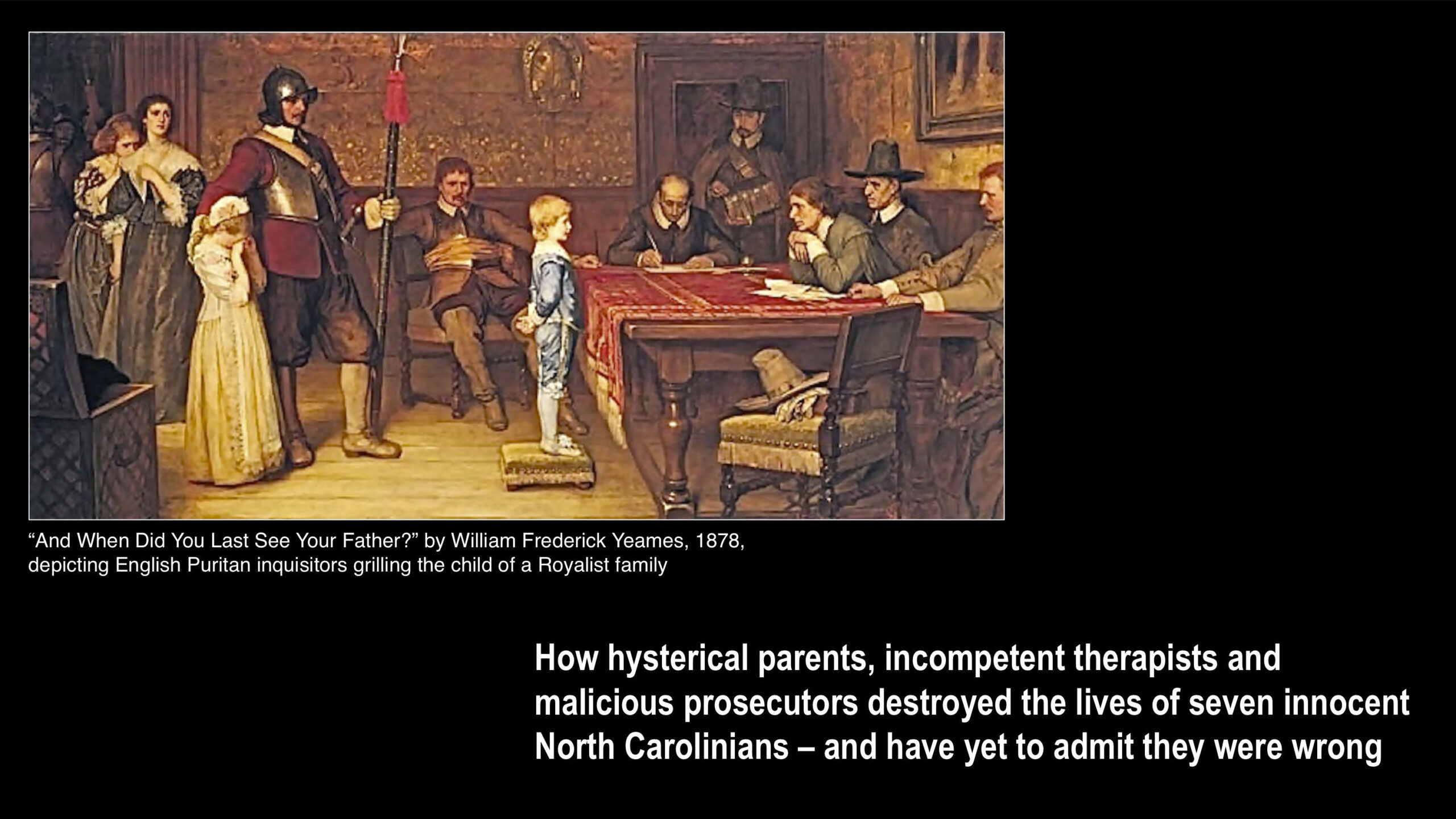
“Of course, research never provides ‘the’ answer in a case; and, of course, clinical opinion is sometimes correct. But research does provide ways of correcting biases and testing assumptions. For example, the day-care scandals, from the McMartin case in California to Margaret Kelly Michaels in New Jersey to the Amiraults in Massachusetts, were perpetuated by therapists who testified that children never lie about sexual abuse and aren’t curious about sex unless they have been molested, that masturbation is a sign of sexual abuse and that abuse can be diagnosed by observing how children play with anatomically correct dolls. But each claim has been disproved by research on the cognitive abilities of children, on factors that increase suggestibility, on the normalcy of masturbation and sex play among children and on the way nonabused children play with the dolls….
“The researcher-therapist gap has been institutionalized by the rapid rise of free-standing schools of therapy not connected to university psychology departments. Graduates of these schools typically learn only to do therapy and seldom learn about other areas of psychology relevant to their work – like the limitations of hypnosis, the fallibility of memory or the normal process of suggestion in therapy.”
– From “A Widening Gulf Splits Lab and Couch” by Carol Tavris
in the New York Times (June 21, 1998)
Prosecutors couldn’t buy off ‘depraved’ defendants
Nov. 16, 2011
“The Little Rascals defendants never wavered in their contention that the allegations were untrue. Not one testified against the other, even though prosecutors commonly offer leniency to accused people in exchange for damning testimony.
“If the defendants were so depraved that they in fact sexually abused small children wholesale, how is it that none was tempted to ‘tell all’ to save his or her hide?”
– From an editorial in the Norfolk Virginian-Pilot (June 2, 1997)
MPD renamed DID – but it’s still bunk
May 31, 2013
“After the DSM-III, often called the ‘Bible’ of psychiatric diagnosis, included (Multiple Personality Disorder) in 1980, thousands of spurious cases emerged in the next two decades, and special psychiatric clinics arose to treat them. Yet faced with evidence of this disastrous epidemic, the DSM-IV did not delete the diagnosis. Instead, the manual renamed it Dissociative Identity Disorder.
“ ‘MPD presented a dilemma for me,’ says (psychiatrist Allen Frances, who oversaw DSM-IV). ‘We took scrupulous pains to present both sides of the controversy as fairly and effectively as possible – even though I believed one side was complete bunk.’ How do you ‘fairly’ argue for a diagnosis you think is complete bunk? Where’s the methodological rigor? Why did it take malpractice suits to close the psychiatric MPD clinics and not the presumed voice of scientific authority, the DSM? Dissociative Identity Disorder remains in the DSM-5.”
– From “How Psychiatry Went Crazy” by Carol Tavris in the Wall Street Journal (May 17, 2013)
“Another disturbing by-product of the MPD diagnosis is the prevalence of alleged repressed memories of satanic ritual abuse. The association of satanic ritual abuse in MPD diagnoses has been attributed to the belief by numerous MPD adherents in the existence of an intergenerational satanic cult conspiracy that has murdered thousands without leaving a trace of evidence.”
– From “Repressed Memory, Multiple Personality Disorder and Satanic Ritual Abuse,” an amicus brief filed in Supreme Court of Georgia, Kahout v. Charter Peachford Behavioral Health System (September 1998)