Rascals case in brief
In the beginning, in 1989, more than 90 children at the Little Rascals Day Care Center in Edenton, North Carolina, accused a total of 20 adults with 429 instances of sexual abuse over a three-year period. It may have all begun with one parent’s complaint about punishment given her child.
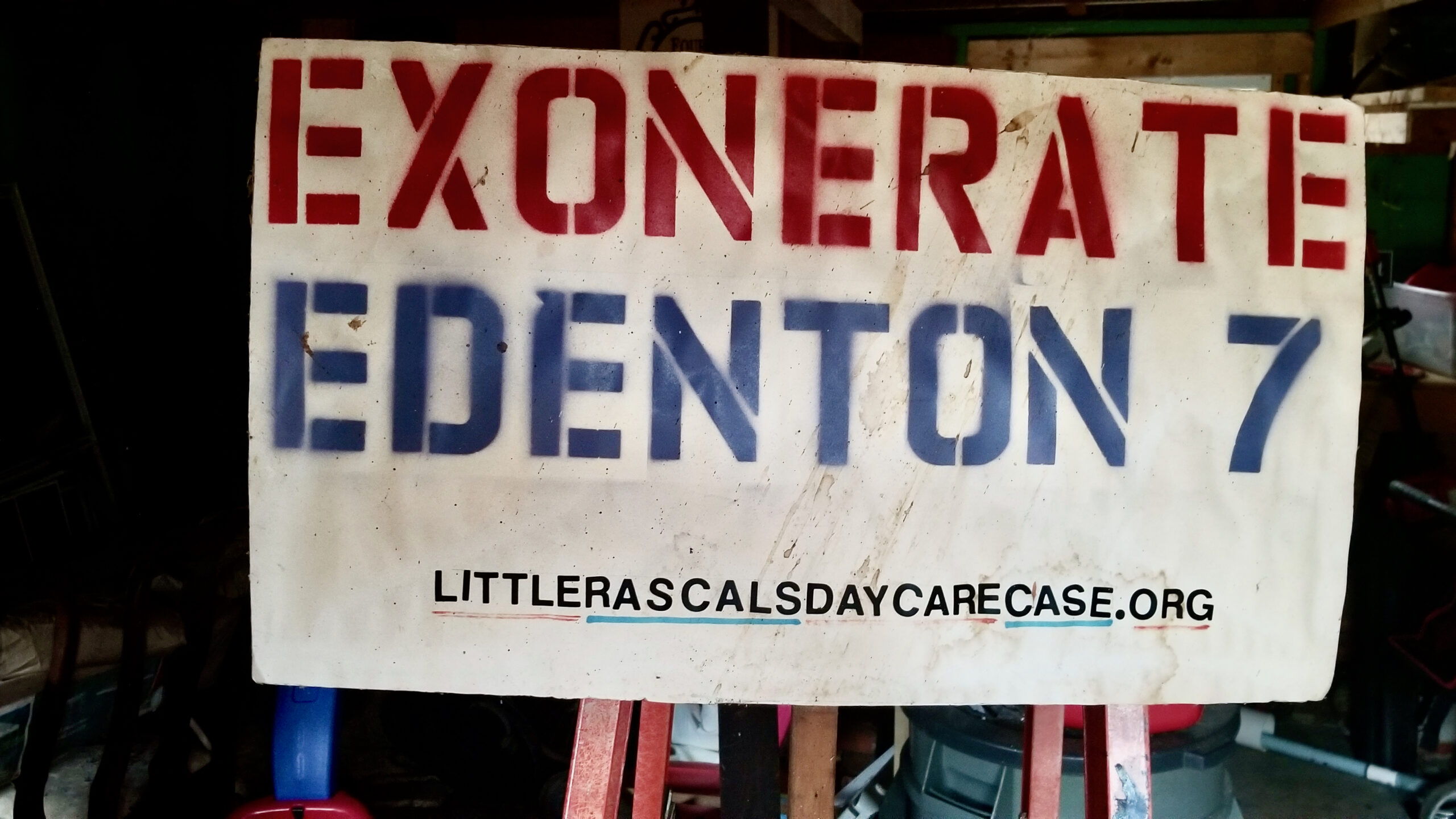
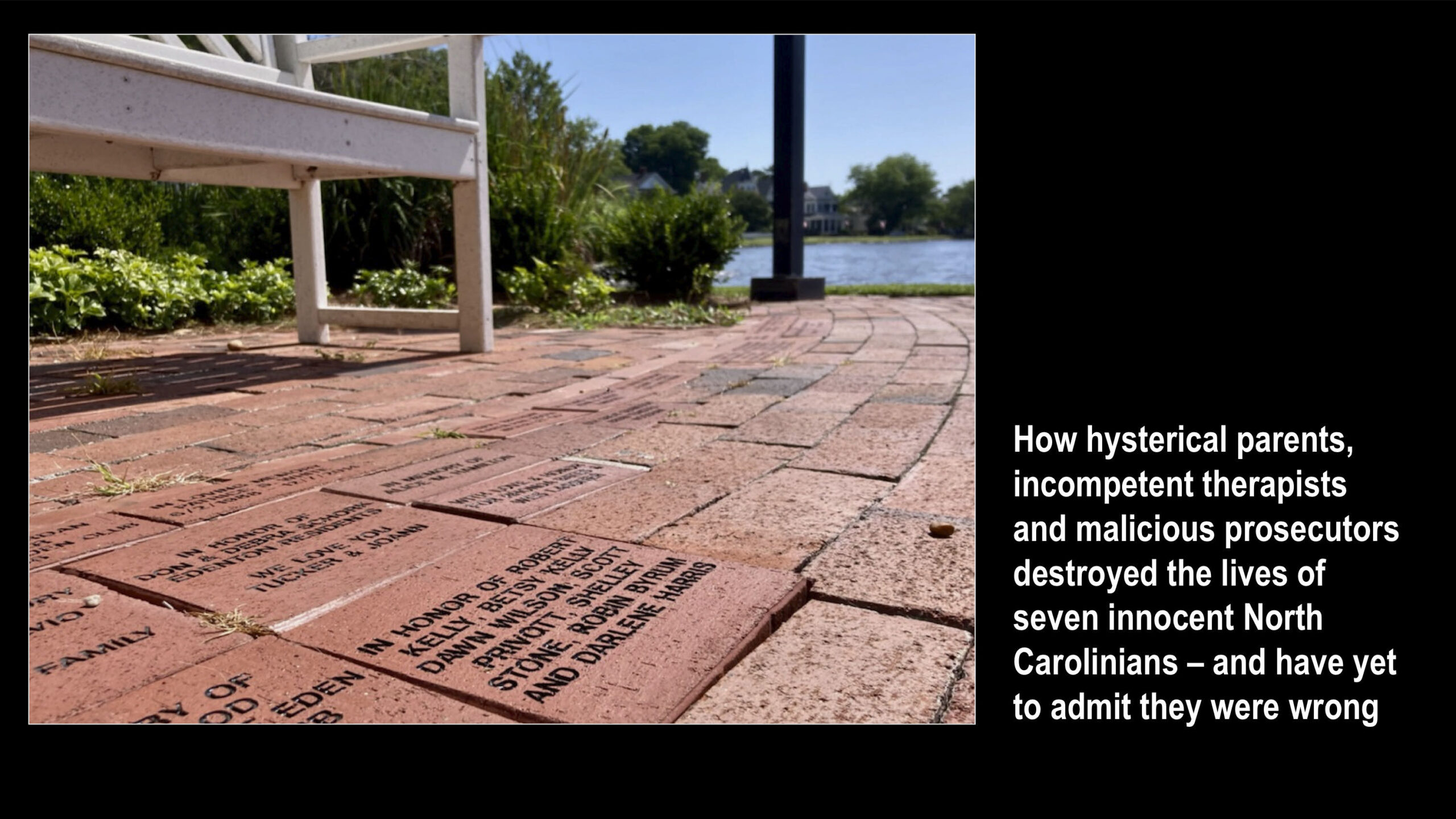
Among the alleged perpetrators: the sheriff and mayor. But prosecutors would charge only Robin Byrum, Darlene Harris, Elizabeth “Betsy” Kelly, Robert “Bob” Kelly, Willard Scott Privott, Shelley Stone and Dawn Wilson – the Edenton 7.
Along with sodomy and beatings, allegations included a baby killed with a handgun, a child being hung upside down from a tree and being set on fire and countless other fantastic incidents involving spaceships, hot air balloons, pirate ships and trained sharks.
By the time prosecutors dropped the last charges in 1997, Little Rascals had become North Carolina’s longest and most costly criminal trial. Prosecutors kept defendants jailed in hopes at least one would turn against their supposed co-conspirators. Remarkably, none did. Another shameful record: Five defendants had to wait longer to face their accusers in court than anyone else in North Carolina history.
Between 1991 and 1997, Ofra Bikel produced three extraordinary episodes on the Little Rascals case for the PBS series “Frontline.” Although “Innocence Lost” did not deter prosecutors, it exposed their tactics and fostered nationwide skepticism and dismay.
With each passing year, the absurdity of the Little Rascals charges has become more obvious. But no admission of error has ever come from prosecutors, police, interviewers or parents. This site is devoted to the issues raised by this case.
On Facebook


Little Rascals Day Care Case
This Facebook page is an offshoot of littlerascalsdaycarecase.org, which addresses the wrongful prosecution of the Edenton Seven and other such victims.

Meanwhile in Edenton....
This content isn't available right now
When this happens, it's usually because the owner only shared it with a small group of people, changed who can see it or it's been deleted.0 CommentsComment on Facebook
Allies for our cause!
This content isn't available right now
When this happens, it's usually because the owner only shared it with a small group of people, changed who can see it or it's been deleted.0 CommentsComment on Facebook
The courts have a long history of capriciously pulling the rug out from under Junior's appeals, but maybe this time....
This content isn't available right now
When this happens, it's usually because the owner only shared it with a small group of people, changed who can see it or it's been deleted.0 CommentsComment on Facebook
Click for earlier Facebook posts archived on this site
Click to go to

Today’s random selection from the Little Rascals Day Care archives….
Injustice without amends: ‘We should be ashamed’
 Aug. 4, 2015
“Some have drawn parallels between the Salem witch trials of 1692 and the false accusations of sexual abuse that sweptc America in the 1980s. The difference is this:
“Those falsely accused in Salem got public apologies from their accusers and reparations. No such luck for the dozens of day-care workers and others who were falsely accused and imprisoned in modern-day America.
“We should be ashamed.”
– From “How the daycare child abuse hysteria of the 1980s became a witch hunt,” a review of “We Believe the Children,” by Maura Casey in the Washington Post (July 31)
I’ll have more soon on Richard Beck’s important new addition to the “satanic ritual abuse” bookshelf.
For maximum notoriety, avoid Chowan County
July 10, 2013
Although some consider Little Rascals the East Coast version of the McMartin case, according to Google’s nGram Viewer it comes in a distant second in prominence.
Not even eight hours of “Innocence Lost” could make up for McMartin’s having been tried first and for its having been situated in Southern California rather than in Eastern North Carolina.
Why Mike Easley had to deny errors in Little Rascals trials

June 19, 2017
“Our criminal justice famously presumes that every accused person is innocent until proven guilty. But once a conviction is obtained, that presumption is turned on its head. Charges were brought, and a jury, which saw evidence and heard from the witnesses firsthand, voted to convict. At that point, finality sets in.
“Prosecutors tasked with defending a conviction against compelling evidence that it was wrongfully secured typically have two choices. They can accept the responsibility for participating — directly or indirectly — in an injustice, or they can insist that nothing went awry or that whatever mistakes may have been made were ‘immaterial’– that is, the jury would have convicted anyway. The justice system strongly pushes them in the latter direction. Ambitious, hard-charging prosecutors know that the way to the top is amassing guilty verdicts, not admitting mistakes. In 47 states [including North Carolina], their bosses – the county district attorney, the state’s attorney general – are elected. Incompetence, or appearing ‘soft on crime,’ can be fatal at the ballot box….
“The refusal to admit a mistake – or even an act of bad faith – holds true regardless of whether the prosecutor defending the conviction had any involvement at the trial level, personally knew the key players or even worked in the same office…. This may be due, in part, to a phenomenon that [Northeastern University law professor Daniel Medwed] calls ‘the conformity effect.’ Prosecutors… are ‘culturally aligned with that side and tend to defer to their peers who were the original decision makers.’ “
– From “For shame” by Lara Bazelon at Slate (April 7, 2016)
Although examples of such prosecutorial lockstep are legion, most relevant here is N.C. Attorney General Mike Easley’s response to the overturning of the convictions of Little Rascals defendants Bob Kelly and Dawn Wilson. Easley, himself a former district attorney (and future governor), laid it on thick:
“The decision casts no doubt on the credibility of the children or the integrity of the investigation…. In both cases, the facts supporting the convictions were clear and overwhelming. [The N.C. Court of Appeals] disregarded these facts and misapplied the law.”
Four months later, throwing in the towel after the N.C. Supreme Court upheld the Court of Appeals, Easley managed to find fault not with the prosecutors but with the children. “All prosecutors know that cases involving children weaken with age,” he said. “A retrial in this matter will be extremely difficult.”

‘Burying the memory’: Misconception that won’t die
 Jan. 23, 2013
“Ritual sex abuse is back. Recently (in 2003) I heard that a conference on the topic was being held for psychotherapists.
“It was planned not to critique a nasty period in the annals of American hysteria but rather so that attendees could learn to ask patients if they’ve ever been raped in day care by secret devil worshipers.
“This stuff was debunked in the 1990s as a type of urban myth. Yet it keeps cropping up, complete with pseudo-scientific theories about the psychology of so-called victims – theories that likewise refuse to die.
“One such theory is that children who are molested often grow up to deny that the crime ever happened. Many do so, the theory holds, because people commonly repress or dissociate from memories of horrific trauma – particularly sex abuse.
“This idea has been repeatedly discredited by research psychologists. But… in pop culture and among many child-protection workers, it’s still de rigueur to think that a child who was fondled or raped is at risk of burying the memory.”
– From “The Exorcists” by Debbie Nathan in the Washington Post (May 4, 2003)