Rascals case in brief
In the beginning, in 1989, more than 90 children at the Little Rascals Day Care Center in Edenton, North Carolina, accused a total of 20 adults with 429 instances of sexual abuse over a three-year period. It may have all begun with one parent’s complaint about punishment given her child.
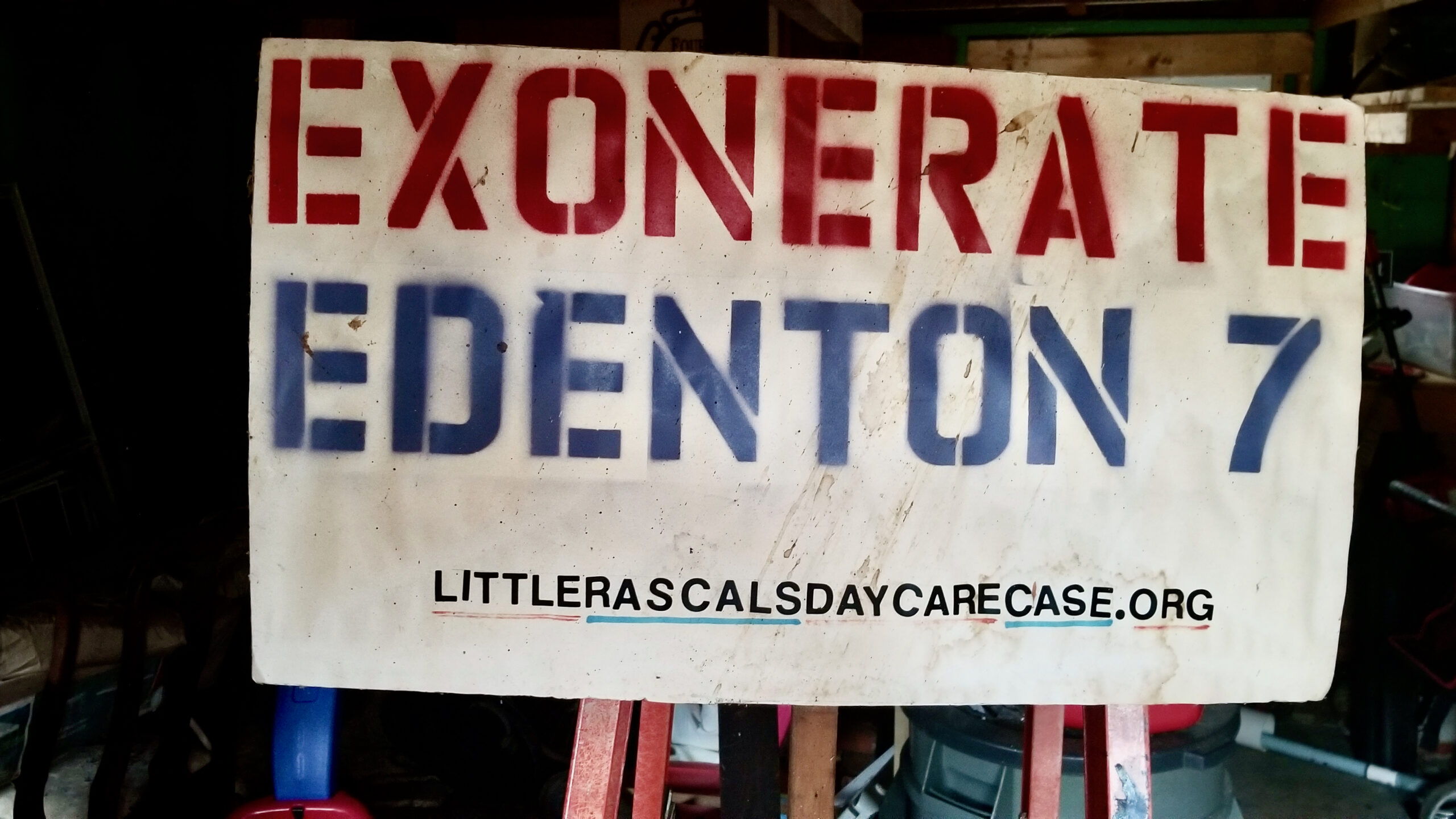
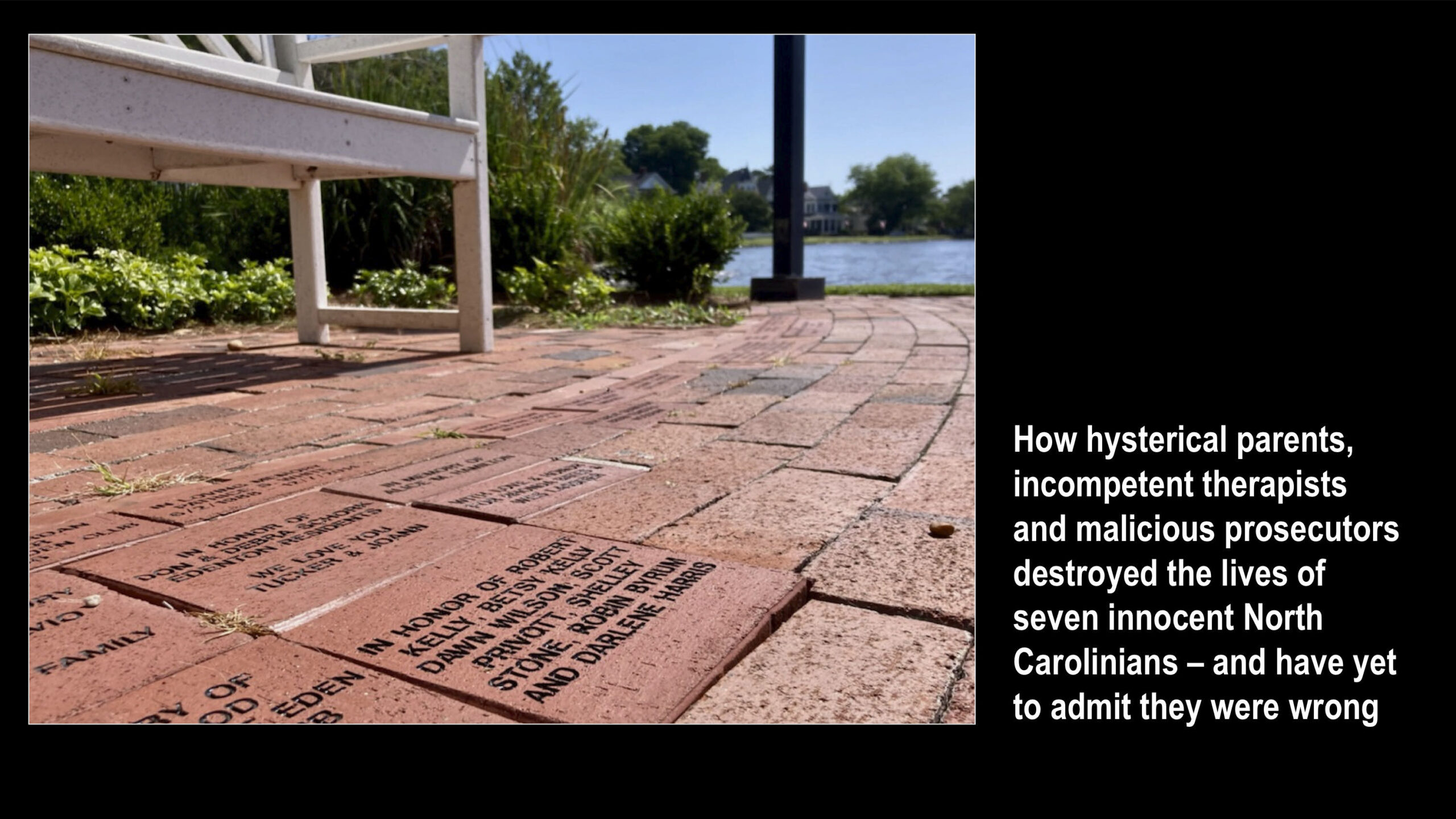
Among the alleged perpetrators: the sheriff and mayor. But prosecutors would charge only Robin Byrum, Darlene Harris, Elizabeth “Betsy” Kelly, Robert “Bob” Kelly, Willard Scott Privott, Shelley Stone and Dawn Wilson – the Edenton 7.
Along with sodomy and beatings, allegations included a baby killed with a handgun, a child being hung upside down from a tree and being set on fire and countless other fantastic incidents involving spaceships, hot air balloons, pirate ships and trained sharks.
By the time prosecutors dropped the last charges in 1997, Little Rascals had become North Carolina’s longest and most costly criminal trial. Prosecutors kept defendants jailed in hopes at least one would turn against their supposed co-conspirators. Remarkably, none did. Another shameful record: Five defendants had to wait longer to face their accusers in court than anyone else in North Carolina history.
Between 1991 and 1997, Ofra Bikel produced three extraordinary episodes on the Little Rascals case for the PBS series “Frontline.” Although “Innocence Lost” did not deter prosecutors, it exposed their tactics and fostered nationwide skepticism and dismay.
With each passing year, the absurdity of the Little Rascals charges has become more obvious. But no admission of error has ever come from prosecutors, police, interviewers or parents. This site is devoted to the issues raised by this case.
On Facebook


Little Rascals Day Care Case
This Facebook page is an offshoot of littlerascalsdaycarecase.org, which addresses the wrongful prosecution of the Edenton Seven and other such victims.

Meanwhile in Edenton....
This content isn't available right now
When this happens, it's usually because the owner only shared it with a small group of people, changed who can see it or it's been deleted.0 CommentsComment on Facebook
Allies for our cause!
This content isn't available right now
When this happens, it's usually because the owner only shared it with a small group of people, changed who can see it or it's been deleted.0 CommentsComment on Facebook
The courts have a long history of capriciously pulling the rug out from under Junior's appeals, but maybe this time....
This content isn't available right now
When this happens, it's usually because the owner only shared it with a small group of people, changed who can see it or it's been deleted.0 CommentsComment on Facebook
Click for earlier Facebook posts archived on this site
Click to go to

Today’s random selection from the Little Rascals Day Care archives….
One thing led to another…. boy, did it ever!
 Nov. 16, 2012
“In North America in the 1980s, the moral panic about organized child abuse arose in a context that included the following scares:
- “a moral panic about satanic activity;
- “a scare about missing and murdered children;
- “great public anxiety about incest, redefined as child sexual abuse during the 1970s;
- “a wave of disputed custody cases in which women accused their former husbands of sexually abusing children during court-ordered visitations;
- “self-help books by women claiming to be ‘survivors’ of incest and ritual abuse;
- “therapists’ claims that many of their adult women patients suffered from multiple-personality disorder as a result of severe childhood sexual and ritual abuse.
“Of particular importance were claims that society was in denial about widespread child sexual abuse…. Thus, claims about organized child abuse by caregivers were made in a context of claims about similar issues, and the effect of claims in one panic was to reinforce claims in another.”
– From “Wrongful Conviction and the Moral Panic About Organized Child Abuse: National and International Perspectives” by Randall Grometstein (2005)
Forensic evaluator or therapist? A distinction not made
 March 23, 2012
“A given professional must undertake either a forensic examination or therapy, not both, with any given child.
“The roles of forensic evaluator and ongoing therapist are different. The forensic evaluator must not become an advocate for the child, a role often difficult to avoid when one is an ongoing therapist.
“For this reason the American Psychological Association’s Guidelines for Psychological Evaluations in Child Protection Matters (1999) holds, ‘Psychologists generally do not conduct psychological evaluations in child protection matters in which they serve in a therapeutic role for the child or the immediate family or have had other involvement that may compromise
their objectivity.’ ”
– From “A Behavior Analytic Look at Contemporary Issues in the Assessment of Child
Sexual Abuse” by W. Joseph Wyatt in The Behavior Analyst Today (March 22, 2007)
By serving enthusiastically as agents of the prosecution, Betty Robertson, Judy Abbott, Susan Childers and Michele Zimmerman not only ignored that crucial ethical distinction, but also fostered psychological havoc where there had been none.
N.C. justices to Junior Chandler: Drop dead
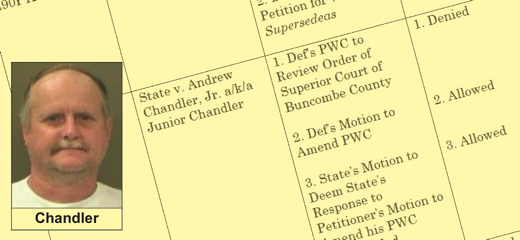 Oct. 5, 2012
Because today’s North Carolina Supreme Court decision on Junior Chandler’s appeal comprised three separate parts, I didn’t fully comprehend it.
“Is this good news or bad?” I emailed Mark Montgomery, Junior’s appellate lawyer.
“The worst,” he replied. “We’re out of court.”
Yes, this is the worst – the absolute, inexcusable, shameful worst.
The justices have denied Junior Chandler, probably the last still-imprisoned victim of the multiple-offender, multiple-victim ritual-abuse day-care panic, his final chance for a new trial. After 25 years behind bars – more than all the Little Rascals defendants combined! – he faces only more of the same.
If I were a lawyer, maybe I could understand how the North Carolina Supreme Court arrived at its decision.
How it was unmoved by Junior’s feeble representation early on.
How it was uninterested in the epochal progress made in limiting expert testimony.
How it was all too eager to find petty justifications for validating a prosecution rotten at the core.
But probably not.
Isn’t half of Junior’s life enough, North Carolina?
Sept. 8, 2014
“The aging prison population represents a national human-made epidemic decades in the making. …
“Our current trajectory is economically infeasible and morally untenable….
“Although there is no commonly agreed-upon age at which an incarcerated individual is ‘old’ – definitions range from 50 to 65 – it is clear that the number of people in prison requiring significant age-related medical care will continue to rise at a substantial rate. From 1995 to 2010, the U.S. prison population aged 55 or older nearly quadrupled….
“On average, it costs approximately twice as much to incarcerate someone aged 50 and over ($68,270) than a younger, more able-bodied individual ($34,135)….
“The elderly in prison also demonstrate a greater risk of injury, victimization, ailing health, and death than their younger counterparts….
“The phenomenon of accelerated aging, which can be attributed to the prevalence of environmental stressors coupled with a lack of access to holistic healthcare, means that the body of an incarcerated 50-year-old has a ‘physiological age’ that is 10 to 15 years older….
“The stated objectives of incarceration would suggest that correctional spending should be allocated among demographics in proportion to their public safety risk and potential for behavioral change.
“Aging adults in prison have the lowest recidivism rate and pose almost no threat to public safety. Nationwide, 43.3 percent of all released individuals recidivate within three years, while only 7 percent of those aged 50-64 are returned to prison for new convictions….”
– From “The High Costs of Low Risk: The Crisis of America’s Aging Prison Population” prepared by the Osborne Association (July 2014) (Hat tip, the New York Times)
Today is Andrew Junior Chandler’s 57th birthday. He has been in prison since he was 29 years old. Even if he were guilty – which he clearly is not – how can the State of North Carolina justify his continued incarceration?