
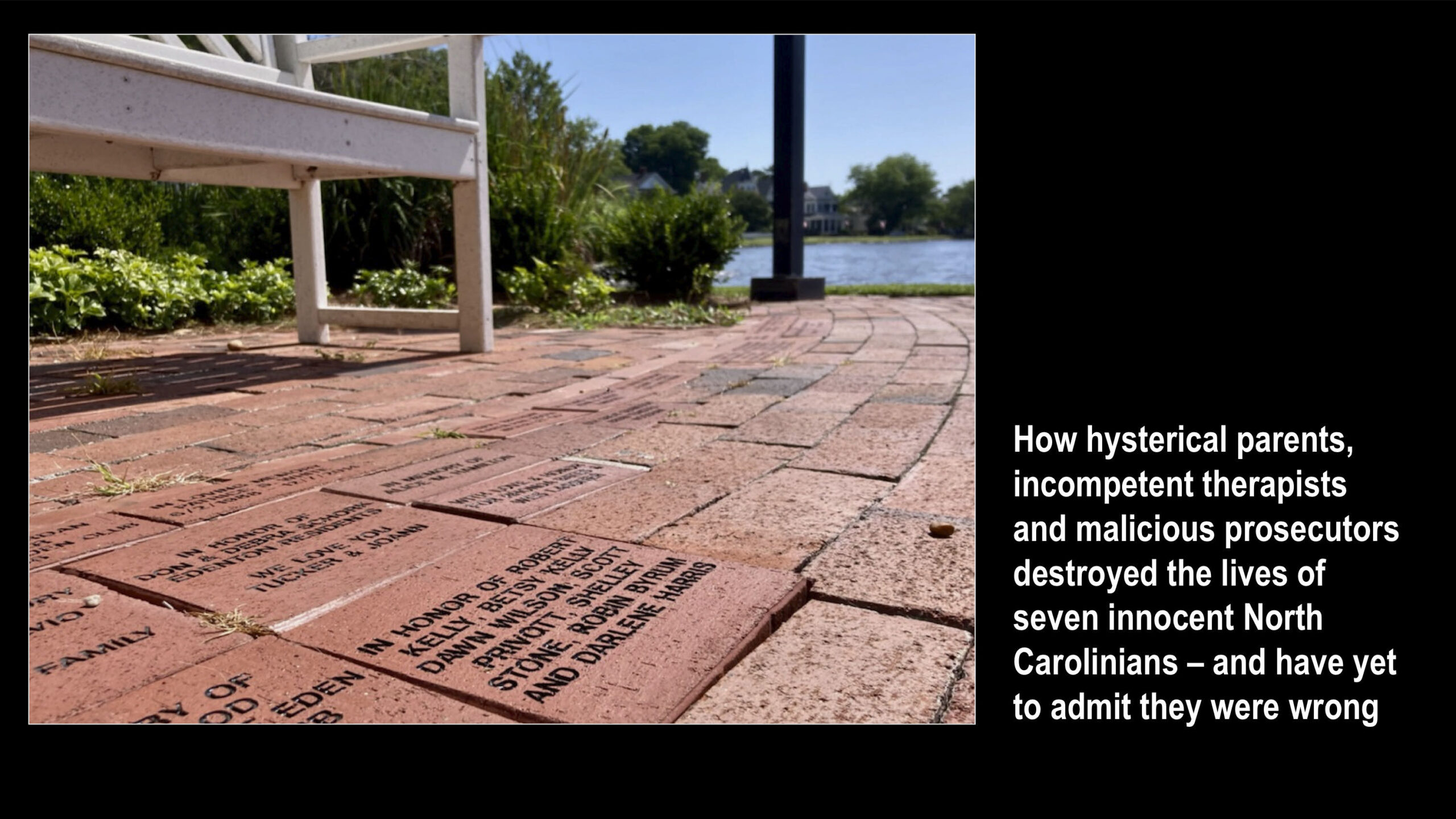
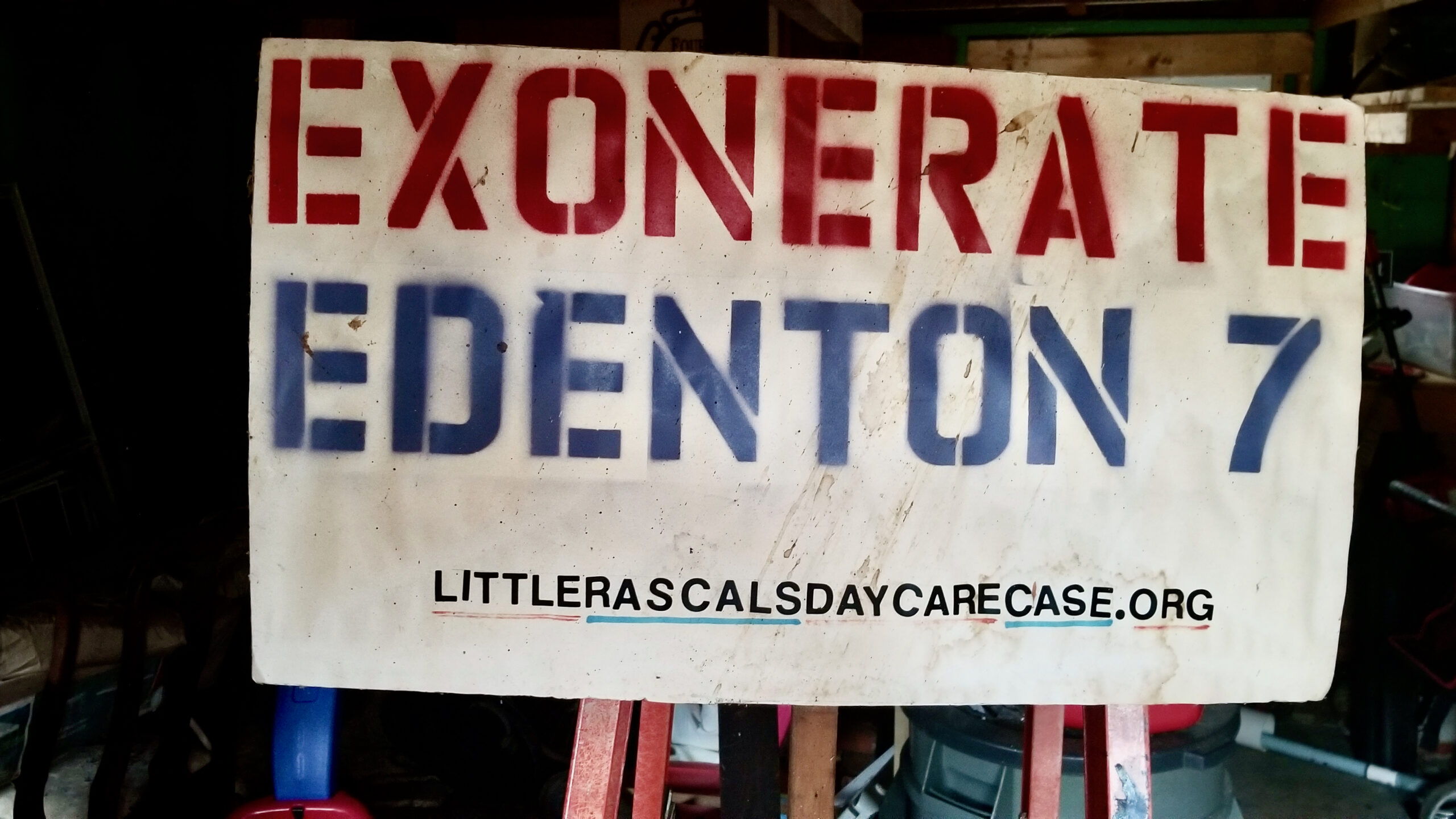
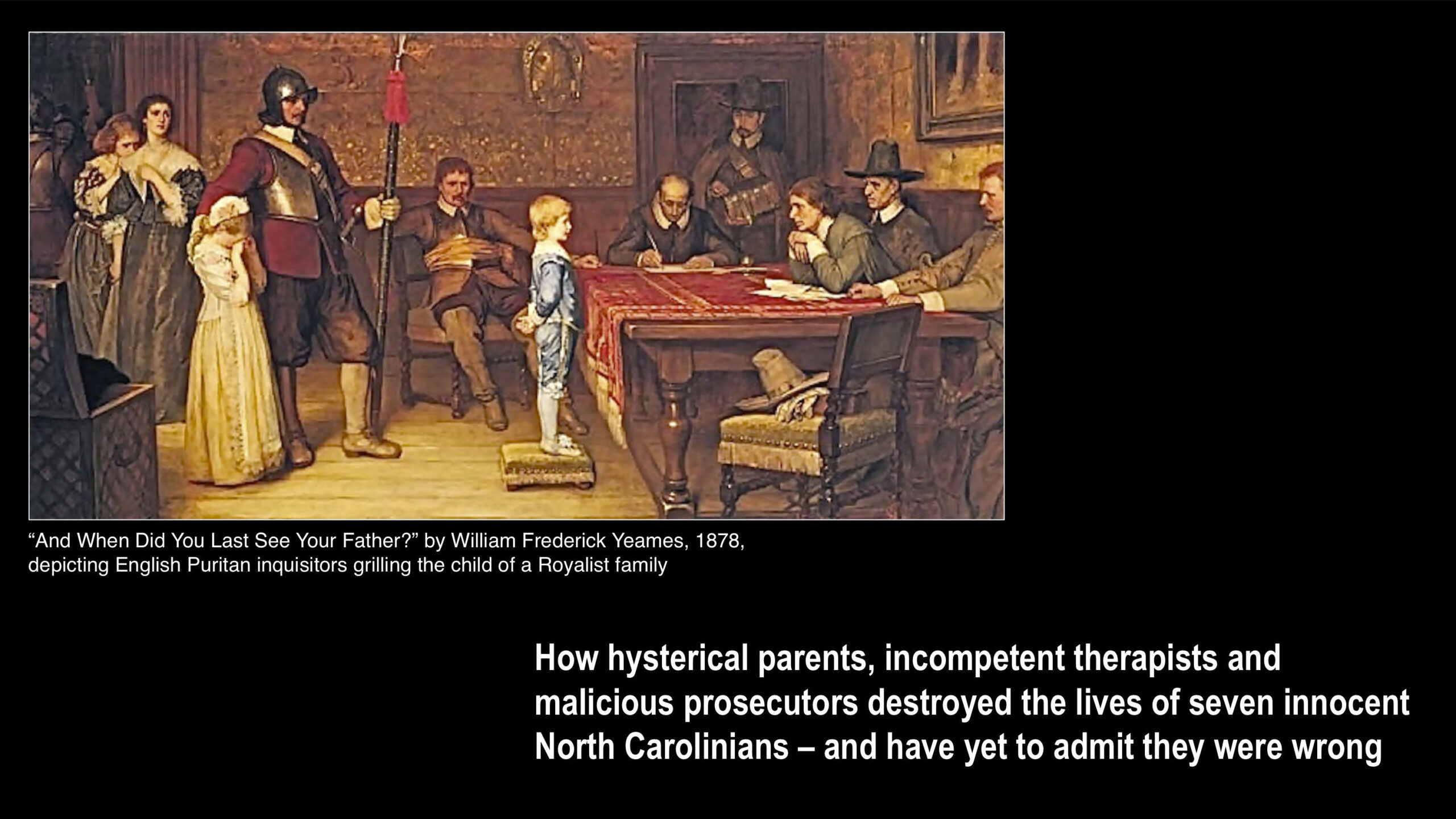
Rascals case in brief
In the beginning, in 1989, more than 90 children at the Little Rascals Day Care Center in Edenton, North Carolina, accused a total of 20 adults with 429 instances of sexual abuse over a three-year period. It may have all begun with one parent’s complaint about punishment given her child.
Among the alleged perpetrators: the sheriff and mayor. But prosecutors would charge only Robin Byrum, Darlene Harris, Elizabeth “Betsy” Kelly, Robert “Bob” Kelly, Willard Scott Privott, Shelley Stone and Dawn Wilson – the Edenton 7.
Along with sodomy and beatings, allegations included a baby killed with a handgun, a child being hung upside down from a tree and being set on fire and countless other fantastic incidents involving spaceships, hot air balloons, pirate ships and trained sharks.
By the time prosecutors dropped the last charges in 1997, Little Rascals had become North Carolina’s longest and most costly criminal trial. Prosecutors kept defendants jailed in hopes at least one would turn against their supposed co-conspirators. Remarkably, none did. Another shameful record: Five defendants had to wait longer to face their accusers in court than anyone else in North Carolina history.
Between 1991 and 1997, Ofra Bikel produced three extraordinary episodes on the Little Rascals case for the PBS series “Frontline.” Although “Innocence Lost” did not deter prosecutors, it exposed their tactics and fostered nationwide skepticism and dismay.
With each passing year, the absurdity of the Little Rascals charges has become more obvious. But no admission of error has ever come from prosecutors, police, interviewers or parents. This site is devoted to the issues raised by this case.
On Facebook


Little Rascals Day Care Case
This Facebook page is an offshoot of littlerascalsdaycarecase.org, which addresses the wrongful prosecution of the Edenton Seven and other such victims.

Meanwhile in Edenton....
This content isn't available right now
When this happens, it's usually because the owner only shared it with a small group of people, changed who can see it or it's been deleted.0 CommentsComment on Facebook
Allies for our cause!
This content isn't available right now
When this happens, it's usually because the owner only shared it with a small group of people, changed who can see it or it's been deleted.0 CommentsComment on Facebook
The courts have a long history of capriciously pulling the rug out from under Junior's appeals, but maybe this time....
This content isn't available right now
When this happens, it's usually because the owner only shared it with a small group of people, changed who can see it or it's been deleted.0 CommentsComment on Facebook
Click for earlier Facebook posts archived on this site
Click to go to

Today’s random selection from the Little Rascals Day Care archives….
Day-care panic had roots in incest movement
 May 23, 2014
“….The widespread belief that sexual abuse of children is endemic to society is a relatively new notion. In fact, it can be traced to a particular moment in history: April 17, 1971.
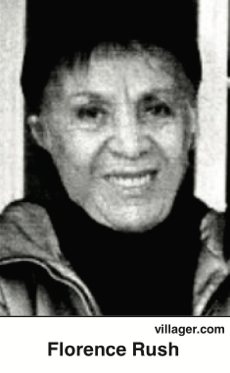
“On that day the New York Radical Feminists, a group that at its height boasted no more than 400 members, held a groundbreaking conference on rape. For two days, women held forth on a subject long considered taboo…. A speech given by Florence Rush (was) the highlight of the event.
“Rush was an unlikely star for such a gathering. A middle-aged social worker, who had never been raped, she outlined statistical studies suggesting that sexual abuse of children, including incest, was a more widespread problem than was generally recognized….
“Before Rush’s speech, feminists had given little thought to incest. Author Andrea Dworkin recalled that before the conference ‘we never had any idea how common it was.’ In the decades following Rush’s talk, feminists more than made up for their earlier unawareness, competing with each other in elevating the number of victims….
“Believe the women. Believe the children. These refrains became the mantra of the incest movement. While the women’s movement would be enormously successful in turning sexual abuse – including incest – into a major public issue, women, ironically, would become the chief victims of the hysteria it generated.
“The obsession with this supposedly rampant sexual abuse played out in two ways: ‘Believe the women’ became the repressed memory hysteria. ‘Believe the children’ turned into the day-care hysteria….”
– From “Sex, Lies, and Audiotapes” by Rael Jean Isaac in the Women’s Quarterly (summer 2001) text cache
The road to the moral panic that would sweep up innocent day-care providers from North Carolina to New Zealand was a long one. If Florence Rush’s 1971 speech was one milestone early on, then perhaps the still-contentious 1988 conference of the International Society for the Study of Multiple Personality and Dissociation could be seen as the beginning of the end – although the allegations against the Edenton Seven weren’t yet even a gleam in a therapist’s eye….
For therapist, creating memory is easy task
 June 13, 2012
“Actually, making a false memory is pretty easy.
“(Psychologist Elizabeth) Loftus describes a father convincing his daughter she’d gotten lost in a mall when she was five years old. At first, the daughter denied any memory of the event, but as the father provided more fake details – ‘Don’t you remember that I told you we would meet at the Tug Boat?’ – the daughter began to ‘remember’ and even provide details of her own. Eventually when her father said, ‘I was so scared,’ she responded, ‘Not as scared as I was!’…
“You can probably imagine the implications of false memory in the courtroom or on the therapist’s couch (which famously leads to the courtroom)….”
– From “How You Remember, How You Decide: Memory Part II”
by Garth Sundem in Psychology Today (October 6, 2010)
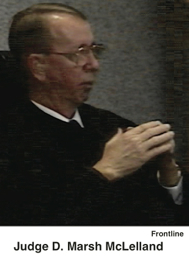
Convictions overturned, judge angrily exited
 July 5, 2014
“The Burlington judge who has presided over the the Little Rascals Day Care Center case since 1990 resigned in disgust the day after the state Supreme Court refused to review (the overturning of) two convictions.
“D. Marsh McLelland, a retired Superior Court judge, said in a letter dated Sept. 8 that the court’s refusal to review the cases ‘is legally and morally reprehensible.’
“McLelland’s letter to Chief Justice Burley Mitchell said the refusal to review a Court of Appeals order for a new trial raised the term technicality to new heights….”
– From “Judge quits Little Rascals case” from the Associated Press (Sept. 22, 1995)
I imagine that the “technicality” comment was from a direct quote, although I haven’t been able to find either McLelland’s original letter or a more substantial account. It’s no wonder he felt humiliated – the Court of Appeals decision had laid bare his indifference to the rights of the defendants.
Regardless, McLelland’s resignation proved irrelevant, as prosecutors decided not to retry Bob Kelly and Dawn Wilson.
Officer Toppin sure had an eye for ‘red flags’
July 24, 2013
“(Edenton police officer Brenda) Toppin, who conducted the first interviews of children allegedly abused at the center, testified that ‘In the early interviews, I had very few children disclosing to me…. Most of the children were not telling me specifically about Mr. Bob.’
“ ‘Red flags,’ however, caused her to continue her questioning. The ‘red flags’ included children being tense when the subject of the day-care center was mentioned, she said, and not talking to her as normal children would.”
– From the Associated Press (December 4, 1991)
It doesn’t take much reading between the lines to see Brenda Toppin’s persistence in the face of “very few children disclosing to me” or her overreaction to those absurdly vague “red flags.”
A surviving fragment of tape laid out even more saliently her abusive interview technique. Read for yourself a transcript of one of Toppin’s interviews with a child. The transcript entered the court record during the appeals process.